
www.industryemea.com
12
'26
Written on Modified on
Humidity Measurement Boosts the Energy Efficiency of the Drying Process
Saint-Gobain has deployed a humidity measurement system provided by Vaisala, enabling the optimization of the plasterboard drying process as well as the energy efficiency of the facility.
www.vaisala.com
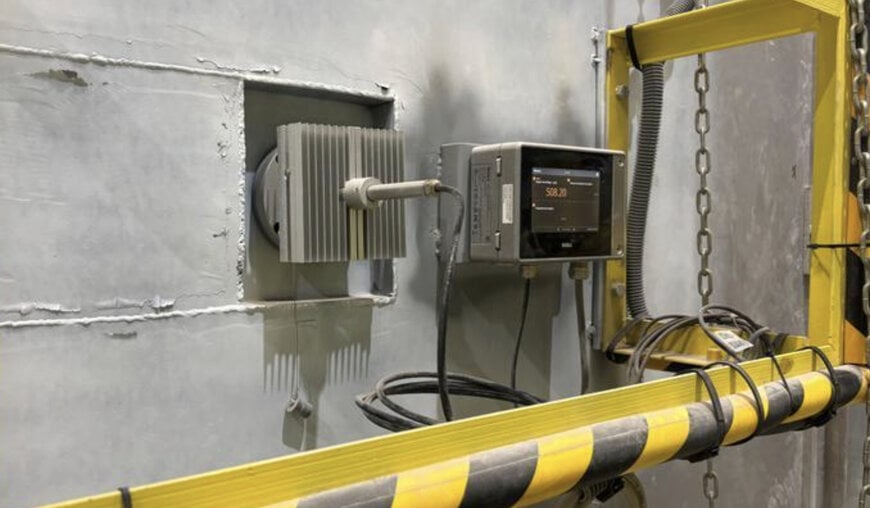
The manufacturing of plasterboard relies on strict control of drying conditions, particularly temperature and humidity. This stage is highly energy-intensive and directly impacts both the final product quality and the overall efficiency of the process. In this context, Saint-Gobain launched an initiative aimed at improving the energy performance and stability of its production lines.
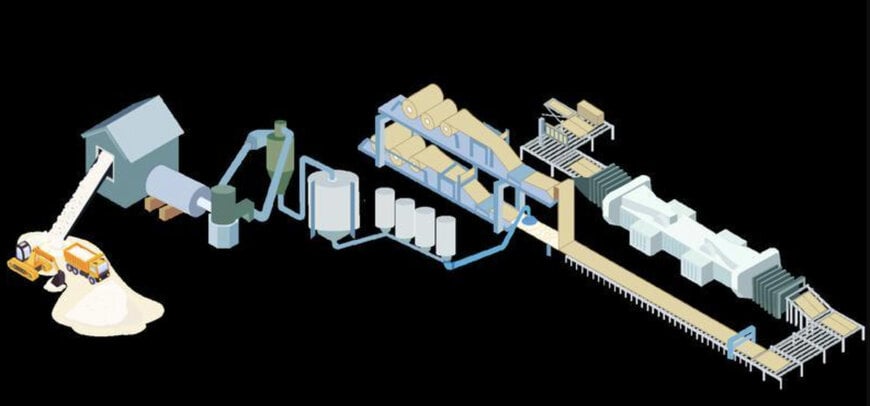
The manufacturing process, which includes the rapid drying of gypsum slurry transformed into boards, exposes materials to temperatures reaching up to 300 °C, along with significant humidity variations. These dynamic conditions make measurements particularly challenging and limit the performance of conventional sensors. The objective was therefore to ensure reliable and continuous measurements in order to optimize board quality, reduce energy consumption, and support the group’s decarbonization commitments.
Technology Choice and Collaboration
To address these challenges, Saint-Gobain selected an approach based on dew point measurement, which is more stable than relative humidity in environments with fluctuating temperatures. The company collaborated with Vaisala to develop a solution adapted to the extreme conditions inside drying kilns.
This partnership led to the adaptation of the DMP6 sensor, capable of operating at high temperatures and delivering diagnostic data to continuously assess measurement reliability. Direct integration of the sensors into the kilns, without a sampling system, improved both responsiveness and monitoring accuracy.
According to Jérôme Cantonnet, Drying Process Manager at Saint-Gobain, “the solutions initially tested did not achieve the required level of precision under these conditions. Dew point measurement proved to be a more robust approach.”
Industrial Deployment
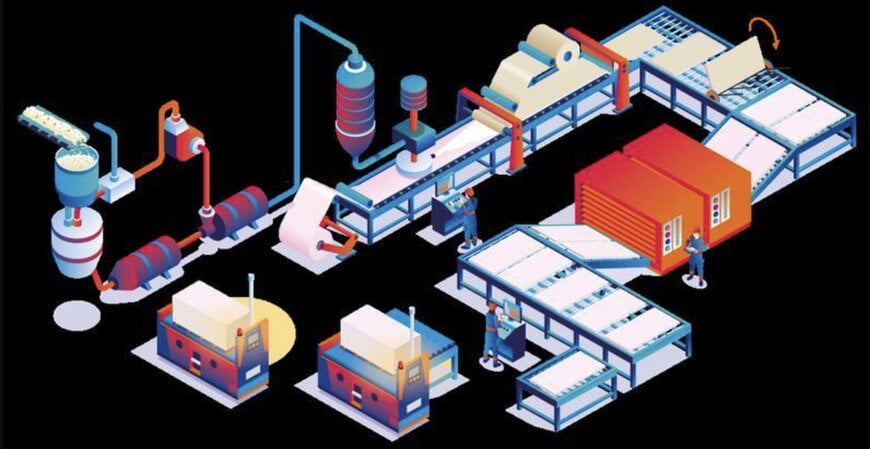
In a standard configuration, several sensors are installed along the kilns to ensure continuous monitoring, while an additional sensor is dedicated to calibration and maintenance. This setup makes it possible to maintain a high level of reliability while minimizing production interruptions.
The technology used is based on a thin-film capacitive sensor with a self-calibration function, offering enhanced resistance to condensation, contaminants, and harsh industrial environments. This robustness is essential to ensure stable measurements despite the demanding process conditions.
Operational Results
Improved humidity measurement accuracy has had a direct impact on the energy efficiency of the installations. A deviation of only ±2 °C in dew point measurement can result in an efficiency loss of up to 10%, representing a significant issue for energy-intensive industrial sites.
Thanks to more precise control, drying kilns can be operated in an optimized manner without systematically running at full capacity. This regulation helps reduce energy consumption while maintaining product quality.
Furthermore, this approach is part of Saint-Gobain’s broader decarbonization strategy, which notably includes the gradual electrification of its industrial sites.
Sensor Specifications
The DMP6 sensor incorporates a thin-film capacitive polymer measurement technology with self-calibration, ensuring long-term stability and resistance to contaminated environments. Unlike conventional relative humidity sensors, dew point measurement provides an absolute value independent of temperature variations, making it particularly suitable for intensive thermal processes.
Published by Maria Brueva, editor for Induportals – content adapted using AI.
www.vaisala.com
