
www.industryemea.com
11
'26
Written on Modified on
Battery Storage System Enables Autonomous Infrastructure Operation
The digital infrastructure operator Pure Data Centres Group deployed a 10 MW battery energy storage system to establish an independent hyperscale microgrid.
www.ingeteam.com
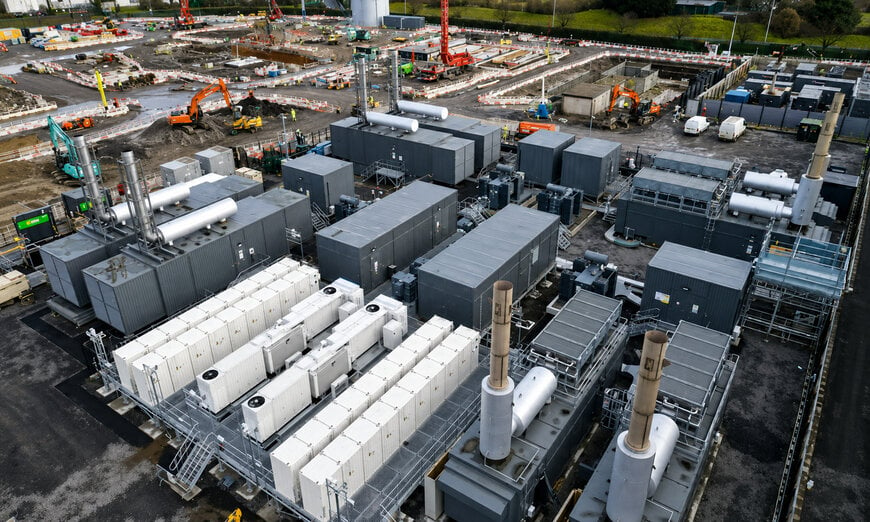
Application area: Decentralized energy management and critical infrastructure power supply
Industry sector: Data centers and digital infrastructure
The digital infrastructure operator Pure Data Centres Group has deployed an integrated industrial microgrid at its hyperscale data center campus in Dublin. To secure reliable power distribution during the initial operational phases, the facility required a decentralized energy management architecture. The engineering setup comprises a 10 MW / 20 MWh battery energy storage system coupled with dedicated power plant controllers and visualization systems. This installation functions as a self-sufficient energy hub, allowing the high-density computing infrastructure to operate completely decoupled from the national transmission grid.
Grid Capacity Constraints for High-Density Computing Facilities
The rapid expansion of artificial intelligence architectures and large-scale cloud computing networks requires continuous, high-volume electrical power. However, local utility providers face increasing grid capacity constraints, leading to delays in granting high-voltage grid connections for newly constructed hyperscale facilities.
Operating a data center without a permanent grid connection presents significant engineering challenges. The site requires a reliable power infrastructure that can balance load fluctuations, maintain precise voltage and frequency stability, and guarantee uninterrupted operation. Traditional diesel backup generators cannot handle dynamic load balancing over long periods, necessitating an active, high-capacity electrical storage system to act as a buffer.
Grid-Forming Inverter Technology for Microgrid Stabilization
To bridge the grid availability gap, the developer integrated an active battery energy storage system as part of the facility's localized energy infrastructure. The technical core of the system relies on liquid-cooled storage inverters capable of establishing a 10 MVA grid-forming system.
The technical mechanics of this decentralized configuration include:
- Frequency and Voltage Control: The grid-forming inverters dictate the voltage amplitude and frequency within the microgrid, mimicking the behavioral characteristics of traditional synchronous generators without relying on an external grid signal.
- Thermal Regulation: Liquid-cooling systems manage the power electronics, preventing thermal derating and maintaining full operational capacity under continuous load demands.
- Centralized Orchestration: A high-speed power plant controller and an advanced energy management system monitor real-time load profiles and regulate power distribution between the storage unit and the data center servers.
During the construction phase, a temporary 10 MW energy center supported the initial site operations, ensuring continuous power distribution before full commissioning.
Scaling Modular Power Infrastructure for Phase Operations
The battery energy storage system represents the first phase of a larger, scalable energy architecture on the data center campus. The permanent microgrid layout will eventually combine three distinct energy centers with the on-site battery storage unit, raising the total installed generation and storage capacity of the campus to 110 MW.
The electrical infrastructure is designed to maintain permanent island mode operation, protecting the critical servers from external power fluctuations. However, the system retains the mechanical and control flexibility to transition into a hybrid configuration—combining grid electricity with the on-site energy systems—as soon as local utility grid capacity is provisioned.
Dynamic Power Dispatching and Operational Reliability
The deployment of the localized battery storage system ensures an immediate, dispatchable capacity that can respond to the high-density power requirements of modern computing nodes. By utilizing the grid-forming capabilities of the inverters, the microgrid absorbs transient load spikes caused by sudden processing demands from the servers.
This automated balancing prevents power quality degradation and protects sensitive digital components. Additionally, the integration of centralized control software allows the data center to optimize its internal energy consumption profiles, establishing an autonomous operational model that bypasses traditional grid constraints while maintaining the strict uptime requirements of hyperscale infrastructure.
