
www.industryemea.com
30
'26
Written on Modified on
Industrial Tissue Machine Modernization
ANDRITZ partners with a European paper producer to upgrade manufacturing equipment, targeting operational performance and resource optimization.
www.andritz.com
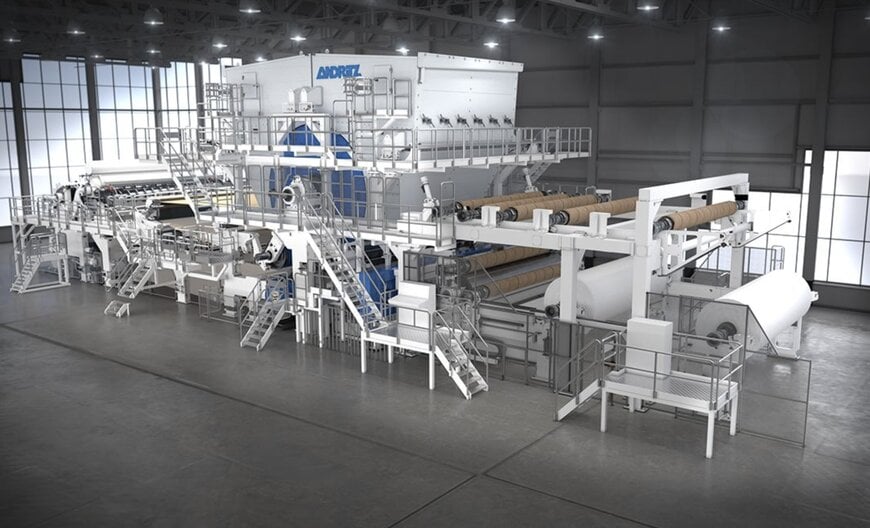
ICT Poland collaborated with technology supplier ANDRITZ to execute a mechanical rebuild and automation upgrade on the TM11 tissue machine at the Kostrzyn nad Odrą mill. The project serves as a case study in tissue manufacturing modernization, demonstrating how targeted equipment overhauls address core industrial requirements for increased output, enhanced product quality, and reduced specific energy consumption.
Industry Context and Operational Objectives
As a producer of high-quality tissue products for consumer and professional markets, ICT Poland operates manufacturing facilities that require precise control over resource consumption and product specifications. The TM11 tissue machine, originally installed in the early 2000s, required an update to meet current operational standards. The primary objectives for this modernization were to increase the gross daily production rate and improve critical quality metrics, specifically tissue softness and caliper. Simultaneously, the company sought to reduce specific energy consumption across steam, gas, and electricity to optimize overall operating costs and support sustainable manufacturing processes.
Targeted Equipment Rebuild and Automation
To achieve these technical goals, ICT Poland selected a solution focused on mechanical and automation upgrades rather than a complete machine replacement. The modernization centered on two critical components of the tissue machine. First, the installation included a shoe press rebuild, utilizing updated press technology designed to maximize dewatering efficiency before the thermal drying phase. This mechanical optimization is directly responsible for reducing the thermal energy required to dry the paper web. Second, the machine’s reel was upgraded with hydraulic automation. This addition provides precise, automated control over the winding process, ensuring consistent tension and pressure, which is necessary for preserving paper caliper and enhancing final product softness.
Deployment Process and Integration
The integration of the new components required coordinated engineering between the supplier and the manufacturer to ensure the legacy systems interfaced correctly with the updated hydraulic automation and shoe press elements.
Commenting on the technical execution, Andrzej Toffel, Paper Mill Manager at ICT Poland, noted that the upgrades to the TM11 positively impacted both production efficiency and the physical quality of the tissue products, adding that the cross-team collaboration successfully met their technical expectations. Furthermore, Marco Poletti, Project Manager at ANDRITZ, highlighted that the operational continuity and performance of the rebuilt TM11 effectively demonstrated the application of the supplier's technology and engineering expertise to existing machine infrastructure.
Quantifiable Efficiency and Quality Results
Following the successful startup, the modernized TM11 yielded immediate, quantifiable improvements in both capacity and resource efficiency. The gross daily production of the machine increased by 2.5 percent. Concurrently, the specific energy consumption—encompassing steam, gas, and electrical power—decreased by 5 percent. Beyond operational metrics, the mechanical updates to the press and the hydraulic automation on the reel resulted in measurable enhancements to product quality, specifically yielding higher tissue softness and increased caliper. These physical improvements to the tissue profile directly support ICT Poland's capacity to supply high-tier consumer and private label markets across Europe.
Edited by Aishwarya Mambet, Induportals Editor, with AI assistance.
www.andritz.com
