
www.industryemea.com
30
'26
Written on Modified on
Alfa Laval Enhances Geothermal Energy Performance For Stargard Green Heating
By implementing advanced T25 plate heat exchangers, the renewable energy facility optimized its single-pass configuration to reliably supply emission-free heat to local Polish residents.
www.alfalaval.com
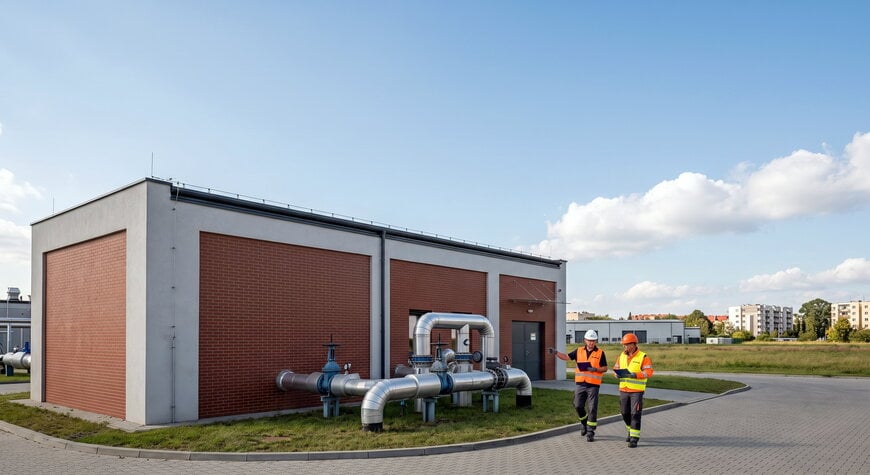
The municipal energy sector faces increasing pressure to transition away from fossil-based thermal energy production toward sustainable alternatives. Geotermia Stargard, operator of the second largest geothermal energy installation in Poland, aimed to expand and modernize its production facility. The project required technology capable of utilizing deep geothermal resources to supply hot water and district heating to the city's residents.
The primary goals focused on maximizing raw material efficiency and reducing reliance on coal-fired boilers. Operational objectives required achieving high energy efficiency, ensuring system reliability under harsh chemical conditions, and minimizing specialized maintenance interventions.
Technical challenges of mineral-rich fluids
Extracting geothermal water from a depth of 2,670 meters at a temperature of 90 °C introduces significant technical hurdles. The extracted thermal fluid contains high levels of dissolved minerals and carries a constant risk of salt contamination. In standard thermal management systems, these mineral-rich fluids lead to rapid fouling, degraded heat transfer efficiency, and frequent operational downtime for manual cleaning.
To overcome these challenges, the utility needed a robust thermal solution capable of managing a total capacity of 32 MW while maintaining stable, single-pass heat transfer despite the poor water quality.
Single-pass heat transfer technology integration
To meet the stringent processing requirements, the company selected two T25-BFG industrial plate heat exchangers featuring specialized plate geometries. The technical features governing this selection centered on optimized fluid distribution and a specialized flow design. This technology ensures uniform fluid velocity across the entire plate surface, minimizing stagnant zones where mineral deposits and salt fouling typically originate.
The selected system operates within a closed circuit loop. After extracting thermal energy from the 90 °C brine, the cooled fluid is reinjected back into the underground source via five injection wells. This mechanism prevents ecological imbalance and maintains the long-term sustainability of the geothermal reservoir. The manufacturer supported the implementation through engineering consultations, applications expertise, and a specialized service framework equipped for emergency response.
Decarbonization and district heating results
The modernized facility utilizes a total network of seven wells, comprising two production wells and five injection wells. The total investment for the infrastructure expansion exceeded PLN 88 million, partially funded via European Union grants.
Integration of the specialized plate heat exchangers yielded the following quantified operational benefits:
- Thermal Output: The system reliably delivers between 350,000 and 400,000 GJ (97 to 111 GWh) of thermal energy annually.
- Network Coverage: The installation supplies renewable energy to approximately 5,000 individual premises, covering 62% of the city’s total annual heat demand.
- Fossil Fuel Displacement: During summer periods and intervals where the ambient outdoor temperature remains above 10 °C, the geothermal system acts as the sole thermal source, allowing coal-fired boilers to be completely deactivated.
- Emission Reductions: By displacing approximately 21,200 tonnes of coal consumption per year, the installation prevents up to 38,000 tonnes of carbon dioxide emissions annually, alongside a substantial reduction in airborne dust and greenhouse gases.
From an operational standpoint, the specialized flow design altered the maintenance profile of the facility, transitioning workflows from reactive troubleshooting of mineral fouling to scheduled, long-term asset management.
Technical perspective on equipment selection
"As part of modernization, we had to decide regarding the selection of new heat exchangers with a total capacity of 32 MW. Ultimately, Alfa Laval was selected as the manufacturer, as it met the high requirements. Alfa Laval demonstrated not only extensive knowledge of geothermal applications and experience, but also strong service support and readiness for emergency situations. The total number of wells is 7 (2 production wells and 5 injection wells)."
— Władysław Zablocki, Director of G-term Energy Sp. z o.o.
Edited by Evgeny Churilov, Induportals Media - Adapted by AI.
www.alfalaval.com
Technical perspective on equipment selection
"As part of modernization, we had to decide regarding the selection of new heat exchangers with a total capacity of 32 MW. Ultimately, Alfa Laval was selected as the manufacturer, as it met the high requirements. Alfa Laval demonstrated not only extensive knowledge of geothermal applications and experience, but also strong service support and readiness for emergency situations. The total number of wells is 7 (2 production wells and 5 injection wells)."
— Władysław Zablocki, Director of G-term Energy Sp. z o.o.
Edited by Evgeny Churilov, Induportals Media - Adapted by AI.
www.alfalaval.com
