
www.industryemea.com
10
'26
Written on Modified on
Beckhoff PC-Based Control Technology Powers H2 Powercell’s Modular Hydrogen Energy System
H2PowerCube combines electrolysis, fuel cells and battery storage with PC-based automation for scalable, decentralized energy management and grid stability.
www.beckhoff.com
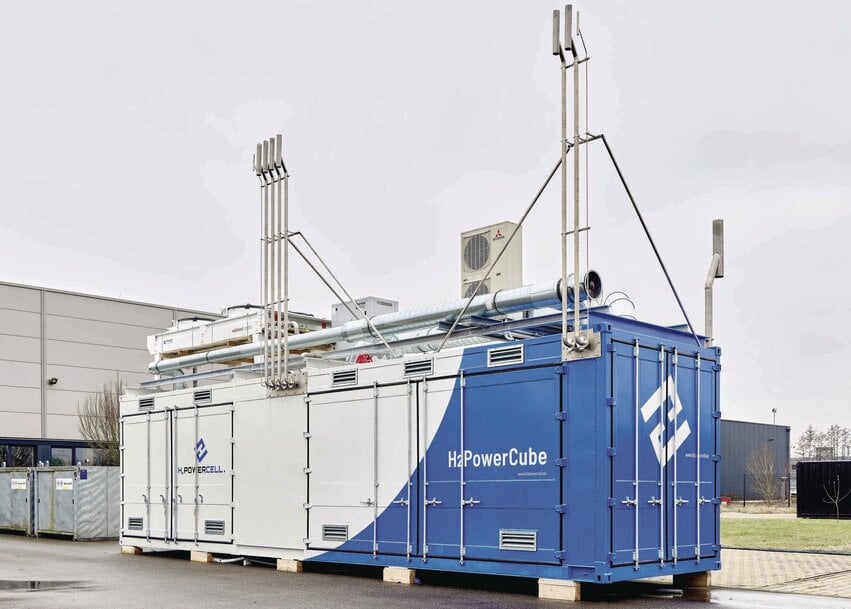
H2 Powercell and Beckhoff are collaborating to implement the H2PowerCube, a container-based system combining electrolyzers, fuel cells, and battery storage for decentralized energy supply. This technical solution addresses the operational stability of power grids across applications such as hydrogen refueling stations, industrial microgrids, and complex sector-coupling projects.
Operational Challenges and Cooperative Roles
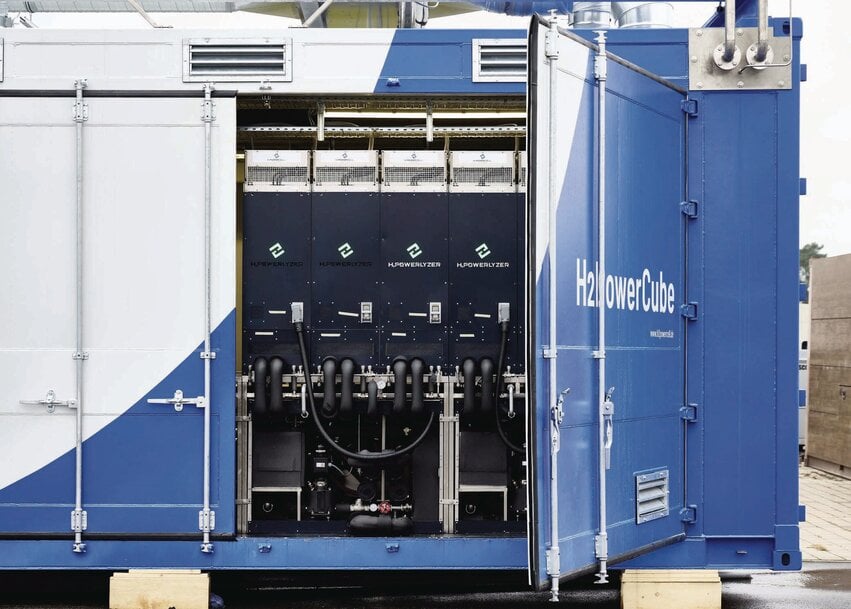
Integrating fluctuating renewable energy sources demands robust storage systems. H2 Powercell constructs modular process engineering systems to replace rigid, monolithic hydrogen plant designs. This structural modularity requires an automation architecture capable of processing substantial data volumes in hard real time while synchronizing complex thermodynamic processes. Beckhoff provides the required industrial automation technology, acting as the control system supplier to manage the system dynamics within the physical constraints of a single container.
System Architecture and Technical Integration
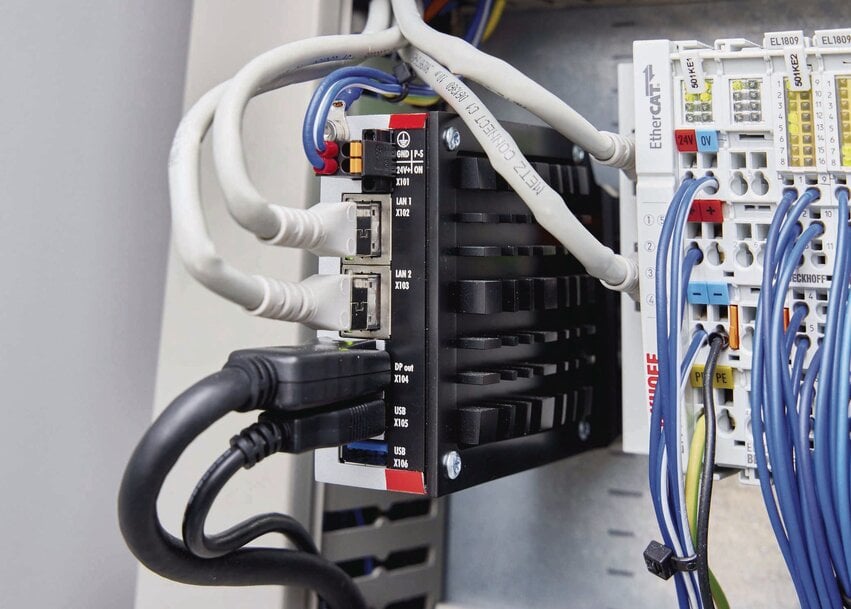
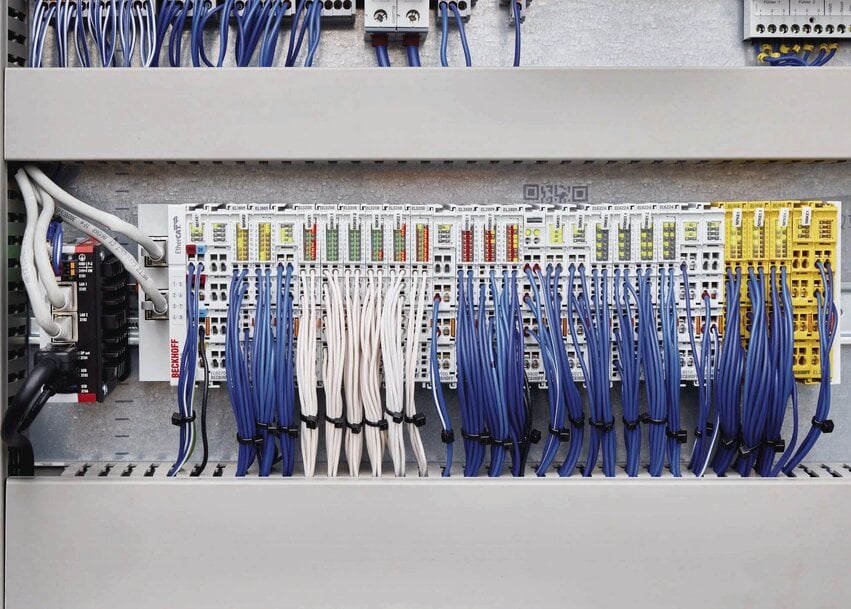
The H2PowerCube cascades up to 24 electrolyzer modules to achieve a capacity of 1.2 megawatts. The topological center of this container system is the Beckhoff C6015 ultra-compact industrial PC. Equipped with a quad-core processor, the controller synchronizes electrolysis and power generation processes with minimal latency. Signal acquisition is managed decentrally through EtherCAT Terminals, connecting all necessary temperature, pressure, and flow sensors to minimize physical wiring.
The software architecture, built on the TwinCAT automation suite, handles object-oriented programming in accordance with IEC 61131-3, enabling software modularity as the physical hardware scales.
Preventive Safety and Deployment Interfaces
Instead of utilizing traditional pressure-resistant enclosures for explosion protection zones, the system relies on active monitoring integrated directly into the automation layer. A redundant ventilation system and gas detection sensors are controlled via safe I/O terminals and the Safety over EtherCAT protocol to prevent the formation of explosive atmospheres. Deployed as an autonomous unit, the container connects to existing digital infrastructure and physical systems through five standard interfaces: hydrogen, electrical power, district heating, waste water, and remote access. Communication with peripheral systems utilizes standard industrial protocols, including OPC UA and Modbus TCP.
Process Efficiency and Expected Impact
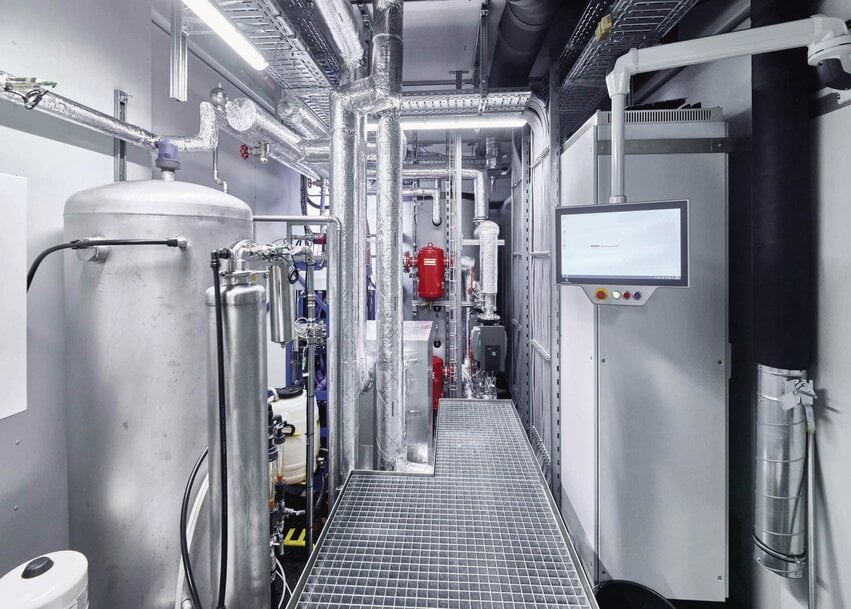
The process engineering utilizes a single-circuit thermodynamic system where electrolysis process water functions as cooling water, allowing operational waste heat to be extracted via a heat control loop and distributed. This combination of hardware and software enables precise energy management, storing surplus electrical power as hydrogen and generating electricity locally upon demand. The installed control infrastructure establishes the foundation for future integration of artificial intelligence tools designed for real-time anomaly detection and equipment lifecycle analysis.
Edited by Natania Lyngdoh, Induportals editor, assisted by AI.
www.beckhoff.com
