
www.industryemea.com
06
'26
Written on Modified on
Omniflex automated monitoring secures clinical research specimens
CAPRISA deploys a continuous temperature tracking system to maintain biological sample integrity and regulatory compliance.
www.omniflex.com
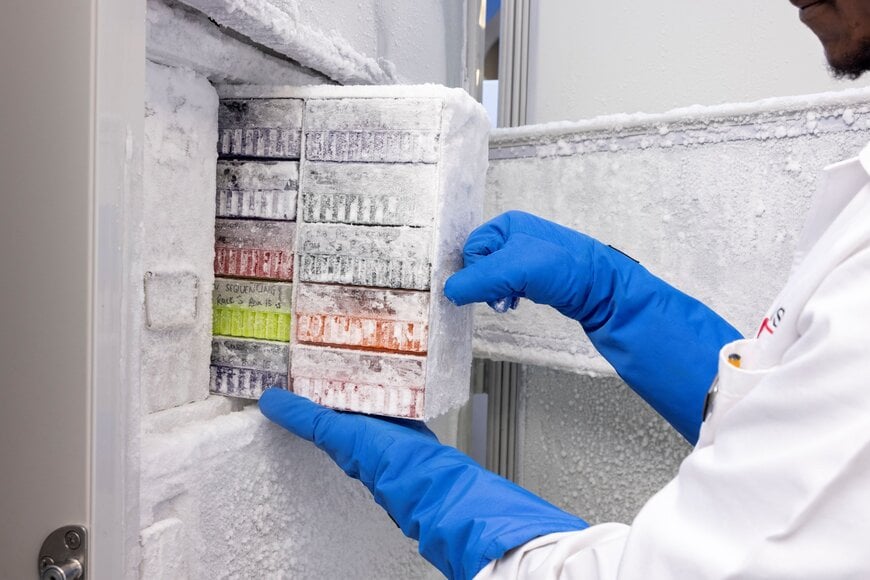
Clinical research organizations require robust environmental monitoring to maintain the integrity, traceability, and security of temperature-sensitive biological specimens. To address these stringent storage requirements, CAPRISA implemented a continuous temperature monitoring system across its main research laboratory, central biorepository, and clinical research sites.
Risks of manual temperature tracking
CAPRISA manages biological specimens across various storage environments, including -80°C freezers, liquid nitrogen storage at -196°C, refrigerators, and incubators. Relying on periodic manual temperature checks introduces significant operational risks. If a freezer fault occurs between scheduled readings, hours can pass before personnel detect the deviation. This delay compromises sample integrity and disrupts large-scale clinical research studies that depend on strict Good Clinical Laboratory Practice (GCLP) standards.
Automated data logging and excursion alerts
To mitigate these risks, the research organization deployed Omniflex’s continuous monitoring system, which operates through the Data2Desktop platform. The technology captures temperature data automatically and provides centralized access to live dashboards and historical records. If storage conditions deviate from defined parameters, the system generates automated excursion alerts, enabling laboratory personnel to investigate and respond immediately without waiting for the next manual reading.
Operational efficiency and predictive maintenance
The continuous monitoring infrastructure removes the administrative burden of routine manual readings, improving overall laboratory efficiency. By analyzing historical temperature records, personnel can also identify emerging equipment faults before they cause a complete failure. For instance, a refrigerator compressor entering a faster cycling pattern to maintain temperatures serves as an early indicator of malfunction. Dr Natasha Samsunder, laboratory director at CAPRISA, confirmed the technology serves as a reliable solution for continuous temperature tracking. Ultimately, the automated records support GCLP compliance by providing a traceable history of environmental conditions, ensuring audit readiness and long-term specimen security.
Additional Context: Thermal dynamics and predictive maintenance in biorepositories
Ultra-low temperature (ULT) freezers operating at -80°C and liquid nitrogen dewars at -196°C rely on complex, heavy-duty compressor cascades or vacuum insulation that degrade over time. When a mechanical failure occurs—such as a refrigerant leak, seal degradation, or compressor stall—the internal thermal mass can only preserve samples for a brief window before temperatures rise past critical thresholds. Manual temperature logs inherently create blind spots during off-hours, risking the loss of irreplaceable biological assets. Implementing continuous telemetry systems shifts laboratory management from reactive crisis response to predictive maintenance. By analyzing granular data trends, such as an increase in compressor duty cycles or power draw, facility engineers can detect deteriorating insulation or failing mechanical components weeks before an actual temperature excursion occurs, effectively preventing catastrophic sample loss.
Edited by Lekshman Ramdas, Induportals editor – adapted by AI.
www.omniflex.com
