
www.industryemea.com
20
'26
Written on Modified on
Ciment Québec upgrades cement grinding to reduce energy use and emissions
New grinding technology supports low-carbon cement production and operational flexibility at the Saint-Basile plant.
www.fivesgroup.com
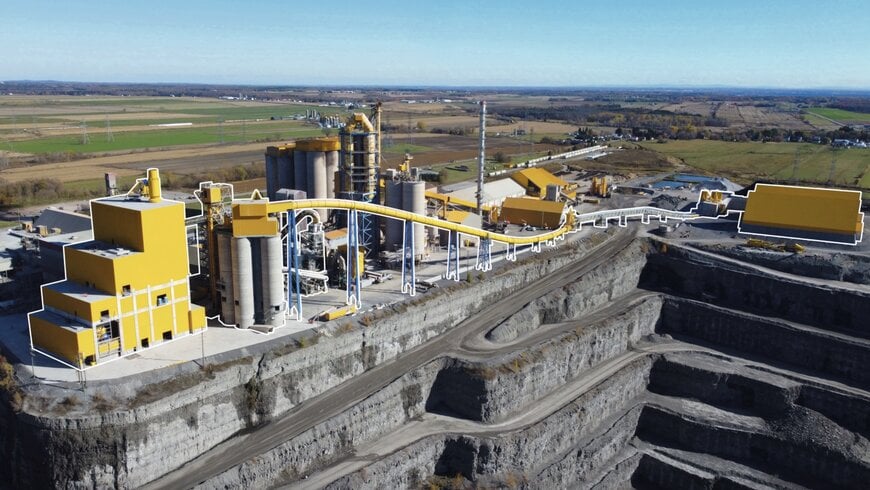
Ciment Québec Inc. (CQI) is a cement producer supplying construction markets in Canada, where demand for lower-carbon building materials is increasing and seasonal production volumes fluctuate significantly. At its Saint-Basile plant, the company identified cement grinding as a key area for improvement in order to reduce energy consumption, lower environmental impact and expand its range of blended cements.
The existing grinding setup limited flexibility and energy performance, particularly when producing very fine cements with reduced clinker content. CQI therefore launched a structured evaluation to identify a grinding solution capable of meeting both current production needs and future sustainability requirements.
Comparing grinding technologies under real operating conditions
As part of its decision process, CQI compared the three main cement grinding technologies used in the industry: traditional ball mills, vertical roller mills and the Horomill-type configuration. The evaluation went beyond theoretical performance.
CQI teams visited operating installations in the United States and Mexico and conducted pilot tests using their own raw materials at the research and testing facilities of Fives in France. These trials allowed CQI to assess cement quality, energy consumption and operational behaviour under conditions representative of its production environment.
Selecting a compact and energy-efficient grinding solution
Following this assessment, CQI selected the FCB Horomill® technology to upgrade the Saint-Basile plant. The solution was chosen primarily for its lower specific energy consumption compared with conventional ball mills, particularly when producing blended and low-clinker cements.
The grinding system also demonstrated the flexibility required to produce a wide range of cement types, including limestone cements and ternary or quaternary blends. Its compact footprint and reduced noise levels were additional factors, as the new equipment needed to integrate into the existing plant layout without major civil modifications.
Dual grinding lines for continuity and flexibility
CQI is preparing to commission two independent Horomill 4200 grinding units, each equipped with high-efficiency classifiers for ultra-fine cement production. Operating two separate circuits allows the plant to maintain production continuity during maintenance while adapting output to seasonal demand variations typical of the Canadian market.
The new configuration also supports CQI’s strategy to anticipate growing demand for sustainable construction materials. By enabling efficient grinding of cements with a reduced clinker factor, the system contributes directly to lowering the carbon intensity of finished products.
Energy efficiency as a driver for long-term competitiveness
Testing performed on CQI’s own materials confirmed consistent cement quality and stable operation across different product recipes. From an environmental perspective, the grinding technology’s ability to deliver fine cements at lower energy input per tonne plays a central role in reducing overall emissions associated with cement production.
For Ciment Québec, the investment represents a measured step toward improving energy performance while retaining operational flexibility. By selecting a grinding solution validated through on-site references and pilot testing, the company has reduced technical risk and aligned its Saint-Basile plant with long-term sustainability and market requirements.
www.fivesgroup.com
