
www.industryemea.com
09
'26
Written on Modified on
Compact Robotic Cell Improves Pharmaceutical Throughput
Robotronic and Mitsubishi Electric develop a low-footprint robotic solution to increase production efficiency and reduce supply chain constraints in pharmaceutical manufacturing.
emea.mitsubishielectric.com
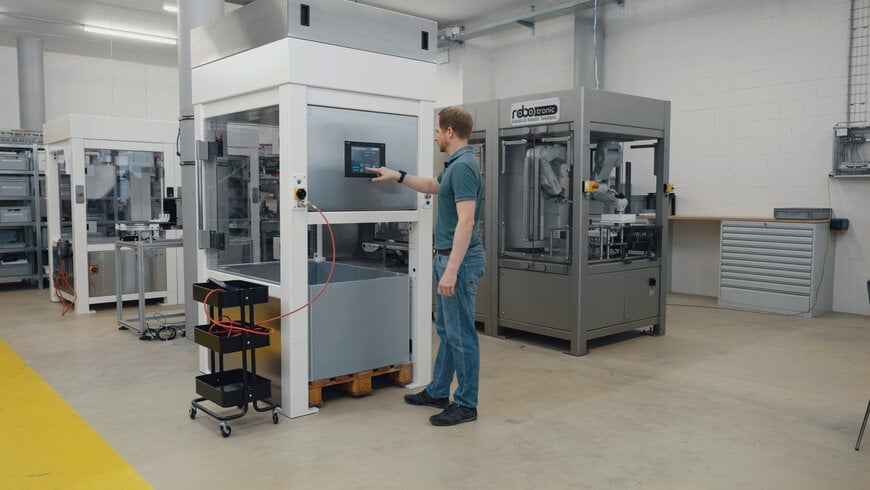
The new low-footprint automated palletising cell developed by Robotronic in partnership with Mitsubishi Electric is designed to help the pharmaceutical industry overcome record-high shortages across Europe.
Robotronic, in collaboration with Mitsubishi Electric, has developed a compact robotic cell designed to improve throughput and handling precision in pharmaceutical production. The solution addresses increasing demand and supply shortages by enabling higher-speed, compliant manufacturing processes.
Addressing Pharmaceutical Supply Constraints
Pharmaceutical supply chains in Europe have faced increasing pressure due to rising demand and manufacturing challenges. Shortages of essential medicines have highlighted the need for improved production efficiency and more resilient manufacturing systems.
Automation plays a key role in addressing these issues by reducing lead times and enabling consistent, high-throughput production. The newly developed robotic cell is designed to support handling processes such as de-nesting, re-nesting, and palletising of vials and pre-filled syringes.
High-Speed Operation in Confined Spaces
The system integrates two industrial robots operating simultaneously within a compact footprint. This configuration enables processing rates of up to 600 products per minute while maintaining precise coordination between robotic units.
A key technical challenge was ensuring safe, collision-free operation in a confined environment. The system achieves this through coordinated motion control, allowing robots to operate within millimetres of each other without compromising speed or accuracy.
Precision Handling for Sensitive Materials
Pharmaceutical products such as glass vials require careful handling to prevent damage. The robotic system incorporates compliance control technology that enables controlled force application during handling operations.
This approach ensures gentle interaction with products, eliminating direct glass-to-glass contact and reducing the risk of breakage. The design also supports hygienic operation, with components suited for clean environments and ease of cleaning.
Supporting Regulatory Compliance and Quality
In pharmaceutical manufacturing, consistency extends beyond product quality to include regulatory compliance and process validation. Automated systems must ensure repeatable handling and traceability while meeting strict safety requirements.
The robotic cell is designed to support these requirements by providing stable, repeatable motion and controlled handling conditions. This contributes to reliable production outcomes and compliance with industry standards.
Enabling Scalable Pharmaceutical Manufacturing
The development demonstrates how compact automation solutions can increase production capacity without requiring significant expansion of physical infrastructure. By combining high-speed robotics with precision handling, manufacturers can improve efficiency while maintaining product integrity.
Such solutions provide a pathway to address growing demand for pharmaceutical products, supporting more robust and responsive manufacturing systems.
Edited with AI assistance.
