
Improving efficiency in compressed air systems
RS outlines how smart pneumatic automation and control technologies can reduce energy losses in industrial compressed air installations.
www.rs-online.com
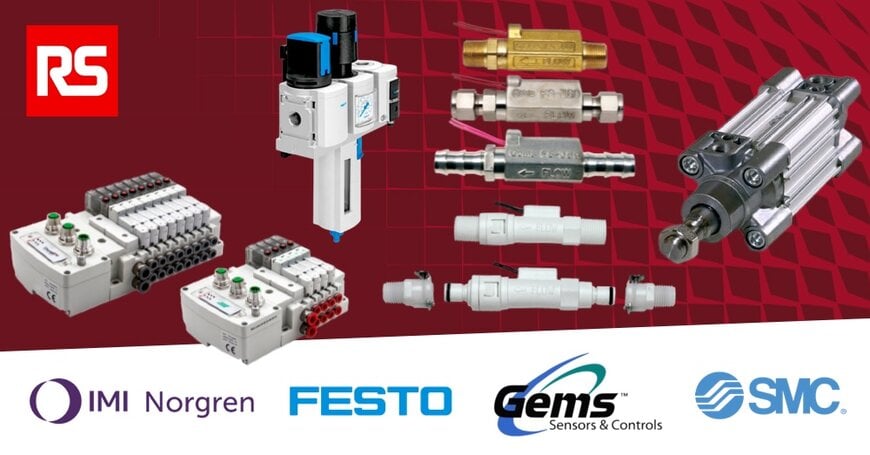
RS is highlighting the role of smart pneumatic automation and control products in addressing the inherent inefficiencies of compressed air systems, which remain widely used across industrial manufacturing despite significant energy losses.
Structural inefficiency of compressed air systems
Compressed air has been a core industrial energy medium since the late 19th century and is still extensively used in automated manufacturing and packaging processes, including material transfer, filling, mixing, cooling, and drying. These systems are common in automotive, food and beverage, pharmaceutical, chemical, and pulp and paper production, as well as in cleanroom environments.
However, compressed air systems are intrinsically inefficient. Industry data indicates that at least 80% of the electrical energy used to generate compressed air is dissipated as heat, with a further 5–10% lost through leaks, artificial demand, and inappropriate usage. While their safety, durability, and flexibility historically offset these drawbacks, current efficiency and sustainability targets are prompting a reassessment of how compressed air is deployed and managed.
Guidance on reducing compressed air demand
The U.S. Department of Energy’s Better Plants program recommends limiting compressed air usage to applications where it is technically necessary and replacing it with alternative technologies where feasible. For existing systems, the program emphasizes improved management practices, including leak repair, pressure stabilization, elimination of inappropriate uses, and demand-side reduction.
A key element of this approach is the adoption of smart automation and control technologies that can monitor operating conditions, detect deviations from setpoints, and either automatically correct them or alert operators.
Role of smart pneumatic automation and control
According to RS, the combined implementation of improved system management and smart pneumatic components can reduce compressed air energy consumption by 20–50%. These measures can also lower maintenance requirements, reduce operating costs, and improve equipment uptime, reliability, and product quality.
Smart pneumatic solutions include control valves, air preparation systems, flow sensors, and actuators designed to optimize air usage and provide real-time visibility into system performance.
Examples of applicable technologies
Within its portfolio, RS supplies a range of smart pneumatic components designed for industrial automation. Valve manifolds consolidate multiple directional control valves into compact assemblies, simplifying installation and reducing leakage points. Modular air preparation units enable precise pressure regulation and filtration across diverse operating environments, including regulated food, beverage, and hazardous-area applications.
Flow switches and sensors provide monitoring and control of compressed air and other process fluids, supporting early detection of abnormal consumption or system faults. Pneumatic actuators designed to ISO standards contribute to consistent motion control while minimizing leakage and energy loss through improved sealing and mechanical efficiency.
Impact on industrial operations
By integrating smart automation and control products into compressed air systems, operators gain improved insight into air usage and system behavior. This supports proactive maintenance, faster fault identification, and more stable process conditions. In turn, these improvements can contribute to reduced energy consumption, improved process consistency, and extended equipment life.
Relevance to modern industrial strategies
As Industry 4.0 initiatives continue to emphasize efficiency, transparency, and sustainability, compressed air systems are increasingly expected to meet the same performance benchmarks as other energy-intensive utilities. Smart pneumatic automation provides a practical pathway for existing installations to align with these expectations without full system replacement.
Through targeted upgrades and intelligent control, compressed air systems can remain a viable and reliable industrial energy source while operating with significantly improved efficiency and reduced lifecycle costs.
www.rs-online.com
