
www.industryemea.com
18
'25
Written on Modified on
Offshore Wind for Grid Restoration Trials
SP Energy Networks is testing offshore wind-based black start methods to expand renewable options for restoring Britain’s electricity system in case of a nationwide outage.
www.spenergynetworks.co.uk
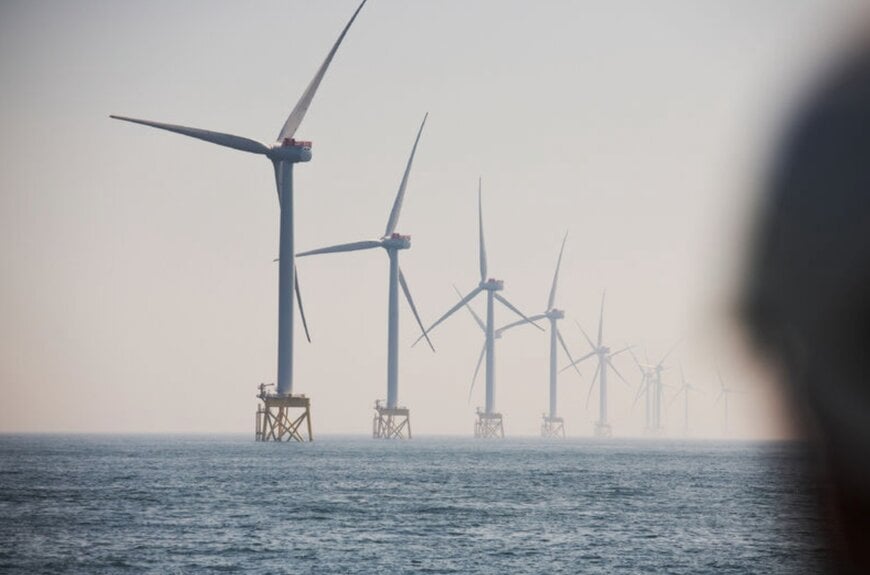
The UK electricity sector has begun technical trials to assess whether offshore wind can contribute to restarting the national grid after a complete power outage, a function traditionally reserved for hydroelectric generation. The work forms part of a multi-year effort to diversify grid restoration pathways and improve energy security as renewable penetration increases.
Rethinking black start in a high-renewables system
In the event of a national blackout, the electricity system must be re-energised in a carefully sequenced process known as black start. Historically, hydro generators have played this role because they can start without an external power supply and gradually bring other assets online. Offshore wind farms, despite their scale, have not been able to perform this function because they depend on grid-supplied power for control systems and synchronisation.
The Blade project is examining whether that limitation can be addressed through new control strategies, power electronics, and coordination mechanisms. By modelling offshore wind participation in black start scenarios, transmission operators aim to provide the National Energy System Operator (NESO) with additional, renewable-based restoration options.
Modelling restoration scenarios before field deployment
The three-year programme brings together Scotland’s two transmission owners—SP Energy Networks and SSEN Transmission—with offshore wind developers including SSE Renewables and Ørsted, alongside the National HVDC Centre. Rather than live grid testing, the initial phase is being conducted in a specialist laboratory environment designed to replicate real-world outage and restoration conditions.
Within this controlled setting, the consortium is analysing how offshore wind farms could be energised, stabilised, and synchronised during early-stage grid restoration. High-voltage direct current (HVDC) interfaces, protection systems, and frequency control behaviour are all being assessed to determine whether offshore wind can meet the technical thresholds required for safe black start participation.
Building on prior distributed restoration work
Blade extends earlier grid restoration research carried out through the Distributed ReStart project, which demonstrated that small, distribution-connected generators could be coordinated to restore sections of the network after widespread outages. That approach has since moved into operational deployment, providing an alternative to reliance on large centralised plants.
By contrast, Blade focuses on transmission-level assets and offshore generation, addressing a different scale and complexity of restoration. Lessons from the Carbon Trust’s Offshore Wind Accelerator programme are also informing the work, particularly around standardisation and cost-effective integration of new offshore capabilities.
Consortium approach to system-level resilience
The project is supported by Ofgem’s Strategic Innovation Fund, delivered in partnership with Innovate UK, and involves a broad industry consortium. Participants include 11 offshore wind developers and operators, seven equipment manufacturers, three international transmission system operators, academic researchers from the University of Strathclyde, and power system specialists such as TNEI.
This structure reflects the system-wide nature of black start capability, which depends not on a single technology but on coordinated performance across generation, transmission, protection, and control layers. If the modelling demonstrates technical viability, the findings could inform future grid codes and design requirements for offshore wind farms across the UK.
Expanding restoration options for future grids
As offshore wind capacity continues to grow, the ability to integrate it into grid restoration planning becomes increasingly relevant. While hydro generation remains a proven black start resource, adding offshore wind as a complementary option could increase operational flexibility and resilience in low-probability, high-impact outage scenarios. The Blade project is intended to establish whether such integration can be achieved within existing reliability and safety standards, before any consideration of wider deployment.
www.spenergynetworks.com
