
www.industryemea.com
23
'26
Written on Modified on
Dow optimises heat exchanger performance at Terneuzen
Alfa Laval helped Dow’s Terneuzen site eliminate heat exchanger fouling and avoid unscheduled maintenance by redesigning units to match changed operating conditions.
www.alfalaval.com
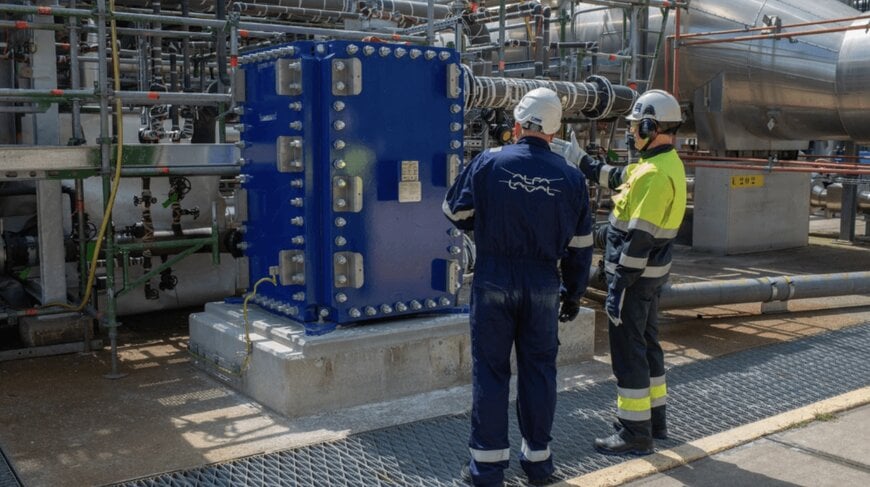
At its Terneuzen site in the Netherlands, Dow operates multiple process plants equipped with plate heat exchangers that have been in service for many years. While the equipment remained mechanically sound, gradual changes in operating conditions over time were not reflected in the original exchanger designs.
Reduced flow rates led to excessive fouling in several units, lowering heat transfer efficiency and increasing energy consumption. In parallel, an undetected issue in pump control software caused negative pressure spikes, resulting in cracking of heat transfer plates and creating a potential risk to equipment integrity and production continuity.
Identifying the root causes through structured assessment
To address these issues, Alfa Laval initiated a structured service study at the Terneuzen site in 2023. The project was carried out in close collaboration with Dow’s engineering and maintenance teams.
The assessment began with a comprehensive on-site visual inspection of all installed Alfa Laval heat exchangers. Based on initial findings, selected units were subjected to more detailed physical inspections and performance assessments. Actual operating parameters were systematically compared with the original design specifications.
This analysis showed that most of the inspected units were no longer optimised for their current duties due to changes in process conditions. It also confirmed that pressure fluctuations originating from pump control software were contributing to plate damage.
Redesigning equipment to match current operations
Based on the assessment results, Alfa Laval redesigned the affected heat exchangers to align with the updated process parameters. This included adapting the thermal and hydraulic design to current flow rates, significantly reducing fouling tendencies.
For one application where two exchangers were operating in parallel, the flow control strategy was reprogrammed to ensure stable and balanced operation. In addition, the pump software was updated to eliminate negative pressure spikes, removing the root cause of plate cracking.
All measures were implemented in a targeted manner, avoiding disruption to ongoing production.
Eliminating fouling and unplanned maintenance
The redesign and software updates effectively resolved the fouling issues and restored heat exchanger efficiency. As a result, the need for intermediate maintenance stops between scheduled plant turnarounds was eliminated.
According to Dow, the service study also increased internal awareness of the value of regular inspections and performance assessments. Even relatively simple measures, such as cleaning and parameter verification, were shown to have a significant impact on energy efficiency and CO₂ emissions.
Improving predictability and lowering lifecycle costs
Beyond the immediate technical improvements, the project enabled a more predictive approach to maintenance planning across the plant. By aligning equipment design with actual operating conditions and addressing control-related issues, Dow reduced the risk of unexpected failures and lowered spare parts consumption.
The Terneuzen case demonstrates how systematic assessment and redesign of existing heat exchangers can restore performance, improve energy efficiency and support long-term operational reliability without major capital investment.
www.alfalaval.com
