
www.industryemea.com
09
'26
Written on Modified on
Integrated Electric and Pneumatic Automation for Industrial Motion
Festo presents a unified automation architecture enabling connected electrics, pneumatics, software, and AI within an open industrial automation framework.
www.festo.com
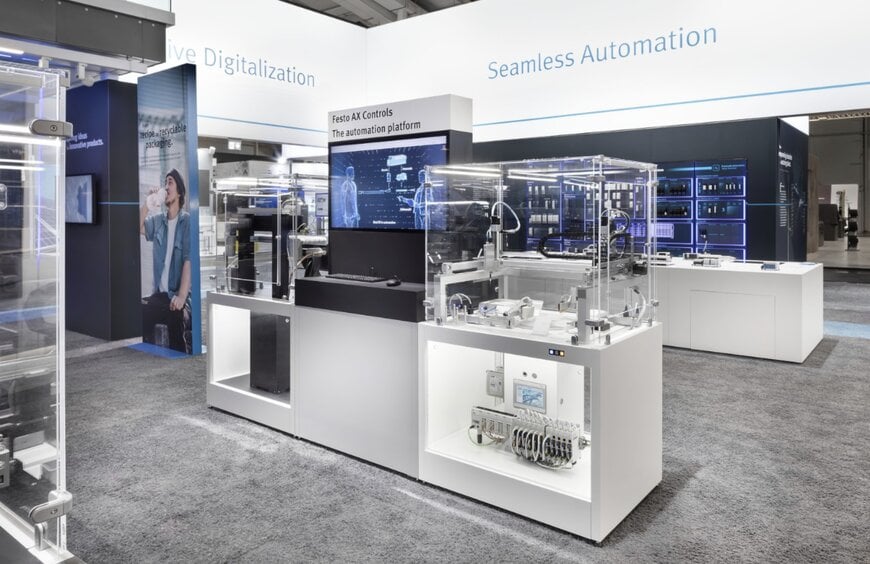
Modern manufacturing systems increasingly combine pneumatic and electric motion technologies with digital connectivity to manage complex automation environments. In this context, Festo is presenting its Seamless Automation approach for integrated motion and control systems at Hannover Messe 2026 (20 - 24 April) in Hanover, Germany, at Hall 13, Stand C17.
Connecting electrics, pneumatics, and software in a single automation architecture
Industrial production lines often combine multiple motion technologies, including electric drives, pneumatic actuators, sensors, and control systems. Integrating these technologies typically requires coordination across hardware platforms, communication protocols, and engineering tools.
Festo’s Seamless Automation concept brings these components together within a unified industrial automation architecture that integrates electric and pneumatic motion systems with software and AI-based functions. The system architecture connects components across different technologies and suppliers, allowing information to move continuously from individual devices to higher-level control systems.
This architecture relies on open connectivity, allowing components from Festo and third-party suppliers to exchange operational data within the same automation environment. Continuous data flow between field devices and control systems supports monitoring, configuration, and operational adjustments across the production system.
The approach reflects the broader transition toward connected production environments, where machine components and control systems are integrated through shared data structures and communication interfaces.
Open architecture supports consistent data exchange across systems
A key element of the approach is an open system architecture designed to maintain consistent communication across automation components. Standardized communication protocols and compatible system structures allow devices, data sources, and hardware modules to interact within the same framework.
This interoperability is supported through several technical principles, including standardized protocols across multiple technologies, a modular system structure, consistent system design rules, and a common architecture used across different modules.
Within this structure, operational data generated at the device level such as actuator status, sensor signals, or process parameters—can be transmitted directly to higher-level control platforms. These data flows support automation tasks such as system monitoring, process control, and diagnostics.
Digital tools extend automation support from design to maintenance
The automation environment is complemented by the Seamless Digital Experience, which connects engineering and operational phases across the lifecycle of an automation project. The framework supports workflows from system design and configuration through commissioning, operation, and maintenance.
Digital tools enable product selection, system configuration, and programming within the same environment. By maintaining consistent data across these stages, engineering teams can reduce the need for repeated configuration steps or manual data transfer between systems.
For industrial users, this approach can reduce development and programming effort during machine construction and commissioning. Simplified integration between hardware, mechanical systems, and software environments supports faster deployment of automated equipment.
Integration designed for complex motion applications
The concept addresses industrial motion applications that require coordination between electric drives, pneumatic components, sensors, and control platforms. Such applications are common in packaging machinery, assembly systems, material handling equipment, and other automated production lines.
Through open connectivity and standardized system architecture, the automation environment enables components to recognize each other and interact automatically within machines and production systems.
www.festo.com
