
www.industryemea.com
12
'26
Written on Modified on
Engine Control Units Support Flexible Fuel Powertrains
Marelli introduces a new generation of port fuel injection ECUs designed for gasoline, flex fuel and CNG engines in Brazil, India and EMEA.
www.marelli.com
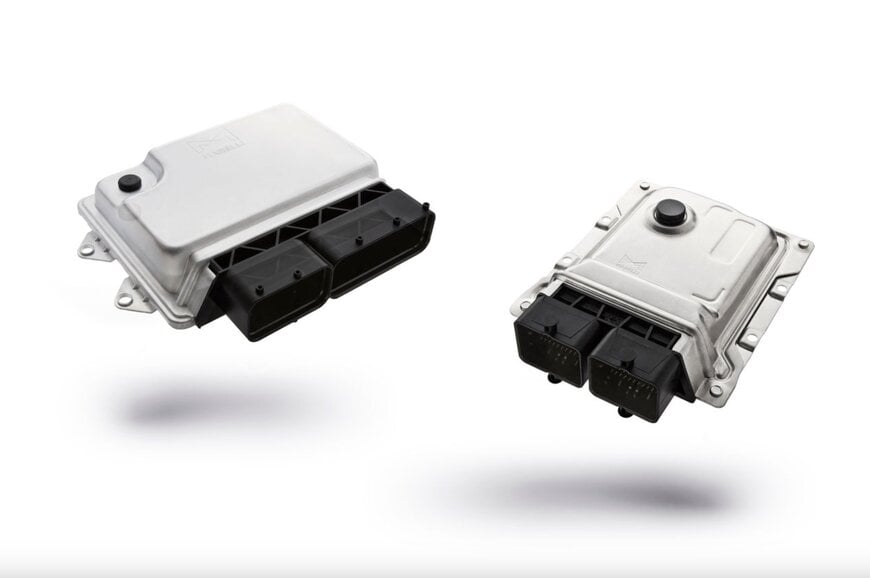
Marelli has launched a new generation of port fuel injection (PFI) engine control units designed to manage gasoline, flex fuel and compressed natural gas (CNG) powertrains. The electronic control units are intended to support evolving emission regulations and regional vehicle architectures in markets where internal combustion engines continue to play a significant role.
The ECUs are targeted primarily at the Brazilian, Indian and EMEA markets and are developed with region-specific configurations for local vehicle manufacturers.
Engine Management for Multiple Fuel Types
The PFI ECUs are designed to control engines operating with a variety of fuel types, including gasoline, ethanol-based flex fuels, methanol blends, synthetic fuels and compressed natural gas.
The system integrates both hardware and software functions required for engine management, including fuel injection control, combustion optimization and emissions monitoring. The architecture supports calibration, homologation processes and manufacturer-specific tuning requirements.
By supporting multiple fuel types within a single control architecture, the ECUs enable vehicle manufacturers to adapt engine platforms to different regional fuel standards.
Microcontroller Platform and Functional Safety
The ECUs are built around the Infineon AURIX TC3x microcontroller platform. This processor supports real-time processing and multitasking functions required for modern engine management systems.
The architecture includes cybersecurity protections such as anti-tuning safeguards and complies with the functional safety requirements of the ISO 26262 standard. The ECU application supports Automotive Safety Integrity Level (ASIL) B/C, while the microcontroller platform is capable of ASIL D compliance.
Flexible I/O for Engine Control
The system incorporates a high number of input and output channels to control engine components such as injectors, valves, relays and actuators.
Depending on configuration, the ECU can support up to eight gasoline injector drivers and four CNG injector drivers. Integrated combustion algorithms regulate air-fuel mixtures and engine performance parameters to meet emission standards and efficiency targets.
Diagnostics and Emission Monitoring
The platform also includes advanced diagnostic capabilities. Integrated monitoring functions use wide-range universal exhaust gas oxygen (UEGO) sensors to measure the engine’s air-fuel ratio in real time.
On-board diagnostics compliant with OBD-II standards enable fault detection and maintenance analysis. The system’s expanded I/O architecture allows it to support various gasoline, flex fuel and bi-fuel engine configurations.
Regional Manufacturing Strategy
Each ECU version is designed, validated and manufactured locally for its target market. This approach allows Marelli to adapt the systems to regional vehicle platforms and regulatory requirements while reducing implementation time for automakers.
The platform also supports firmware-over-the-air updates, enabling software improvements and calibration adjustments during the vehicle lifecycle.
Edited by Industrial Journalist, Romila DSilva - Powered by AI
www.marelli.com
