
www.industryemea.com
07
'26
Written on Modified on
D-bore couplings for secure torque transmission on D-profile shafts
Ruland provides D-bore configurations for direct shaft engagement in precision semiconductor, medical, and automation systems requiring high torque reliability.
www.ruland.com
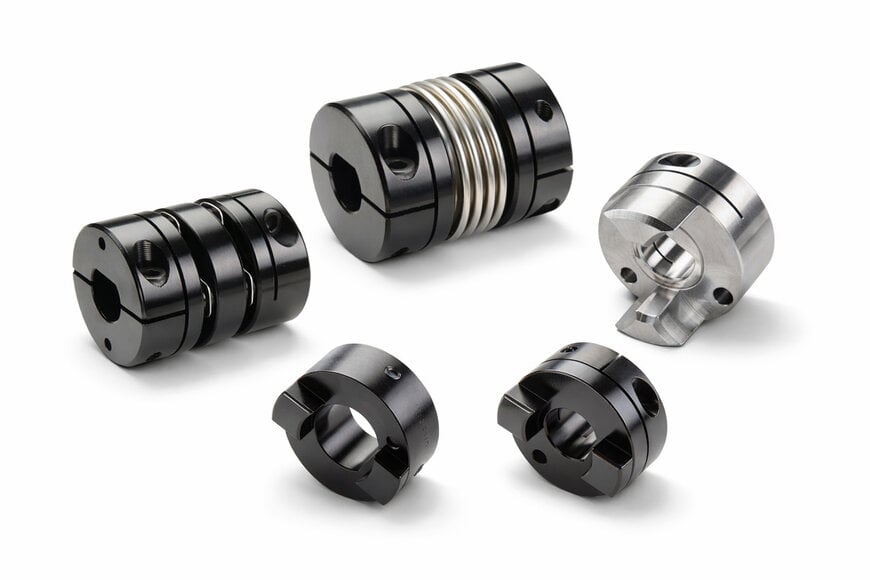
Ruland D-bore couplings prevent slipping by engaging directly with D-shafting in precision motion control applications.
The integration of D-bore couplings into motion-control systems addresses the technical requirement for secure torque transmission on D-profile shafts. These components are utilized in semiconductor equipment, medical devices, and automated warehouse systems where shaft slippage can disrupt precision operations. By mating directly with the flat section of a D-shaft, the coupling provides a mechanical connection that resists rotational movement. This design is specifically engineered for shafts with diameters under 7 mm, where standard keyways are often impractical or unavailable.
Technical versatility and configuration options
Engineers can select from four coupling architectures: disc, jaw, bellows, and oldham. Each style offers specific mechanical properties regarding torsional rigidity, dampening, and misalignment handling. The D-bore geometry removes the reliance on set screw friction alone, which can be inconsistent on small-diameter shafts due to vibration or improper installation seating. The couplings are available in bore sizes ranging from 3 mm to 10 mm and are manufactured from aluminum to maintain low inertia and minimize the operational load on the motor.
Manufacturing standards and material specifications
The components are produced in Marlborough, Massachusetts, using North American bar stock and specialized manufacturing processes. Hub configurations include both clamp and set screw types to accommodate various assembly and fastening preferences. All units meet RoHS3, REACH, and Conflict Minerals compliance standards. By facilitating direct shaft engagement, these couplings eliminate the necessity for secondary shaft machining while enhancing the mechanical reliability of compact motion-control assemblies.
Edited by an industrial journalist, Lekshman Ramdas, with AI assistance.
www.ruland.com
The integration of D-bore couplings into motion-control systems addresses the technical requirement for secure torque transmission on D-profile shafts. These components are utilized in semiconductor equipment, medical devices, and automated warehouse systems where shaft slippage can disrupt precision operations. By mating directly with the flat section of a D-shaft, the coupling provides a mechanical connection that resists rotational movement. This design is specifically engineered for shafts with diameters under 7 mm, where standard keyways are often impractical or unavailable.
Technical versatility and configuration options
Engineers can select from four coupling architectures: disc, jaw, bellows, and oldham. Each style offers specific mechanical properties regarding torsional rigidity, dampening, and misalignment handling. The D-bore geometry removes the reliance on set screw friction alone, which can be inconsistent on small-diameter shafts due to vibration or improper installation seating. The couplings are available in bore sizes ranging from 3 mm to 10 mm and are manufactured from aluminum to maintain low inertia and minimize the operational load on the motor.
Manufacturing standards and material specifications
The components are produced in Marlborough, Massachusetts, using North American bar stock and specialized manufacturing processes. Hub configurations include both clamp and set screw types to accommodate various assembly and fastening preferences. All units meet RoHS3, REACH, and Conflict Minerals compliance standards. By facilitating direct shaft engagement, these couplings eliminate the necessity for secondary shaft machining while enhancing the mechanical reliability of compact motion-control assemblies.
Edited by an industrial journalist, Lekshman Ramdas, with AI assistance.
www.ruland.com
