
www.industryemea.com
10
'26
Written on Modified on
SABIC Exhibits Specialty Thermoplastics Portfolio at Battery Show Europe
The company is highlighting newly launched LNP THERMOCOMP OFM compounds, which are well-suited for high-power, high-voltage electric drive and power module applications.
www.sabic.com
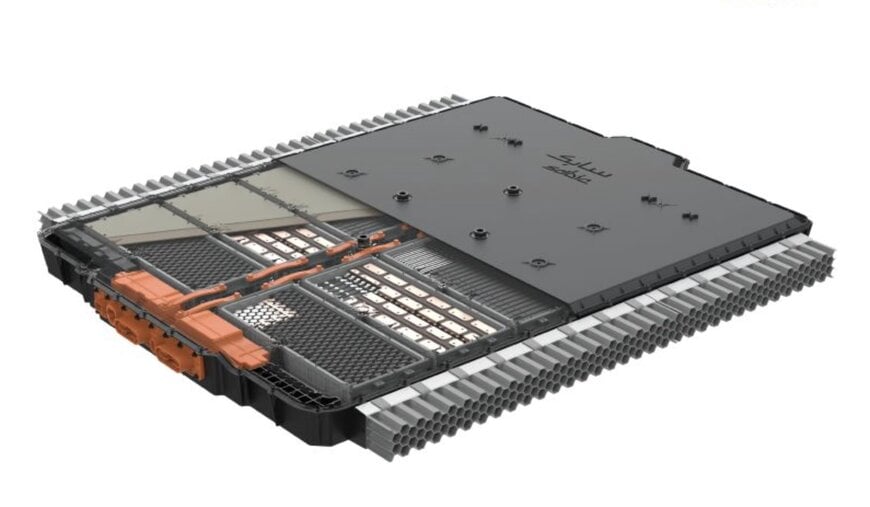
SABIC has introduced its expanding line of engineering thermoplastics at the Battery Show Europe (June 9-11) in Stuttgart, Germany, showcasing material innovations intended for energy storage and high-voltage power electronics applications.
Material Solutions for High-Voltage Systems
The company highlighted its newly launched LNP™ THERMOCOMP™ OFM compounds, which are formulated for high-power, high-voltage electric drive and power module systems. These compounds are based on polyphenylene sulfide (PPS) resin, a polymer selected to expand the company's product range for the electrical vehicle (EV) sector while meeting increasingly rigorous voltage insulation and power density challenges.
Sergi Monros, vice president of SABIC's Specialties Business Unit, noted that manufacturers face persistent industry demands to develop automotive systems that manage higher power outputs, run cooler, and demonstrate greater operational reliability. The high-voltage LNP THERMOCOMP OFM series and adjacent materials are intended to assist design engineers in improving overall system performance, thermal safety, and manufacturing efficiency from the initial charging cycle through to power discharge.
Component Replicas and Technical Demonstrations
To illustrate the application of its materials within physical power architectures, the company displayed a full-size structural replica of an EV battery pack alongside individual component designs. The engineering material assemblies featured:
- A lightweight, structural honeycomb energy absorber utilizing NORYL GTX™ resin.
- A cell retainer and module frame assembly constructed from an LNP KONDUIT™ compound.
- An electrical insulation film extruded from NORYL™ NHP resin, developed to mitigate short circuits and handle fire propagation demands inside battery modules.
Beyond foundational battery components, the technical exhibit included high-voltage capacitors utilizing ELCRES™ HTV150A dielectric film and an EV inverter housing molded from ULTEM™ resin. The implementation of ULTEM resin replaces conventional die-cast and machined metal inverter structures, lowering component weight and supporting part integration via injection molding. Additionally, a high-voltage header featuring LNP KONDUIT compound was presented as a high-efficiency alternative to glass-fiber reinforced PBT or polyamide blends, aiming to maximize heat dissipation to accelerate battery charging and extend component service life.
Additional Context
This section details technical specifications not included in the original news release.
Polyphenylene sulfide (PPS) is a semi-crystalline, high-performance thermoplastic characterized by a rigid aromatic backbone of alternating benzene rings and sulfur atoms. This chemical structure provides high thermal stability, enabling continuous-use temperatures up to 240°C, and inherent flame retardancy without the addition of halogenated additives. In high-power electric drives and insulated gate bipolar transistor (IGBT) power modules, materials require excellent dielectric strength (typically exceeding 20 kV/mm) and a high Comparative Tracking Index (CTI), often reaching CTI PLCs of 0 or 1 (600V or higher). A high CTI prevents electrical tracking—the gradual electrical breakdown of an insulating material's surface due to localized electrical discharges—which is critical under the elevated voltage architectures of modern 800V EV drivetrains.
Thermal management in compact battery packs relies on polymer composites filled with thermally conductive but electrically insulating ceramic particulate networks (such as boron nitride or aluminium oxide). Standard unfilled polymers exhibit very low thermal conductivity, usually around 0.2 W/m·K, which acts as a thermal barrier. Thermally conductive plastics can achieve bulk thermal conductivity values ranging from 1.0 to over 5.0 W/m·K. This enables module frames and high-voltage headers to function as structural heat sinks, conducting localized ohmic heat away from active electrical junctions and battery cells toward the liquid-cooling baseplates, thereby minimizing thermal gradients that accelerate cell degradation.
Edited by Romila DSilva, Induportals Editor, with AI assistance.
Additional Context
This section details technical specifications not included in the original news release.
Polyphenylene sulfide (PPS) is a semi-crystalline, high-performance thermoplastic characterized by a rigid aromatic backbone of alternating benzene rings and sulfur atoms. This chemical structure provides high thermal stability, enabling continuous-use temperatures up to 240°C, and inherent flame retardancy without the addition of halogenated additives. In high-power electric drives and insulated gate bipolar transistor (IGBT) power modules, materials require excellent dielectric strength (typically exceeding 20 kV/mm) and a high Comparative Tracking Index (CTI), often reaching CTI PLCs of 0 or 1 (600V or higher). A high CTI prevents electrical tracking—the gradual electrical breakdown of an insulating material's surface due to localized electrical discharges—which is critical under the elevated voltage architectures of modern 800V EV drivetrains.
Thermal management in compact battery packs relies on polymer composites filled with thermally conductive but electrically insulating ceramic particulate networks (such as boron nitride or aluminium oxide). Standard unfilled polymers exhibit very low thermal conductivity, usually around 0.2 W/m·K, which acts as a thermal barrier. Thermally conductive plastics can achieve bulk thermal conductivity values ranging from 1.0 to over 5.0 W/m·K. This enables module frames and high-voltage headers to function as structural heat sinks, conducting localized ohmic heat away from active electrical junctions and battery cells toward the liquid-cooling baseplates, thereby minimizing thermal gradients that accelerate cell degradation.
Edited by Romila DSilva, Induportals Editor, with AI assistance.
