
Modular Polycarbonate Enclosures for Decentralized Switchgear Deployments
Spelsberg UK details the integration of modular polycarbonate GTi enclosures for distributed switchgear architectures.
www.spelsberg.co.uk
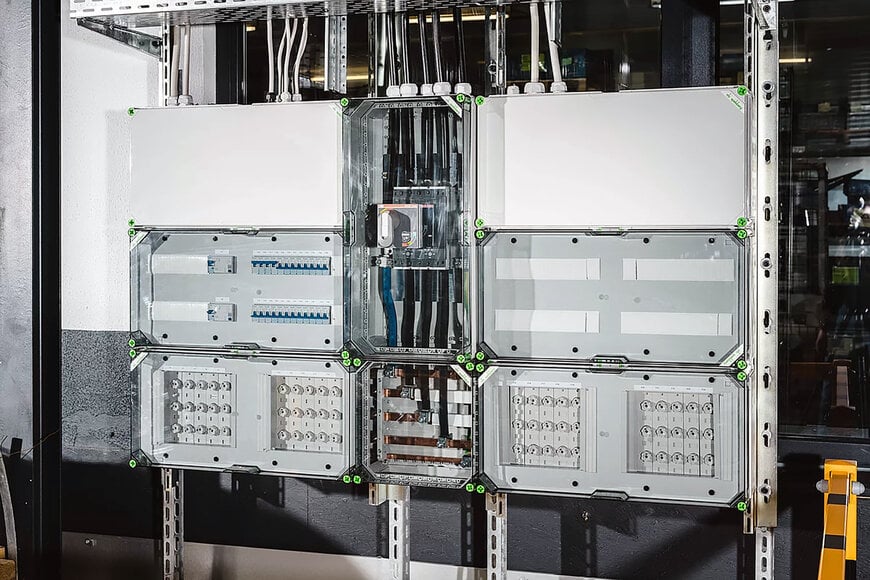
Decentralized electrification is pushing switchgear architecture closer to load points and renewable power generation sites. To protect distributed switchgear while ensuring rapid deployment, modular polycarbonate enclosure systems are increasingly utilized to provide standardization, durability, and flexible on-site installation.
Drivers of Decentralized Switchgear
A decentralized approach enhances the speed of diagnostics and maintenance for critical applications, including industrial automation and traffic control systems. By minimizing the required cabling, decentralized systems reduce installation time and costs. Furthermore, the expansion of renewable energy generation requires localized protection near the point of generation. This focus on energy management has increased the demand for localized metering and accessible points of circuit separation. With fewer interdependencies per installation point and lower wiring density, decentralized switchgear modules simplify commissioning, directly addressing skilled labor shortages across the electrical engineering sector.
Polycarbonate Protection and Modularity
Switchgear design requires an external housing capable of protecting both the electrical components and the personnel interacting with them. Installers increasingly utilize high-strength polycarbonate enclosures due to their lightweight properties, impact resistance, and ingress protection. Polycarbonate provides a corrosion-free lifespan, which is critical for switchgear installed outdoors or exposed to harsh industrial environments. The primary operational advantage is modularity; a matrix of conjoining enclosures accommodates varying switchgear configurations, allowing the electrical architecture to scale as operational requirements expand.
Tool-Free Assembly and Installation
The Spelsberg GTi ISO insulated distribution box is engineered specifically for switchgear based around an open-housing architecture. These enclosures feature a base with upright corner angles that support open walls, allowing multiple units to be secured together using a plug-in, tool-free process. Internal components and wiring can be routed through adjoining housings, while any unused openings are sealed with panels to maintain IP ratings and mechanical integrity. A variety of flanges accommodate different cable entry and exit sizes, eliminating the need to physically knock out walls or drill custom entry points on-site.
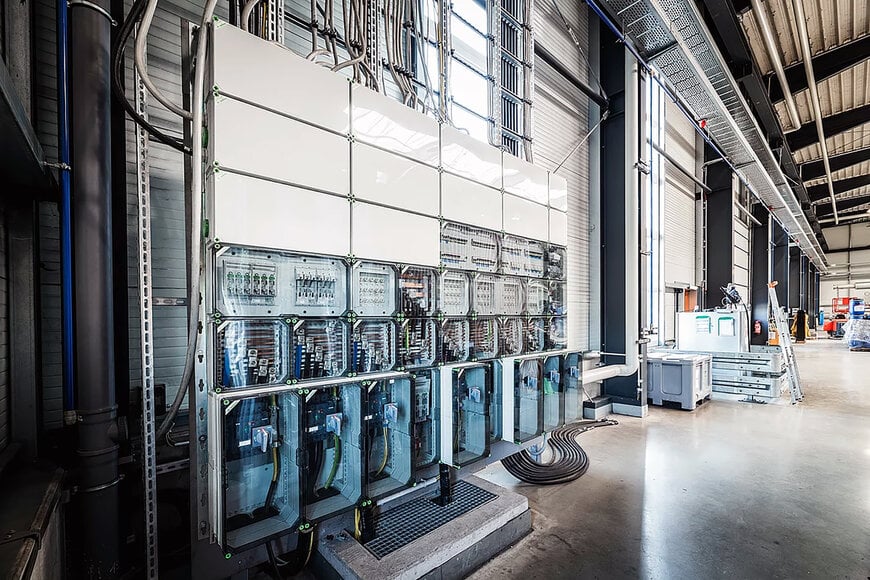
Standardized Internal Architecture
The modular system standardizes the internal architecture and includes supporting equipment such as busbars and mounting plates. This standardization allows electrical installers to reuse layouts across multiple enclosures, utilizing busbars to minimize complex point-to-point wiring. For off-site switchgear builders, the precise alignment of adjacent units and predefined coupling points for busbars convert the project engineering process into a repeatable assembly line. This approach streamlines testing, fault detection, and eventual field deployment. Spelsberg supports this workflow by providing custom assembly services, including CNC customization and the fitting of circuit breakers and contactors.
Additional Context: This section details technical specifications not included in the original article
In low-voltage switchgear design, the use of insulated distribution boxes (such as the GTi ISO series) is critical for achieving Class II electrical insulation (double or reinforced insulation), eliminating the need for a protective earth ground connection to the enclosure itself. This provides a significant safety advantage in outdoor or wet environments where earth grounding may be compromised. Furthermore, polycarbonate (PC) offers superior UV resistance and a higher impact strength (often rated up to IK08 or IK09) compared to standard ABS plastic, ensuring the enclosure will not become brittle or shatter under mechanical stress or long-term sunlight exposure.
Edited by Lekshman Ramdas, Induportals editor – adapted by AI.
www.spelsberg.com
