
1.27 mm Pitch Board Connectors for Industrial Electronics
TE Connectivity introduces the AMP SMC essential connector series for board-to-board applications.
www.te.com
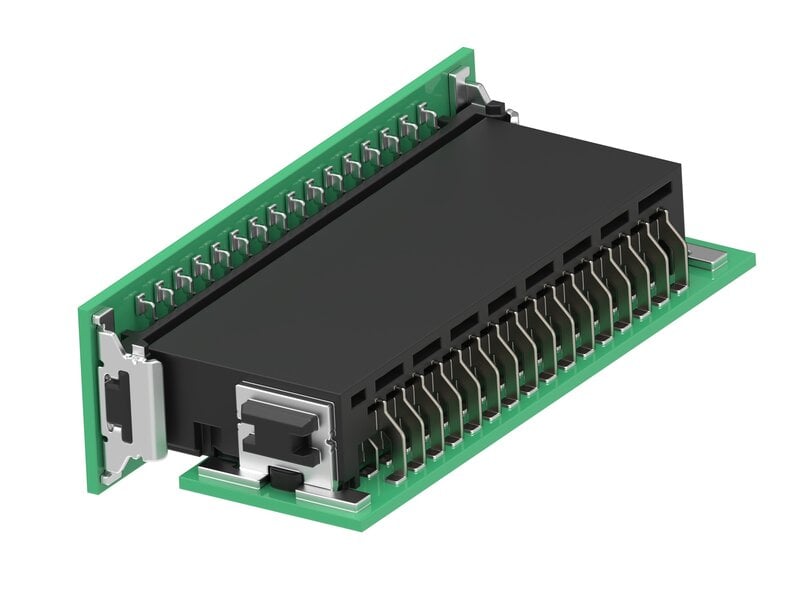
TE expands its current fine pitch portfolio with a connector featuring a 1.27 mm pitch.
TE Connectivity has expanded its 1.27 mm pitch board-connector portfolio with the introduction of the AMP SMC essential connector series. Developed as an optimized solution for standard industrial applications, these interconnects provide various configurations to tailor board-to-board and board-to-wire system layouts.
Performance Specifications and Classifications
The AMP SMC essential connector series is engineered to fulfill standard electronic hardware requirements without the added cost of extreme environmental hardening. The electromechanical specifications of the series include:
- Current-Carrying Capacity: Supports up to 1.7 A per contact.
- Thermal Endurance: Operates reliably within a temperature range up to 125 °C.
- Mechanical Stability: Satisfies vibration and shock requirements compliant with the IEC 60603 Class 2 standard.
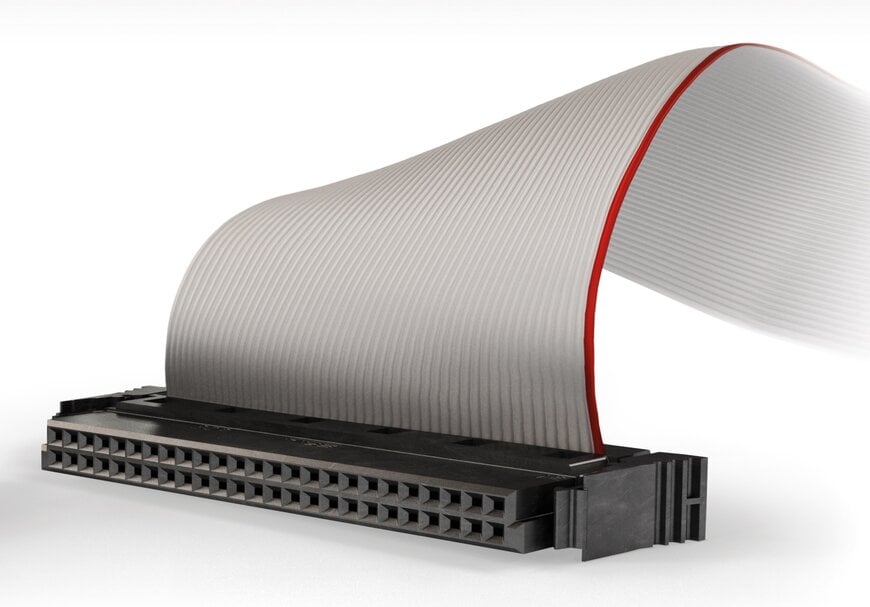
Various variants give users broad design freedom, e.g., for flat cables as well as coplanar and mezzanine configurations.
This series complements the established ERNI SMC connector line, which also shares the 1.27 mm pitch footprint. While the new AMP SMC series covers standard operational envelopes, the ERNI SMC series remains designated for highly demanding, harsh environments, fulfilling tougher IEC 60603 Class 1 standards for shock, vibration, and higher mechanical mating cycles.
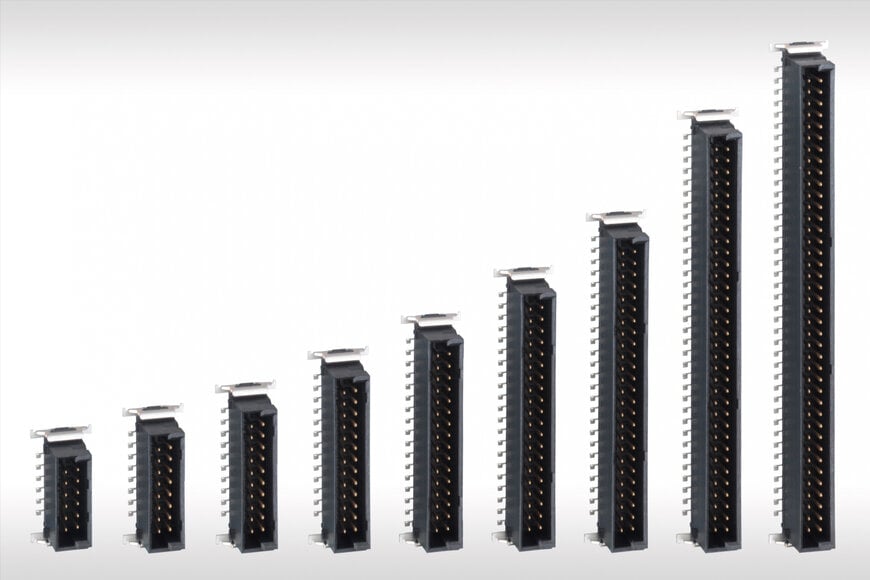
Design flexibility due to various configurations, such as different pin counts, heights and orientations.
Mechanical Design and Assembly Integration
Both the AMP SMC essential and ERNI SMC product lines incorporate specific mechanical design features to secure signal integrity and streamline high-volume production assembly:
- Contact Architecture: Double-sided spring contacts ensure high contact reliability and continuous normal force under operational stress.
- Structural Reinforcement: Integrated locating pegs secure the housing to the printed circuit board (PCB) to increase mechanical strength against shear forces.
Mating Alignment: Built-in polarization preventing incorrect orientation during coupling, combined with geometric lead-in chamfers. These chamfers provide a high misalignment tolerance of ±0.7 mm, enabling reliable blind mating execution in confined or visually obstructed installation areas.
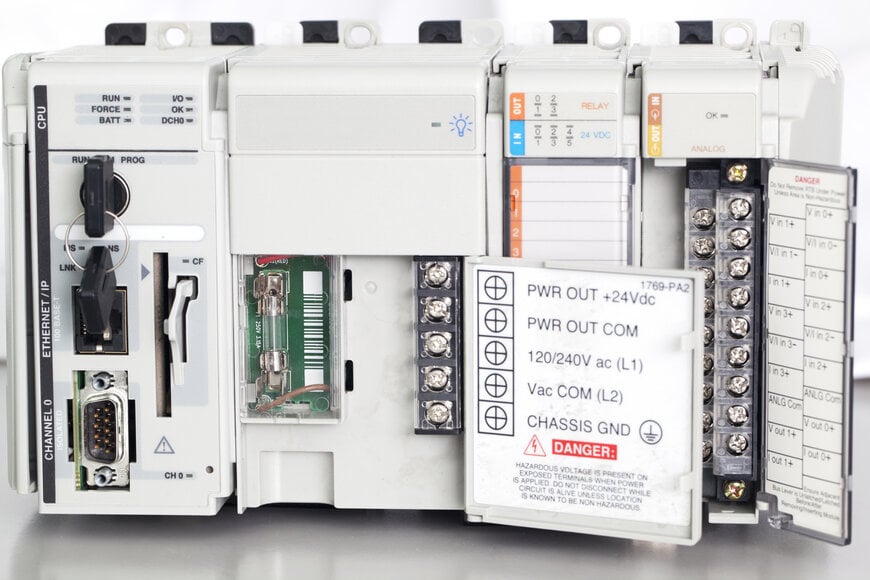
The latest AMP SMC essential connectors serve as an interface for connecting sensors and drives in industry, especially in cabinets, controls and robotics.
Additional Context: This section details technical specifications and physics not included in the original announcement
In high-density PCB layouts, transitioning to a 1.27 mm (0.050 inch) pitch effectively doubles the pin density compared to traditional 2.54 mm headers, allowing more signal pathways in a reduced mechanical footprint. However, minimizing contact spacing requires managing constraints regarding electrical clearance and creepage distances to prevent dielectric breakdown or arcing between adjacent pins.
The distinction between IEC 60603 Class 1 and Class 2 classifications centers on the thickness of the contact plating and the resulting lifecycle durability. Class 1 connectors typically utilize a thicker gold layer over a nickel underplate, qualifying them for up to 500 mating cycles while resisting fretting corrosion in high-vibration aerospace or heavy industrial environments. Class 2 connectors are specified for approximately 400 mating cycles, optimizing material costs for standard industrial control systems where the hardware is infrequently disconnected. Additionally, the double-sided spring contacts are critical for maintaining uniform hertzian contact pressure; as temperature cycles fluctuate up to 125 °C, the dual-spring geometry dynamically compensates for the thermal expansion and contraction of the housing polymer, preventing microscopic contact separation and subsequent signal jitter.
Edited by Lekshman Ramdas, Induportals editor – adapted by AI.
www.te.com
