
www.industryemea.com
06
'26
Written on Modified on
Pilot Infrastructure Accelerates Biomanufacturing Scale-Up
GEA collaborates with industry partners to implement a pilot-scale biomanufacturing testing facility, facilitating the transition from laboratory biotechnology to industrial food and ingredient production.
www.gea.com
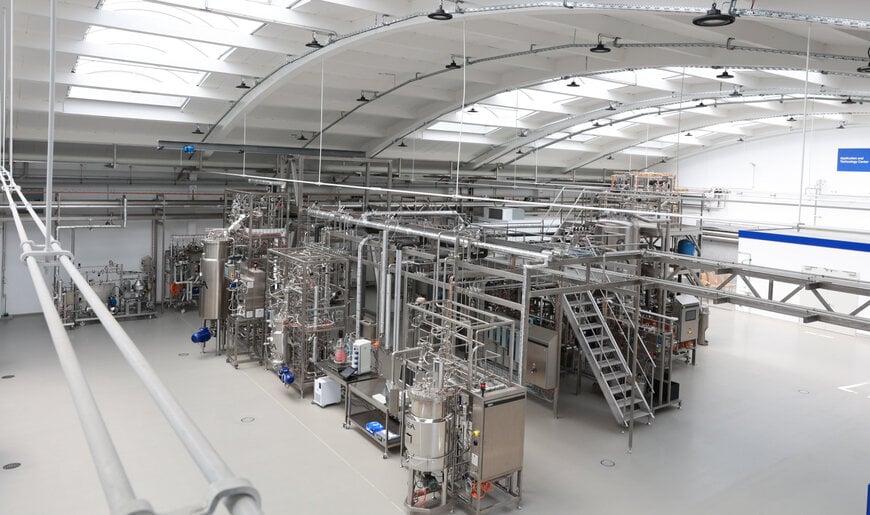
GEA is collaborating with the Biotechnology Fermentation Factory, Solar Foods, and other industry partners to operate a process testing infrastructure in Sarstedt, Germany. The cooperation utilizes pilot-scale bioreactors and separation systems to scale up precision fermentation and cell cultivation processes for the food, feed, and healthcare sectors.
Target Industries and Application Areas
The primary application areas for this pilot infrastructure include precision fermentation and biomanufacturing within the alternative protein, food ingredient, and healthcare sectors. Concrete technical use cases involve the scalable production of functional ingredients such as enzymes, amino acids, vitamins, and non-animal proteins. By testing processes at intermediate volumes, operators achieve measurable improvements in process stability, yield predictability, and overall production efficiency before committing to full-scale industrial plant construction.
Operational Challenges and Partner Roles
The central industrial challenge in biotechnology is the scale-up phase, where laboratory-proven cell lines and organisms often exhibit unpredictable biological and mechanical behaviors when transferred to larger volumes. To address this, GEA provides the engineering architecture and processing equipment, while partners such as the Biotechnology Fermentation Factory and Solar Foods contribute open-access piloting capacity and industrial demonstration expertise across the value chain. This cooperation integrates individual upstream and downstream processing steps into a continuous, viable operational framework, combining mechanical engineering with bioprocess scaling.
Technical Solution and System Architecture
The technical solution consists of an integrated technology center equipped with bioreactors ranging from 50 to 500 liters in capacity. GEA is responsible for the design and provision of the core hardware, which includes the bioreactors, media preparation systems, filtration units, and industrial automation technology. Industry partners utilize this hardware to validate biological parameters and operational logic. The system functions by maintaining sterile, controlled hygienic environments across interconnected upstream and downstream modules, allowing for the precise measurement of product quality and biological stability under simulated industrial conditions.
Deployment and Physical Integration
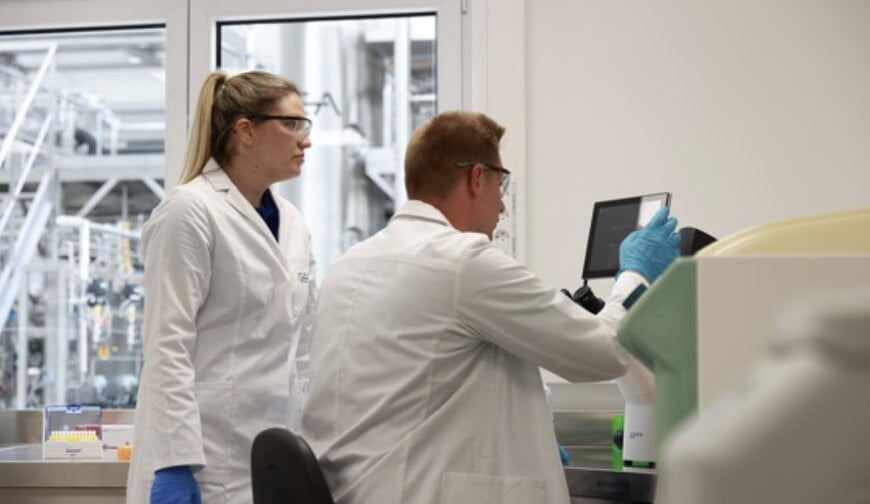
The testing facility is deployed at the GEA engineering site in Sarstedt, Germany, following a EUR 4 million conversion of an existing facility. The implementation phase consolidated 40 pilot technology specialists with 200 existing site personnel focused on liquid processing and automation. This physical integration co-locates the pilot testing infrastructure directly alongside established engineering and industrial plant design teams, establishing a continuous development pathway from initial 50-liter trial batches to full-scale commercial manufacturing setups.
Expected Impact and Strategic Scalability
Testing biomanufacturing processes through this integrated pilot infrastructure yields quantitative data on process consistency and operational cost structures. By identifying unstable cell cultures or inefficient yield ratios early in the development cycle, companies prevent capital expenditure on non-viable commercial plants. Regarding the strategic rationale of the facility, Klaus Stojentin, CEO of the GEA Nutrition Plant Engineering Division, indicated that consolidating pilot infrastructure and engineering expertise provides companies with a factual basis for subsequent industrial application decisions. Furthermore, Frederieke Reiners, Vice President of New Food and Biotech at GEA, noted that early process validation determines operational stability and economic viability, optimizing capital allocation during the scale-up phase.
Edited by Aishwarya Mambet, Induportals Editor, with AI assistance.
www.gea.com
