
www.industryemea.com
23
'26
Written on Modified on
Energy Management System Optimizes Hybrid Temporary Power
Atlas Copco has introduced an upgraded energy management system that improves the control, integration, and scalability of hybrid temporary power installations.
www.atlascopco.com
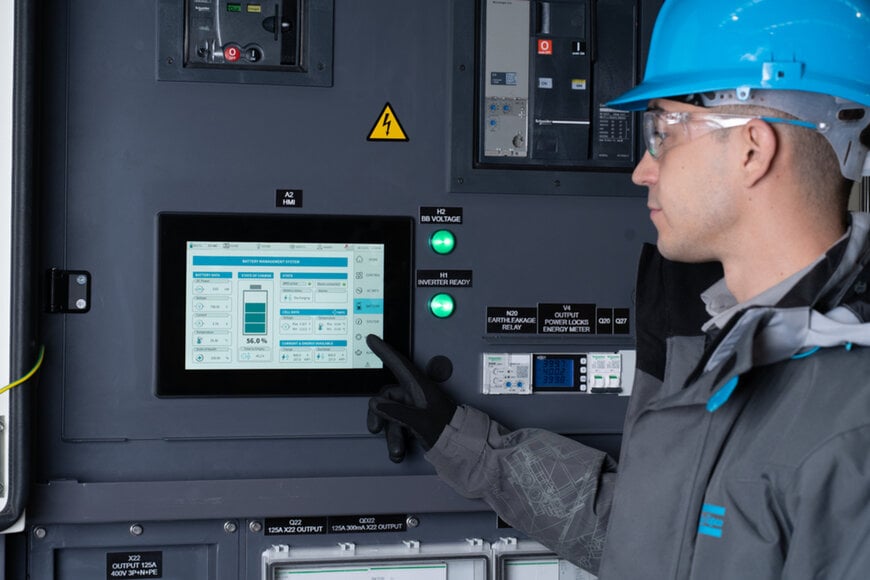
As construction sites, industrial facilities, and infrastructure projects increasingly combine battery storage, diesel generators, renewable energy, and grid connections, effective energy management has become essential for maintaining reliable power while reducing fuel consumption and emissions. Atlas Copco has expanded its portable power portfolio with an upgraded energy management system designed to improve energy distribution, simplify hybrid power management, and support more flexible temporary power operations.
Managing Energy Across Multiple Power Sources
The new controller is integrated into Atlas Copco's battery energy storage systems, including the ZBP and ZBC series, where it serves as the central platform for managing energy generation, storage, and distribution. Through an updated human-machine interface (HMI), operators can monitor system performance, balance electrical loads, and optimize energy consumption across temporary power installations.
Designed for hybrid energy systems, the controller coordinates electricity supplied by diesel generators, battery energy storage, the electrical grid, renewable energy sources, or combinations of these resources. By continuously managing power flows between available energy sources, it helps maintain stable operation while improving overall energy efficiency. The system also connects with Atlas Copco's Fleetlink telematics platform, enabling remote monitoring and fleet management across multiple worksites.
Enhanced Interface Improves Operational Visibility
The latest software release incorporates numerous refinements developed from customer feedback collected over the past year. The redesigned interface provides clearer visualization of operational data, allowing users to monitor key system parameters more efficiently and access relevant information with fewer navigation steps.
Alongside its updated appearance, the controller introduces a range of operational enhancements that simplify both daily operation and system commissioning. Automatic calibration, charging derating, configurable operating profiles, integrated troubleshooting guidance, SD card data logging, rack isolation monitoring, and detailed battery cell temperature reporting are all incorporated into the platform. Dynamic screen layouts automatically adapt to the connected system configuration, providing simplified interfaces for less experienced operators while preserving advanced controls for specialist users.
Greater Compatibility for Modular Power Plants
A major enhancement is the controller's expanded interoperability with third-party generator control systems. In addition to Atlas Copco equipment, the platform can communicate with controllers from DSE, CAT, Cummins, and ComAp, allowing operators to integrate existing generator fleets into hybrid portable power plants without replacing installed assets.
This broader compatibility enables more flexible modular power plant configurations tailored to individual project requirements. Rental companies and contractors can combine battery energy storage with generators from different manufacturers while maintaining centralized energy management through a single control platform.
Supporting Scalable and Remote Energy Management
The controller is designed for decentralized energy systems where multiple power sources operate simultaneously. Its built-in control intelligence continuously monitors equipment status, battery condition, load demand, and overall system health through an intuitive touchscreen interface. Real-time visibility enables operators to respond more quickly to changing load conditions or unexpected power interruptions, helping reduce downtime and maintain reliable power delivery.
Remote connectivity further extends operational flexibility by transmitting performance data to Fleetlink, where entire fleets can be monitored and managed from off-site locations. Because the platform is designed to accommodate additional energy sources and system components as operational requirements evolve, it also provides a scalable foundation for future hybrid power installations and expanding temporary energy infrastructure.
Applications
The energy management system is intended for temporary and distributed power applications where multiple energy sources must operate together efficiently. Typical use cases include construction and infrastructure projects, mining operations, industrial facilities, rental equipment fleets, temporary event power, remote worksites, and hybrid microgrid installations.
Additional Context
This section details technical specifications and competitive benchmarking not included in the original product announcement
The growing adoption of battery energy storage systems in temporary power applications has increased demand for intelligent energy management platforms capable of coordinating multiple energy sources while reducing fuel consumption and operating costs. Many hybrid power systems now combine diesel generators, battery storage, renewable generation, and utility connections, making centralized control increasingly important for achieving reliable and efficient operation.
Atlas Copco's latest controller reflects this industry trend by emphasizing interoperability as well as energy optimization. Support for generator controllers from manufacturers including DSE, CAT, Cummins, and ComAp enables mixed-equipment fleets to be integrated into a single hybrid power system without requiring wholesale equipment replacement. Comparable energy management platforms offered by suppliers such as ComAp and Deep Sea Electronics similarly focus on hybrid microgrid control, remote monitoring, and intelligent load management. Atlas Copco differentiates its approach through native integration with its battery energy storage portfolio, Fleetlink telematics connectivity, and a scalable architecture that can accommodate additional energy sources as operational requirements evolve.
Edited by Sucithra Mani, Induportals editor – adapted by AI.
www.atlascopcogroup.com
