
www.industryemea.com
07
'26
Written on Modified on
Digital pH and ORP Sensors for Demanding Process Environments
Emerson has developed a digital pH and ORP sensor designed to withstand high temperatures and pressures while simplifying site-wide maintenance workflows.
www.emerson.com
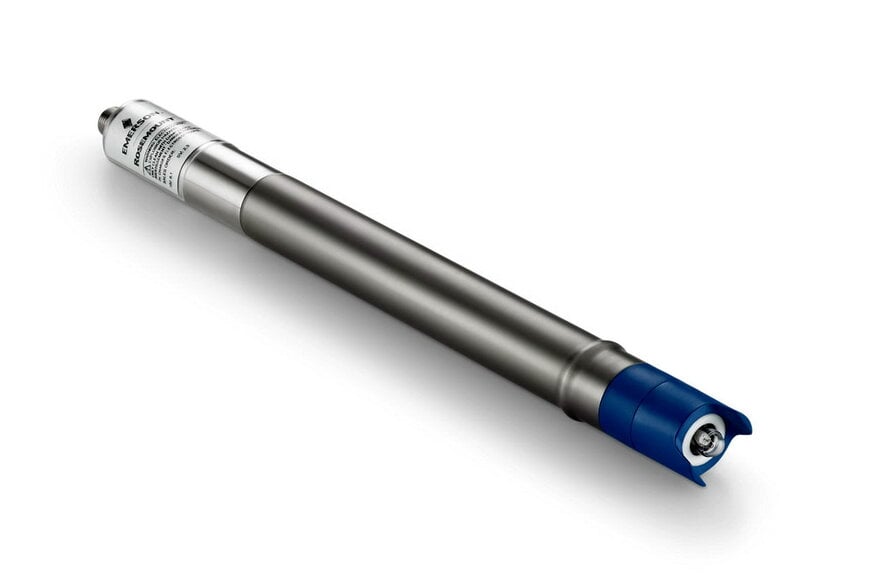
Emerson has introduced the Rosemount 350A digital pH and oxidation-reduction potential sensor to address signal noise and manual wiring complexities in challenging process environments. The system utilizes digital signal conversion and standardized cabling to deliver liquid analysis across high-temperature, high-pressure, and retractable applications in chemical, power, and manufacturing industries.
Digital Signal Conversion and Standardized Connectivity
Conventional analog liquid analysis sensors often suffer from signal attenuation, electrical noise interference, and complex wiring configurations, particularly when installed in demanding process conditions. The Rosemount 350A converts raw pH and oxidation-reduction potential measurements into digital signals directly at the sensor head before transmission. Data is transmitted via a digital Modbus interface using an M12 quick-connect cable assembly. This digital architecture eliminates signal degradation over long cable runs, speeds up measurement stabilization, and prevents common manual wiring mistakes during field commissioning. The standardized digital protocol also allows interoperability across compatible liquid analysis sensors, supporting site-wide standardization and reducing spare parts inventory requirements.
Onboard Calibration Storage and Diagnostic Capabilities
To streamline maintenance routines, the sensor incorporates internal memory that stores calibration parameters, diagnostic history, and sensor health metrics. Operating personnel can perform bench calibrations in controlled laboratory settings prior to field deployment, eliminating the need for complex on-site calibration in hazardous or difficult-to-access field locations. Integrated diagnostic tracking continuously monitors sensor condition and logs operational events, providing contextual data to support proactive maintenance scheduling and root-cause troubleshooting during process deviations.
Mechanical Construction and Process Compatibility
Severe process environments involving elevated temperatures, high pressures, media coating, or sensor poisoning degrade conventional sensing elements and reduce operational lifespan. The sensor is engineered with titanium body options, retractable mounting compatibility, and selectable reference electrolytes tailored to specific process chemistries. These construction choices preserve sensor integrity and maintain measurement stability in aggressive chemical streams.
Additional Context
This section details technical specifications and competitive benchmarking not included in the original product announcement.
Digital pH and oxidation-reduction potential sensors operate in a competitive industrial market alongside established digital platform technologies such as Mettler Toledo ISM and Endress+Hauser Memosens. While standard analog sensors rely on high-impedance millivolt signals that are highly vulnerable to moisture ingress and electromagnetic interference, modern digital sensor architectures convert analog signals to digital data within the sensor body. Utilizing standard Modbus communication over standard M12 industrial connectors enables direct communication with third-party programmable logic controllers and distributed control systems, contrasting with proprietary digital protocols that require dedicated transmitter interfaces.
Edited by Evgeny Churilov, Induportals Media - Adapted by AI.
www.emerson.com
