
www.industryemea.com
11
'26
Written on Modified on
Enemac Presents Corrosion-Resistant Stainless Steel Couplings for Offshore Systems
The shaft and safety couplings ensure reliable torque transmission and overload protection in marine environments.
www.enemac.de
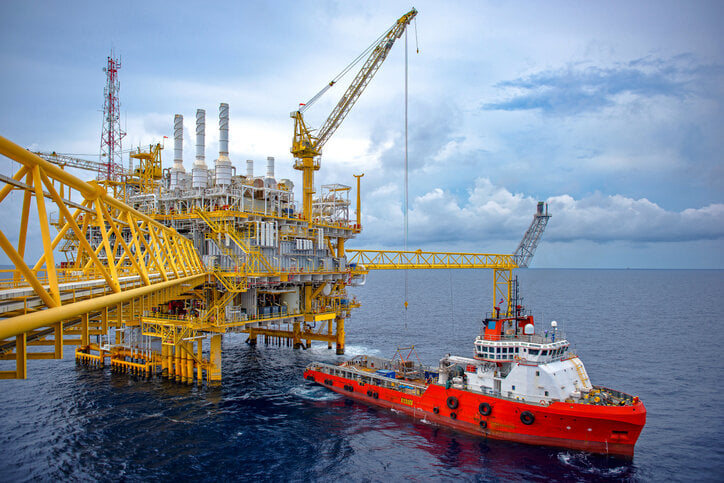
Modern applications in marine research, offshore technology, and the oil and gas industry require drive components that can permanently withstand corrosive conditions and high dynamic loads. Enemac's corrosion-protected stainless steel shaft couplings ensure precise torque transmission and compensate for unavoidable shaft misalignments in these harsh environments. At the same time, the company's mechanical safety couplings protect the entire drivetrain against overloads, significantly reducing unplanned plant downtime and the associated maintenance efforts at sea.
Customized Coupling Technologies for Extreme Conditions
Depending on the specific requirement profile, various coupling technologies are available. The backlash-free EWC and EWR metal bellows couplings are ideal for high-precision servo axes and positioning systems, with the EWR featuring split half-shell hubs for easy, maintenance-friendly radial installation in confined installation spaces. For vibration-intensive applications, the EWJ elastomer coupling effectively dampens oscillations and shock loads.
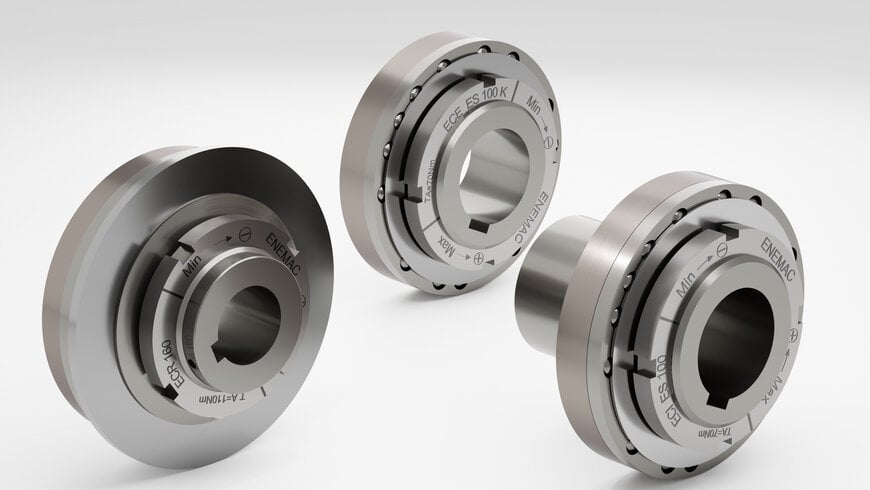
To protect against costly machine damage caused by jams, the ECE_ES, ECI_ES, and ECR series safety couplings—manufactured entirely from stainless steel—disconnect the drivetrain from the output within milliseconds. They are characterized by continuously adjustable disengagement torques and automatic re-engagement once the fault is cleared.
Additional Context: Technological Background and Industry Dynamics
This section provides technological and industry-specific background not explicitly detailed in the original release.
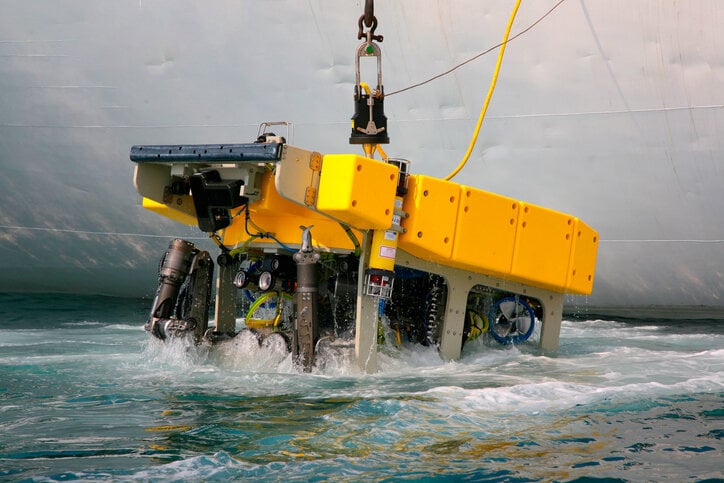
In offshore and subsea applications, saline atmospheres and constant water contact place extreme demands on material resistance. Conventional drive components are highly susceptible to pitting and galvanic corrosion in these environments, which can quickly lead to mechanical failures. The consistent use of high-alloy stainless steel in mechanical couplings is therefore essential to maximize the service life of remotely operated vehicles (ROVs) and automated aquaculture systems. Since offshore maintenance operations are extremely costly and logistically complex, mechanical safety couplings that protect the drivetrain and automatically re-engage after an overload provide a decisive economic advantage over systems requiring manual intervention or component replacement.
Edited by Lekshman Ramdas, Induportals editor – adapted by AI.
www.enemac.com
