
www.industryemea.com
13
'26
Written on Modified on
Off-Grid Illumination Networks for Utility-Scale Power Facilities
SOKOYO and Samsung C&T Corporation collaborated to engineer and integrate decentralized photovoltaic streetlights across industrial sites in the Middle East.
www.sokoyosolar.com
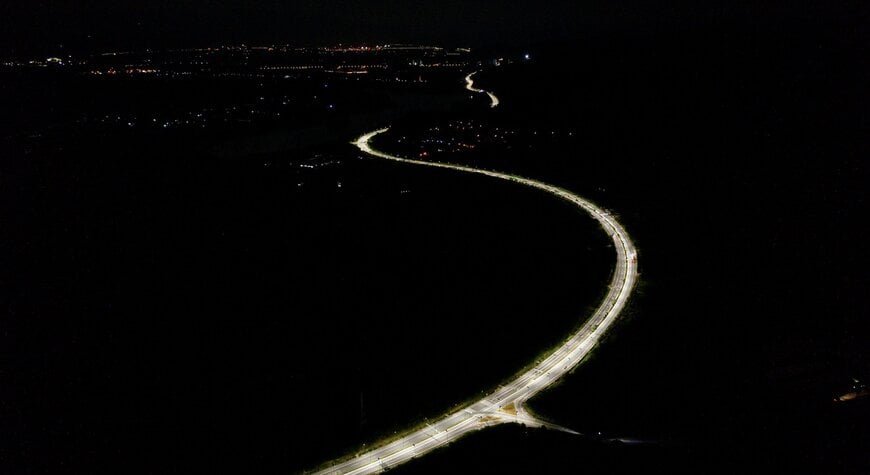
SOKOYO and Samsung C&T Corporation partnered to deploy autonomous photovoltaic illumination for QatarEnergy's primary infrastructure. The collaboration implements decentralized lighting systems designed specifically for high-temperature and sandstorm-prone operational environments.
Project Roles and Engineering Challenges
The project involves integrating 252 split-type solar street lights into the utility-scale solar generation facilities located in Ras Laffan and Masaieed. Samsung C&T Corporation managed the site construction and procurement phases, while SOKOYO functioned as the original equipment manufacturer and system engineer. The primary industrial challenge required implementing a lighting network that operates independently from the main power grid, ensuring continuous illumination without drawing resources from the facility's own energy output or requiring extensive underground cabling.
Technical Architecture and System Components
The deployed network relies on a split-system architecture, separating the photovoltaic panels, battery storage, and LED luminaires to manage thermal loads. Engineers customized the physical arrangement and orientation of the solar panels to facilitate automated dust shedding and reduce manual maintenance cycles. SOKOYO manufactured the primary components, including the LED modules, photovoltaic arrays, and energy storage units. The batteries operate within the International Electrotechnical Commission (IEC) CB scheme parameters, featuring tested resistance to high temperatures, overcharging, mechanical vibration, and short circuits. Furthermore, the LED housings underwent 72-hour salt spray testing to validate corrosion resistance. The assemblies also support Internet of Things integration for remote operational monitoring.
Implementation and Photometric Validation
Implementation across the Ras Laffan and Masaieed sites concluded in July, following extensive environmental and photometrics testing. To validate spatial light distribution prior to field deployment, the system configurations were evaluated in an 1,100-square-meter facility. This testing phase ensured that the optical output achieved sufficient lux levels across simulated four-lane road layouts, eliminating localized dark zones and maintaining uniformity across the site footprint.
Operational Benefits for Industrial Infrastructure
The integration of decentralized lighting within centralized energy facilities eliminates the need for trenching and routing electrical conduits, reducing baseline engineering requirements. By utilizing these customized split-type configurations, the installation maintains continuous operation despite local environmental variables such as thermal stress and sand accumulation.
Edited by Aishwarya Mambet, Induportals Editor, with AI assistance.
www.sokoyosolar.com
