
www.industryemea.com
04
'26
Written on Modified on
Voith SteamBooster Cuts Energy Use at Koehler Paper Mill
The heat recovery system converts 300°C exhaust air into process steam, reducing CO2 emissions by 1,500 tons annually.
voith.com
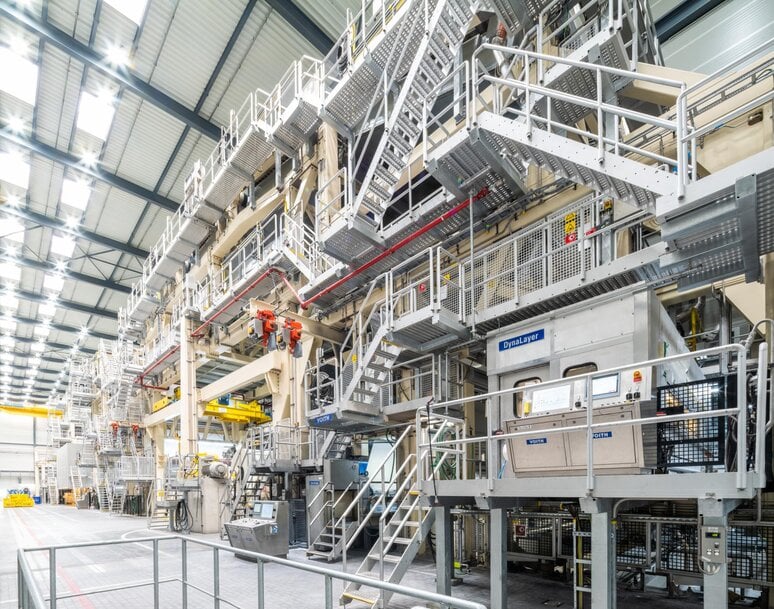
Voith has successfully deployed its SteamBooster heat recovery technology at Koehler Paper’s Kehl mill in Germany. Operational since June 2025, the system serves as the core of a three-stage heat recovery concept installed on the offline coating machine SM 8, which produces machine-glazed specialty papers. By capturing exhaust heat reaching up to 300°C from the machine's non-contact air dryers, the SteamBooster transfers this thermal energy through a specialized heat exchanger to generate approximately one ton of usable process steam per hour from condensate.
This recovered steam is fed directly back into the production cycle, significantly reducing the mill's reliance on baseload boilers. Originally developed and patented for tissue machine hoods, Voith's turnkey solution has now been adapted for any paper production line generating exhaust temperatures above 100°C. Engineered for straightforward retrofitting during standard maintenance shutdowns, the system offers an average payback period of under two years while enabling Koehler Paper to dramatically lower its natural gas consumption and carbon footprint.
Additional Context
This section provides technological and market background not explicitly detailed in the original release.
The pulp and paper industry is one of the most energy-intensive manufacturing sectors globally, with the thermal drying process accounting for the vast majority of a mill's total energy consumption. Traditionally, the immense heat required to evaporate water from the paper web is generated by natural gas boilers, making Scope 1 carbon emissions exceptionally difficult and expensive to abate. Solutions like the SteamBooster represent a critical transition technology toward closed-loop thermal management. By capturing and upgrading waste exhaust heat back into high-value utility steam, operators can create a circular energy flow. This significantly reduces fossil fuel dependency without altering the core papermaking chemistry or requiring the massive electrical grid upgrades that would be necessary for the complete electrification of industrial drying processes.
Edited by Lekshman Ramdas, Induportals editor – adapted by AI.
www.voith.com
