
www.industryemea.com
19
'26
Written on Modified on
COMSOL Multiphysics 2027 simulation software
COMSOL introduces the COMSOL Multiphysics 2027 platform, integrating system-level tools and MCP servers for AI-based workflows.
www.comsol.com
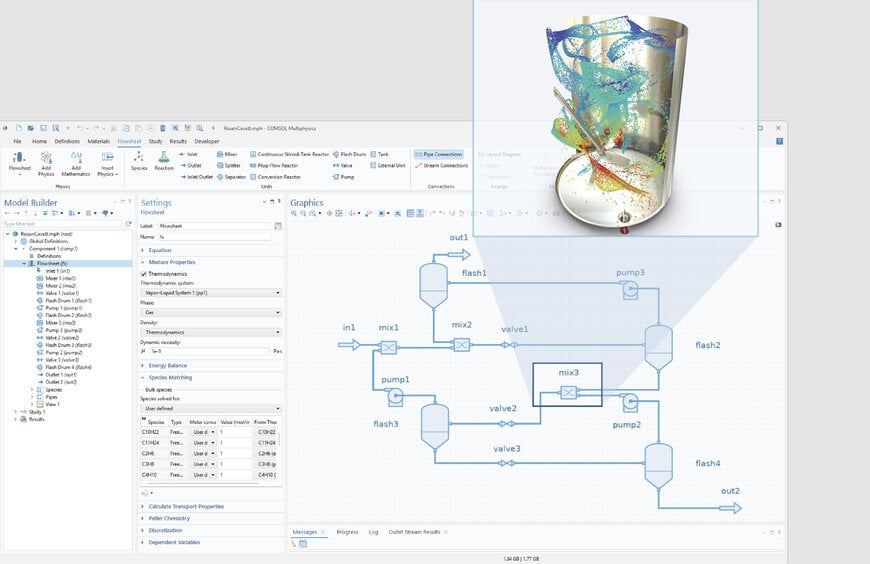
COMSOL has announced the autumn release of the 2027 version of the COMSOL Multiphysics software, introducing advanced architectures for system-level modeling and the integration of artificial intelligence agents. This new iteration is aimed at engineers and researchers in fields such as electromagnetics, structural mechanics, acoustics, and fluid dynamics.
Integration between system models and multiphysics simulation
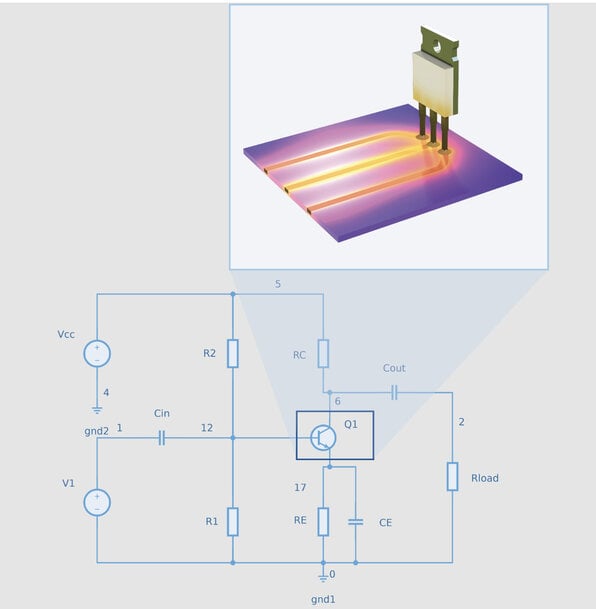
Industrial engineering challenges increasingly require the understanding of large-scale physical interactions, as the behavior of a single unit heavily influences the performance of the entire system. To overcome the typical limitations of isolated simulations, the new COMSOL Systems modeling environment offers a library of nearly 5000 ready-to-use components. Engineers can create electrical circuit schematics, process diagrams, and custom equation-based models, and then link them directly to 1D, 2D, and 3D multiphysics simulations. Svante Littmarck, CEO of COMSOL, describes the engineering need behind the update: 'The 2027 version of COMSOL Multiphysics will allow users to connect detailed multiphysics models with system-level simulations in a single integrated environment, providing a deeper understanding of the interactions that determine the performance of products and processes.'
Interaction with Artificial Intelligence via MCP Server
To optimize computational design, the 2027 version expands AI assistance by integrating the new COMSOL MCP Server. This architecture leverages the Model Context Protocol (MCP) to provide a standardized method of direct communication between the software and external artificial intelligence agents. Through COMSOL's native API, an autonomous agent can perform cyclical tasks such as mesh setup, solver management, and real-time result interpretation, while the human operator supervises and refines the work directly within the COMSOL Desktop environment. Mikael Sterner, development director at COMSOL, frames the impact on the testing cycle: 'This support will pave the way for more ambitious engineering workflows, connecting modeling, simulation, optimization, validation, and reporting in an iterative and goal-oriented process.'
Electromagnetic modeling and cross-platform accessibility
The release also introduces the Electric Motor Module, a dedicated environment for the thermal and electromagnetic modeling of electric machines and generators. The module analyzes structural parameters, excitation circuits, and operating ranges, supporting direct coupling with heat transfer and fluid dynamics. On a computational level, the update implements a time-periodic solver specifically designed to accelerate simulations of microwave systems, plasmas, and MEMS devices. Regarding enterprise usability, the Application Builder module is now natively supported on macOS and Linux operating systems, allowing experts to package complex algorithms into user-friendly application interfaces to be deployed in the field, in the office, or as dashboards for digital twins.
Additional context
This section details the technical specifications and competitive benchmarking not included in the original product announcement
In the CAE (Computer-Aided Engineering) software market for multiphysics simulation, COMSOL Multiphysics competes with high-fidelity platforms such as ANSYS and the Dassault Systèmes SIMULIA ecosystem. While traditional workflows often require separate software packages for one-dimensional (1D) system-level analysis and three-dimensional (3D) finite element simulation, the COMSOL Systems architecture converges both methodologies within the same unified computational engine. Additionally, the native implementation of the Model Context Protocol (MCP) positions the new COMSOL server as an open and standardized interface for agentic workflows (Agentic AI), allowing external artificial intelligence models to directly manipulate the simulation tree nodes via API calls, thus bypassing the structural limitations of closed and pre-programmed chatbots.
Edited by Maria Brueva, Induportals editor – adapted by AI.
www.comsol.com
