
www.industryemea.com
06
'26
Written on Modified on
Veolia secures €200M Middle East desalination contracts
New UAE and Oman projects feature record energy efficiency and smart digital optimization for reverse osmosis systems.
www.veoliawatertechnologies.com
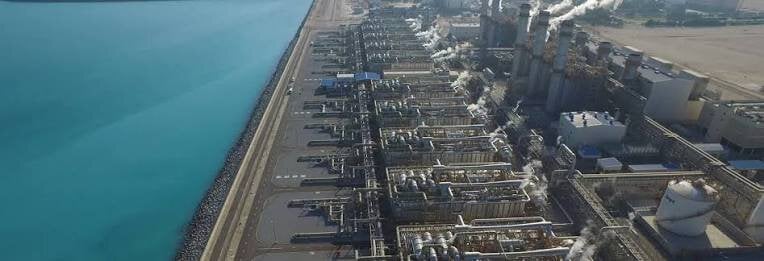
Veolia has strengthened its position as a global leader in water technologies by securing two major desalination contracts in the Middle East valued at nearly €200 million. Encompassing projects in the United Arab Emirates and Oman, the agreements represent a combined production capacity of 490,000 cubic meters per day. The contracts align with Veolia’s strategic ambition to double its globally operated desalination capacity to 1.4 million m³ per day by 2030, leveraging continuous technological innovation to drive down both energy consumption and operational costs.
Record energy efficiency at Al Hamriyah
In the UAE, Veolia has been awarded the design and technology supply contract for the Al Hamriyah desalination plant. Scaled to produce 410,000 m³ of drinking water per day for approximately 1.4 million residents, the facility is designed to set a new global benchmark for energy efficiency in large-scale operations. By optimizing pre-treatment and remineralization processes—incorporating dissolved air flotation (DAF), dual-media pressure filters, and advanced limestone filters—the plant will achieve a record-low energy consumption of just 2.75 kWh per cubic meter of water produced.
Digital optimization and solar integration in Oman
Simultaneously, Veolia has secured a five-year operations and performance optimization contract for the 80,000 m³/day Al Asilah desalination plant in Oman. Serving 200,000 inhabitants, the facility uniquely integrates a dedicated solar farm to diversify its energy mix and decarbonize the water production process. To further drive operational efficiency, Veolia is deploying its proprietary Hubgrade digital solution and Smart Connectors. These AI-enabled platforms provide real-time equipment monitoring and predictive analytics, actively reducing chemical consumption and optimizing the reverse osmosis performance.
Additional Context: SWRO Thermodynamics and Isobaric Energy Recovery
This section details reverse osmosis physics and pre-treatment fluid dynamics not included in the original press release.
In Seawater Reverse Osmosis (SWRO), thermodynamic laws dictate a theoretical minimum energy requirement of approximately 1.06 kWh/m³ simply to overcome the natural osmotic pressure of standard seawater (typically around 35,000 ppm salinity). Achieving a total plant energy consumption of 2.75 kWh/m³, as targeted at Al Hamriyah, represents the bleeding edge of current membrane and hydraulic technology. This extreme efficiency relies heavily on Isobaric Energy Recovery Devices (ERDs), such as rotary pressure exchangers. These devices capture the immense hydraulic energy from the high-pressure brine reject stream and transfer it directly to the incoming raw seawater feed with up to 98% efficiency, drastically reducing the load on the primary high-pressure pumps.
Furthermore, the implementation of Dissolved Air Flotation (DAF) in the pre-treatment phase is a highly critical engineering choice for the Arabian Gulf. The region's waters are highly susceptible to severe algal blooms (red tides) and hydrocarbon contamination. DAF systems work by injecting microscopic air bubbles into the raw feed water; these bubbles adhere to low-density suspended solids and biological matter, floating them to the surface for mechanical skimming. This physical separation prevents devastating biofouling on the delicate polyamide RO membranes, ensuring stable trans-membrane pressure and minimizing the need for harsh chemical cleaning cycles.
Edited by an industrial journalist, Lekshman Ramdas, with AI assistance.
www.veoliawatertechnologies.com
