
AIMPLAS Examines Europe’s Plastics Recycling Challenges at PLASREC
Industry experts discuss regulation, competitiveness, and emerging technologies shaping the future of plastics recycling.
www.aimplas.net
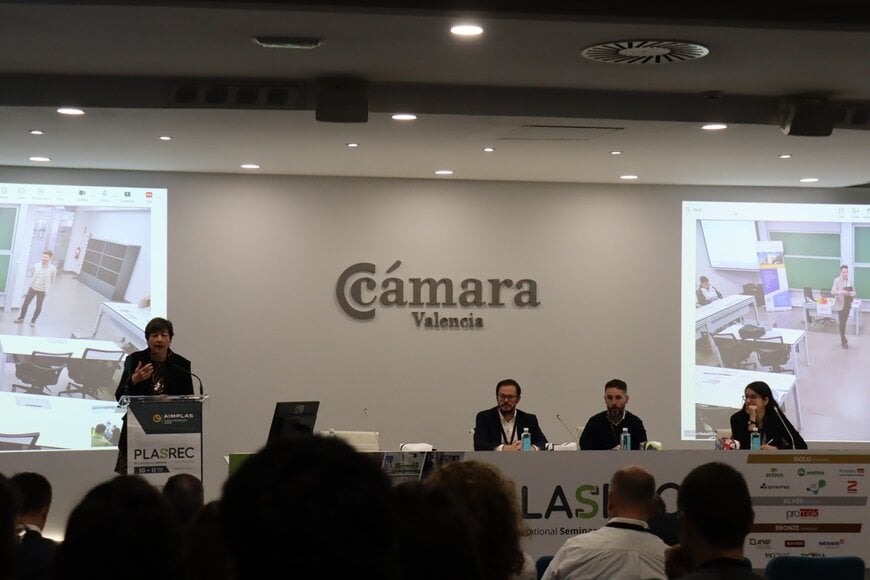
AIMPLAS, the Plastics Technology Centre, brought together more than 100 professionals from across the plastics recycling value chain at the third edition of PLASREC, its International Plastics Recycling Seminar. Held on 10–11 December in Valencia, the event featured over 20 national and international presentations addressing the regulatory, technological, and economic challenges facing plastics recycling in Europe.
The opening session highlighted the growing strategic importance of plastics recycling at a European level. Nicolás Molina of the Spanish Federation for Recovery and Recycling (FER) described recycling as a “geopolitical and strategic issue” for Europe, driven by accelerating regulation and upcoming requirements such as mandatory recycled content in vehicles. He noted that new legislation, including industrial decarbonization and circular economy laws, will significantly increase demands for traceability, classification, and recycled material quality.
Speakers from industry associations warned of a “regulatory tsunami” affecting competitiveness. Óscar Hernández of ANARPLA pointed to stagnation in recycling capacity despite reaching 13 million tonnes, citing high energy costs, competition from virgin plastics, and low-cost imports of recycled materials. Cristina Galán of ANAIP focused on the upcoming Packaging and Packaging Waste Regulation (PPWR), which will make design-for-recycling mandatory and introduce harmonized methods to calculate and verify recycled content, alongside stricter rules for food-contact packaging.
The seminar also examined Europe’s declining plastics competitiveness. Irene Mora of Plastics Europe reported a 12.4% drop in plastics production since 2018, nearly 3,000 company closures since 2022, and the loss of around 35,000 jobs. She emphasized that meeting 2030 and 2050 circularity targets will require improved collection, sorting efficiency, and reinforced traceability.
Technology innovation featured prominently throughout PLASREC. Presentations covered artificial intelligence for waste sorting, computer vision systems for complex waste streams, recycling of synthetic textiles, tyre recycling aligned with the European Green Deal, and emerging solutions such as hydrothermal recycling. Chemical recycling approaches—including pyrolysis, enzymatic depolymerization, and first-of-a-kind industrial projects—were discussed as key enablers for recycling complex and multilayer materials.
The event concluded with cross-sector discussions on meeting recycling targets in textiles, electronics, automotive, and renewable energy applications, underlining the need to better align regulation, technology, and market realities.
PLASREC was supported by a broad group of industry sponsors and partners, reinforcing its role as a key European forum for advancing plastics recycling and circular economy strategies.
www.aimplas.com
