
www.industryemea.com
12
'26
Written on Modified on
Public Fast-Charging Network for Intercity E-Buses
Daimler Buses plans four 600 kW public charging stations at Munich’s Central Bus Station by 2026 to expand Europe’s e-bus charging infrastructure.
www.daimlertruck.com
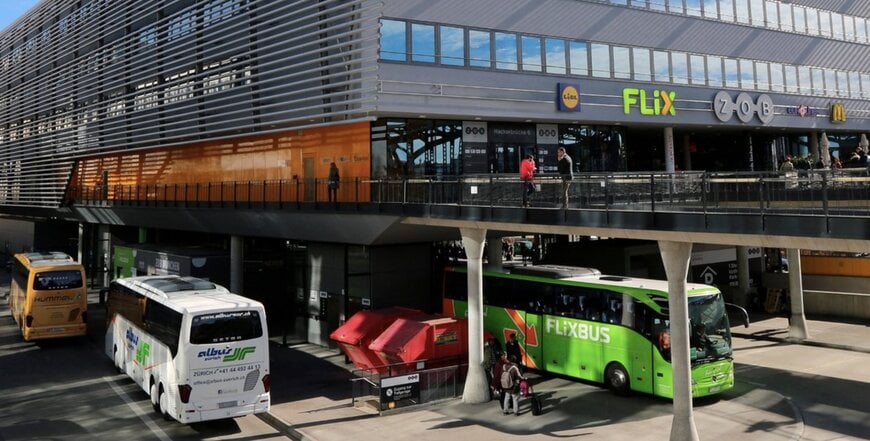
Daimler Buses will install four public high-power charging stations at the Central Bus Station (ZOB) in Munich, Germany, by the end of 2026. The project supports the deployment of electric intercity buses and forms part of a broader strategy to accelerate public charging infrastructure for long-distance and regional e-bus operations.
The agreement was signed with Wealthcap, representing the owner of the Munich ZOB. Implementation, financing, and operation will be managed by Daimler Buses Solutions GmbH, a wholly owned subsidiary of Daimler Buses.
High-Power Charging Integrated into Bus Operations
The planned charging stations will deliver power levels of up to 600 kW, enabling rapid recharging during standard operational dwell times. Charging can occur while passengers board or disembark, tickets are checked, or luggage is handled. This integration eliminates the need for additional charging stops or route deviations.
According to Daimler Buses Solutions GmbH, the objective is to enable electric buses to charge at existing stopping points without altering timetables. The infrastructure will be accessible to buses from all manufacturers and will supply electricity generated from renewable sources.
Two of the four charging stations are scheduled for completion during 2026. Construction activities in the second quarter of 2026 will include civil engineering works, installation of high-voltage cabling, transformer integration, and foundation construction. Commissioning is planned for later in the year.
Supporting Electric Intercity Transport
The charging initiative aligns with the market introduction of the Mercedes-Benz eIntouro, Daimler Buses’ electric intercity bus, available for order since spring 2025. First customer deliveries are scheduled for the second half of 2026.
Intercity and regional routes present distinct operational requirements compared with urban bus services, including longer distances and limited charging infrastructure. High-power charging at central transport hubs such as the Munich ZOB addresses these constraints by enabling opportunity charging within existing operational schedules.
Daimler Buses had previously announced public e-bus charging stations in October 2025 as part of a pilot project in Cologne. The company intends to expand the model to other highly frequented tourist and transport locations across Europe.
Infrastructure Development and Operating Model
Daimler Buses Solutions GmbH will finance and operate the Munich charging stations. Refinancing will occur through electricity sales. After commissioning, the subsidiary will assume responsibility for maintenance and technical operations with its own service teams.
The model offers property owners turnkey charging infrastructure without direct capital investment. Daimler Buses Solutions collaborates with experienced construction partners for civil and electrical works, including grid connection and transformer installation.
www.daimlertruck.com
