
www.industryemea.com
27
'26
Written on Modified on
Satellite Quantum Communication for Global Data Security
Toshiba develops a satellite-based quantum key distribution system to enable secure intercontinental communication beyond fiber network limits.
www.global.toshiba
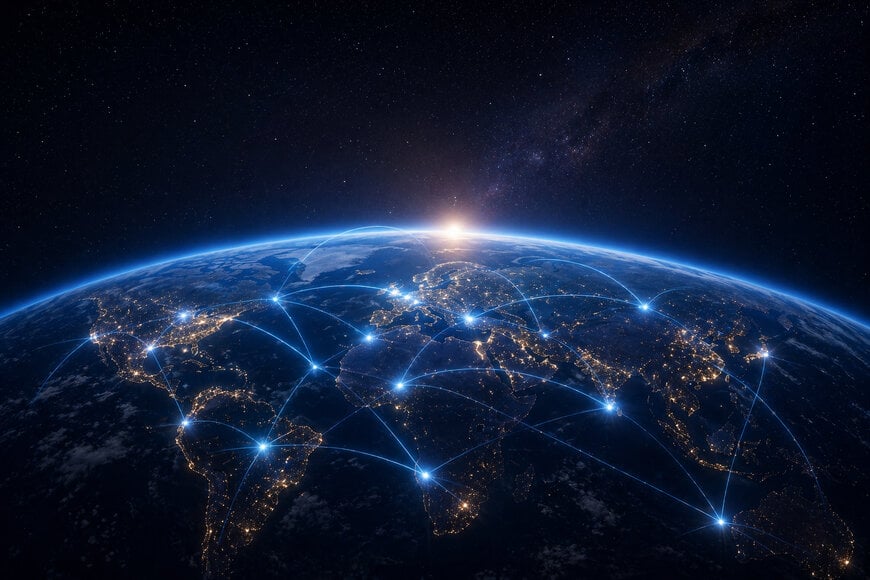
Satellite-based quantum cryptographic communication is being developed to address the limitations of terrestrial networks in securing data against future quantum computing threats. The approach combines quantum key distribution (QKD) with space-based infrastructure to enable long-distance secure communication across continents.
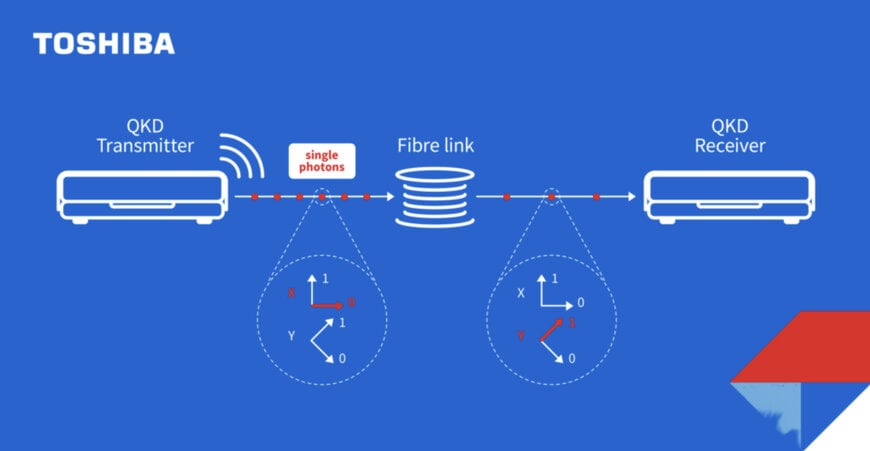
Schematic Diagram of Fiber-optic QKD
Overcoming Distance Limits in Quantum Networks
QKD enables secure key exchange by encoding cryptographic information onto individual photons. Any interception attempt alters the quantum state, making eavesdropping detectable. This property positions QKD as a core component of post-quantum cybersecurity architectures.
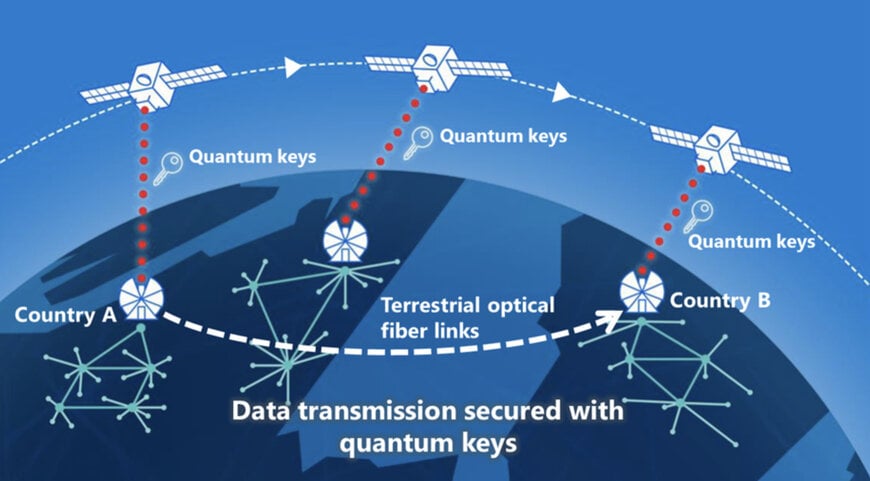
Schematic Diagram of Satellite QKD
However, fiber-based QKD systems face exponential signal attenuation with distance. Because quantum states cannot be amplified without loss of integrity, practical transmission distances are typically limited to a few hundred kilometers. This creates a structural barrier for intercontinental quantum communication using existing fiber-optic infrastructure.
Satellite-based QKD addresses this constraint by transmitting quantum states through free space, where signal loss is significantly lower. Low-Earth orbit (LEO) satellites can distribute keys between distant ground stations, enabling secure links over thousands of kilometers without requiring quantum repeaters.
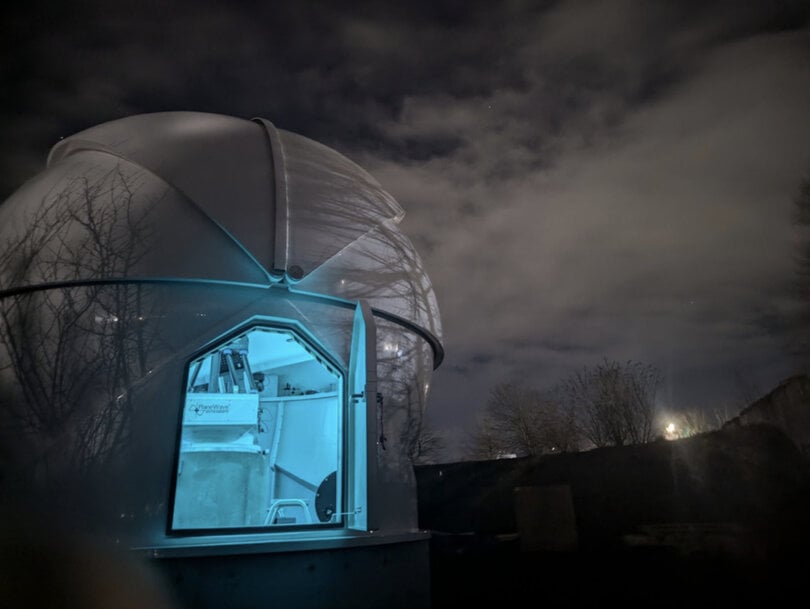
The optical ground station of Heriot-Watt University, where the team carried out the demonstration.
System Design for Space-Based Deployment
The QKD system developed by Toshiba is engineered for satellite deployment with constraints on size, weight, and transmission efficiency. The transmitter unit measures approximately 20 × 10 × 10 cm and weighs 1.6 kg, allowing integration into LEO satellite payloads.
The system operates at a transmission rate of 1 GHz, enabling the generation of sufficient quantum keys within the limited time window of a satellite pass over a ground station. This parameter is critical, as communication opportunities are constrained by orbital dynamics.
In addition to free-space transmission, the system supports interoperability with terrestrial QKD networks. Demonstrations confirmed compatibility with fiber-based systems using ETSI-defined protocols, enabling hybrid architectures that combine satellite and ground-based infrastructure.
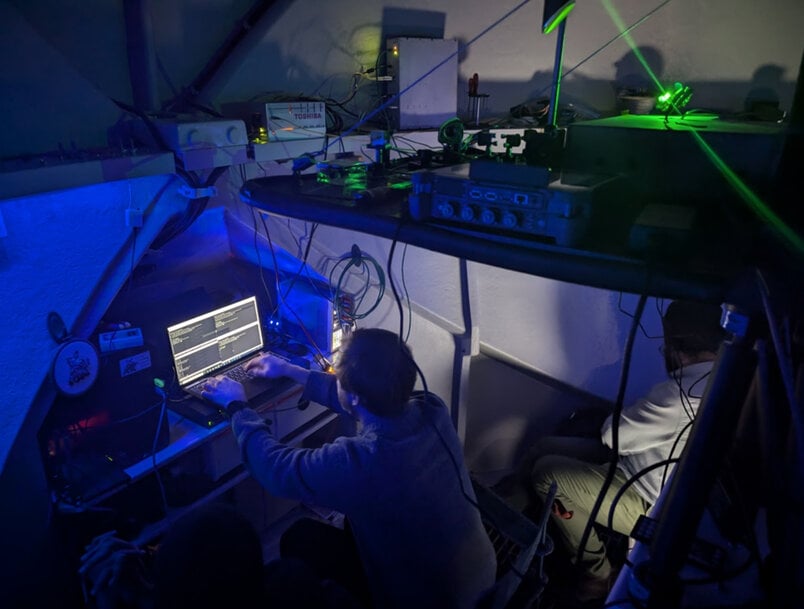
The team in place in the optical ground station, conducting the demonstration.
Ground Demonstration Under Real Conditions
Validation was conducted at an optical ground station at Heriot-Watt University in Edinburgh. The system transmitted quantum states through atmospheric conditions, including turbulence and environmental noise, simulating operational scenarios for satellite communication.
The demonstration verified end-to-end functionality: quantum keys generated via free-space transmission were successfully reconstructed and used for encryption in a fiber-linked system. This confirmed that satellite-generated keys can be integrated into existing secure communication frameworks.
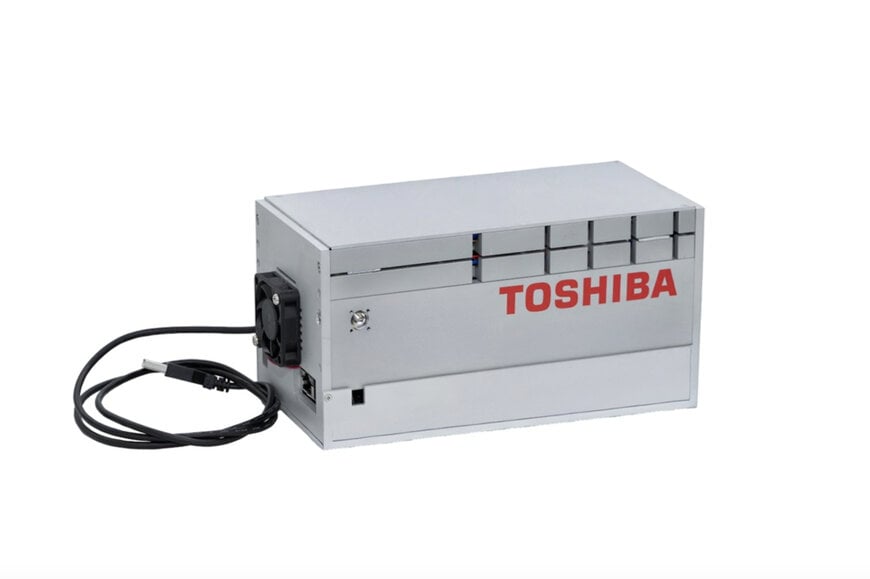
Toshiba’s world-leading compact, light QKD transmitter for satellite deployment.
Multidisciplinary Development Environment
The system development is based on long-term research in photonics, optical systems, and network engineering. Satellite QKD requires integration across multiple domains, including laser control, optical alignment, signal processing, and communication protocols.
Research conducted at the Cambridge-based laboratory leveraged a multidisciplinary approach, combining expertise in chip design, software, and quantum optics. This integration supports the transition from laboratory-scale experiments to deployable infrastructure.
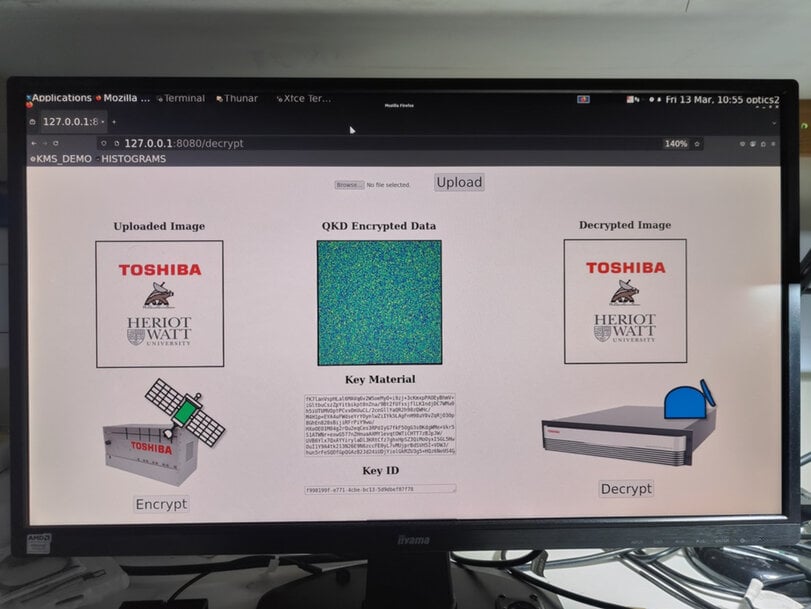
The team decrypted a logo image using quantum keys sent via free space and optical fiber, demonstrating interoperability with terrestrial quantum networks.
Implications for Secure Digital Infrastructure
Target applications include financial systems, critical infrastructure, healthcare networks, and government communications, where long-distance data security is essential. Satellite QKD enables secure key exchange between geographically separated networks, forming the basis of a global quantum communication layer.
By extending QKD beyond terrestrial limits, the system contributes to the development of resilient digital infrastructure capable of withstanding future computational threats. The approach supports the creation of interconnected quantum networks, where satellite links act as secure bridges between regional systems.
Future development phases include in-orbit validation and performance optimization under varying environmental conditions, including temperature extremes and radiation exposure. These steps are required to transition from ground-based demonstrations to operational deployment in space.
Edited by Natania Lyngdoh, Induportals Editor — Adapted by AI.
www.toshiba-clip.com
