
www.industryemea.com
30
'26
Written on Modified on
Hitachi Energy Secures Elmed Project Interconnection Contract
Terna and STEG have awarded Hitachi Energy a €770 million contract to construct converter stations for the Italy-Tunisia Elmed interconnection project.
www.hitachi.com
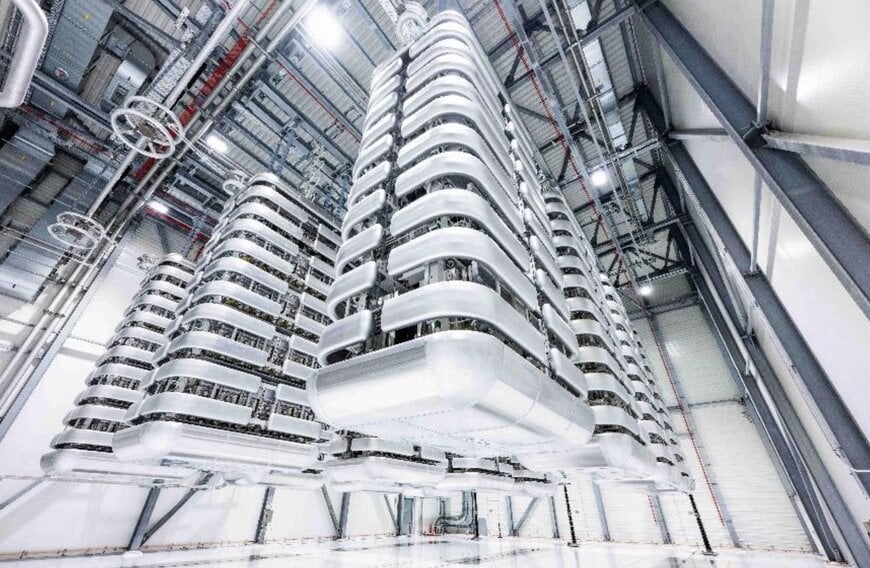
Terna, the manager of the Italian national electricity transmission grid, and STEG, the Tunisian electricity and gas grid operator, have finalized a contract worth approximately €770 million with Hitachi Energy for the construction of converter stations for the Elmed project. The infrastructure establishes the first high-voltage direct current (HVDC) submarine link connecting Europe and North Africa between Italy and Tunisia, completing the procurement process for the transmission link.
Technical Specifications and Infrastructure Scope
The interconnection will utilize high-voltage direct current technology to deliver a transmission capacity of 600 MW. The link spans approximately 220 km, configured primarily as a submarine cable that descends to a maximum depth of around 800 meters within the Strait of Sicily.
Hitachi Energy will supply the complete HVDC solution, comprising converter valves, the MACH™ digital control platform, power transformers, and high-voltage switchgear. The company's scope of work also encompasses system studies, design, engineering, supply, installation supervision, and technical commissioning.
Consortium Roles and Construction Locations
The converter stations will be built at two distinct geographical endpoints: Partanna in the province of Trapani, Italy, and Mlaabi in the Menel Temime region of Tunisia. To execute the installations, a consortium framework has been established with specialized engineering companies. D’Agostino Costruzioni Generali S.p.A. will manage civil works, electromechanical installations, and auxiliary systems for the Partanna station in Italy. Concurrently, Orascom Construction SAE will perform the corresponding civil and electromechanical works for the Mlaabi facility in Tunisia.
Strategic and Regulatory Framework
The procurement process was initiated in 2023 through a joint tender published by Terna and STEG in the Official Journal of the European Union. The interconnection is integrated into the Mattei Plan for Africa, an infrastructure framework designed to strengthen energy, economic, and geopolitical partnerships between Europe and African nations.
The installation aligns with Euro-Mediterranean electricity system interoperability goals and supports the energy transition targets outlined in the Integrated National Energy and Climate Plan (PNIEC). The project is supported by Italian institutions, specifically the Presidency of the Council of Ministers, and Tunisian authorities focused on regional market integration. Additionally, the asset supports the European Commission’s REPowerEU plan to diversify energy resources and reduce fossil fuel dependency.
Financial Structure and Institutional Backing
The comprehensive investment required for the cross-border electricity link totals €1,420 million. The European Commission has allocated €307 million of this budget through the Connecting Europe Facility (CEF) grant program, which is managed by CINEA. This allocation represents the initial instance where the European Union has provided funding for an infrastructure project that includes a non-member nation. On the Tunisian side, the development receives additional capital support from international financial institutions, including the World Bank, the European Investment Bank, the European Bank for Reconstruction and Development, and KfW.
Edited by Romila DSilva, Induportals Editor, with AI assistance.
www.hitachi.com
