
www.industryemea.com
23
'26
Written on Modified on
Hitachi Energy and Samsung C&T Expand AC Grid Collaboration
Agreement outlines joint development of high-voltage AC infrastructure in Europe to support renewable integration, cross-border electricity exchange, and evolving grid stability requirements.
www.hitachi.com
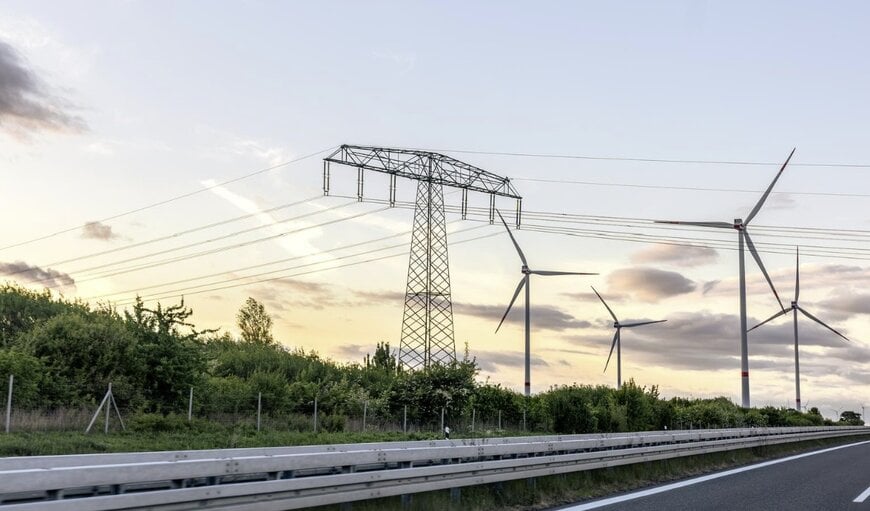
The expansion of Europe’s electricity networks is being shaped by rising renewable penetration, cross-border power flows, and increasing demand from industry and data infrastructure. In this context, grid flexibility and stability have become central engineering challenges, particularly in high-voltage transmission systems. Hitachi Energy and Samsung C&T Engineering & Construction Group have signed a Memorandum of Understanding to expand collaboration on AC grid infrastructure.
AC infrastructure takes priority in grid modernisation
European transmission systems are undergoing structural changes as intermittent renewable sources such as wind and solar increase their share in the energy mix. This variability introduces frequency and voltage management challenges, requiring more flexible alternating current (AC) networks to maintain system stability.
High-voltage AC infrastructure remains fundamental for transmission and distribution, particularly for regional interconnections and cross-border electricity exchange. Strengthening these networks supports load balancing across countries, reduces congestion, and enables more efficient utilisation of renewable generation.
The collaboration targets these requirements by focusing on scalable AC transmission systems that can handle fluctuating supply and demand conditions across interconnected grids.
Combining grid technology with EPC execution
The agreement defines a framework for integrating Hitachi Energy’s grid technologies with Samsung C&T’s engineering, procurement, and construction (EPC) capabilities. This combination is intended to address both system design and project delivery constraints in large-scale transmission infrastructure.
Hitachi Energy contributes expertise in high-voltage systems, grid integration engineering, and digital grid solutions, including monitoring and control systems that support real-time network management. Samsung C&T’s role focuses on executing complex infrastructure projects, including multi-country transmission corridors and large-scale substations.
This division of responsibilities aligns with typical high-voltage project requirements, where system performance depends on both advanced electrical design and reliable construction timelines.
Cross-border transmission and hybrid AC/DC systems
The collaboration builds on previous joint projects in regions such as the UAE and Australia, particularly in high-voltage direct current (HVDC) systems. While HVDC is typically used for long-distance bulk transmission, AC systems remain essential for grid integration and regional distribution.
Future projects are expected to combine AC and DC technologies, forming hybrid transmission architectures. In such systems, HVDC links handle long-distance, high-capacity transfer, while AC networks distribute power locally and manage interconnections between national grids.
This hybrid approach supports the development of a more interconnected European power system, where electricity can be routed dynamically based on demand, generation availability, and network constraints.
Structuring a digital supply chain for grid expansion
The Memorandum of Understanding establishes a joint roadmap covering project identification, evaluation, and commercial development. This includes building a portfolio of AC infrastructure opportunities aligned with Europe’s grid expansion requirements.
Coordination across stakeholders—utilities, regulators, and contractors—requires a structured digital supply chain, particularly for large, multi-phase transmission projects. Integrated planning and execution models can reduce delays, improve resource allocation, and ensure compliance with regional grid codes.
By aligning technology development with EPC execution and project pipeline planning, the partnership aims to address both technical and logistical constraints in expanding Europe’s high-voltage grid infrastructure.
Supporting energy security through network resilience
Grid resilience has become a key design parameter as electricity systems face increasing variability and higher loads from electrification in transport, industry, and data centers. Reinforcing AC infrastructure improves fault tolerance, enhances redundancy, and supports stable operation under dynamic conditions.
The collaboration focuses on enabling these capabilities at scale, particularly in cross-border contexts where system reliability depends on coordinated infrastructure across multiple countries.
Edited by Aishwarya Mambet, Induportals Editor, with AI assistance.
www.hitachi.com
