
www.industryemea.com
10
'26
Written on Modified on
Optimising Hydrogen Electrolysis with Precision Control Systems
Bürkert delivers advanced valve and sensor technology to ensure efficiency in low-carbon hydrogen production.
www.buerkert.de
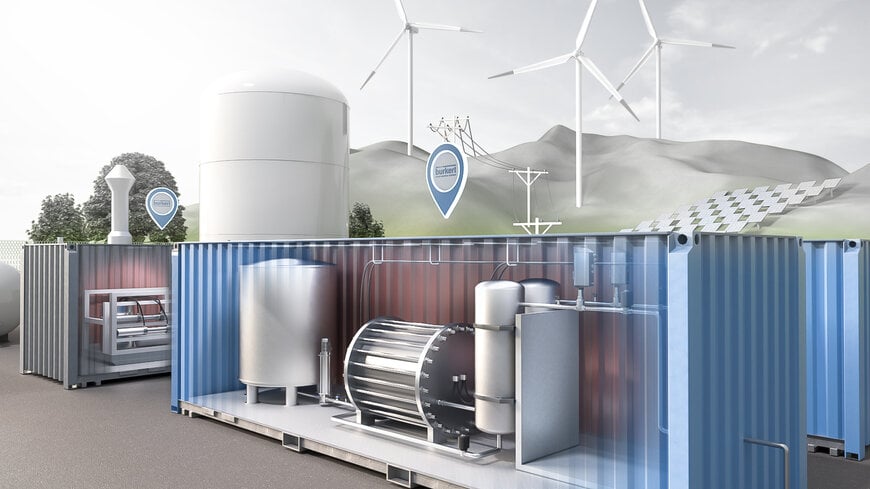
As the UK accelerates towards 5GW of low-carbon hydrogen production by 2030, electrolysis processes require precise management to optimise energy use. Advanced valve and sensor systems are being deployed to address the intensive energy demands of alkaline, proton exchange membrane, and solid oxide electrolysis.
Flow Measurement and Efficiency
Electromotive control valves, such as the Bürkert Type 3280, provide automated, precise control of cooling water, fresh water, and recirculate without requiring pneumatic or hydraulic actuation. These direct-acting valves hold set positions with zero current, resulting in measurable energy savings. Furthermore, continuous supply measurement using devices like the Type 8030 paddle wheel flowmeter guarantees an accuracy of +/-1%. This precision prevents underfeeding, which lowers hydrogen yield, and overfeeding, which wastes pumping energy.
Electrolyser Stabilisation
Maintaining balanced conditions on the anode and cathode sides of an electrolyser is critical to prevent gas crossover and maintain hydrogen purity. The Type 3361 electromotive control valve regulates outlet resistance, delivering dynamic back-pressure control. This ensures the system operates consistently at its optimal efficiency point despite transient load conditions. Monitoring the discharge from both sides requires durable pressure transmitters constructed from corrosion-resistant stainless steel with flush diaphragms, capable of achieving a 0.1% measurement accuracy.
Safe Gas Shut-off
System safety heavily relies on reliable gas isolation during start-up, operation, and emergency shutdowns. The Type 6240 solenoid valve facilitates fast electrical shut-off for gas streams. Its direct-acting design provides rapid response and tight sealing to prevent unwanted gas migration. A kick-and-drop actuation method reduces overall power consumption by using a lower holding energy state after the initial switching action.
Additional Context: This section details technical specifications and competitive benchmarking not included in the original product announcement
Traditional industrial electrolysis systems often rely on pneumatic actuation, which introduces higher baseline energy consumption and slower response times. Electromotive control architectures represent a shift toward digitised fluid control, offering improved repeatability. Benchmark performance in this category requires pressure deviation tolerances well below 0.5% and seamless integration into automated programmable logic controller environments to maintain long-term stability.
Edited by Lekshman Ramdas, Induportals editor – adapted by AI.
www.burkert.com
