
www.industryemea.com
01
'26
Written on Modified on
Schmalz Introduces NEXO Pro Exoskeleton for Safer Workplace Lifting
Passive mechanical support reduces lower-back muscle strain during repetitive bending, lifting and physically demanding tasks without requiring batteries or maintenance.
www.schmalz.com
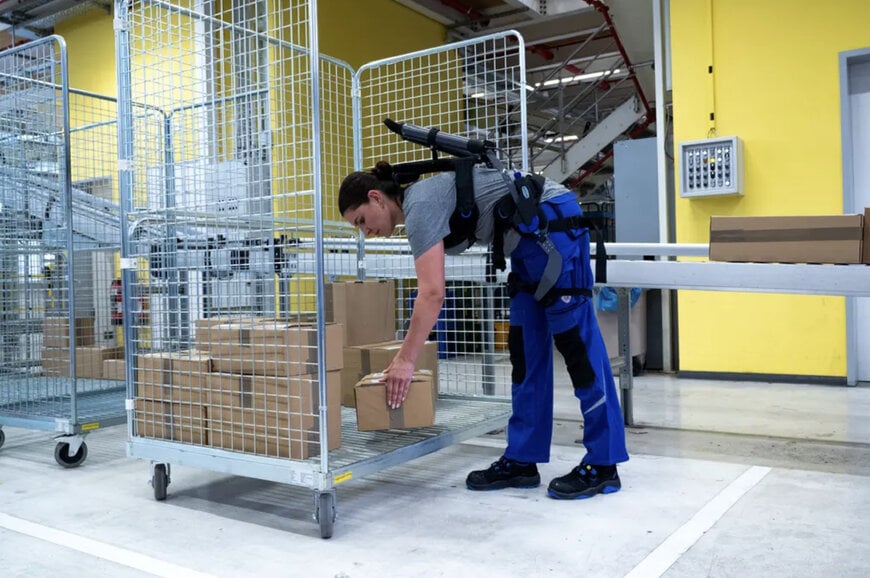
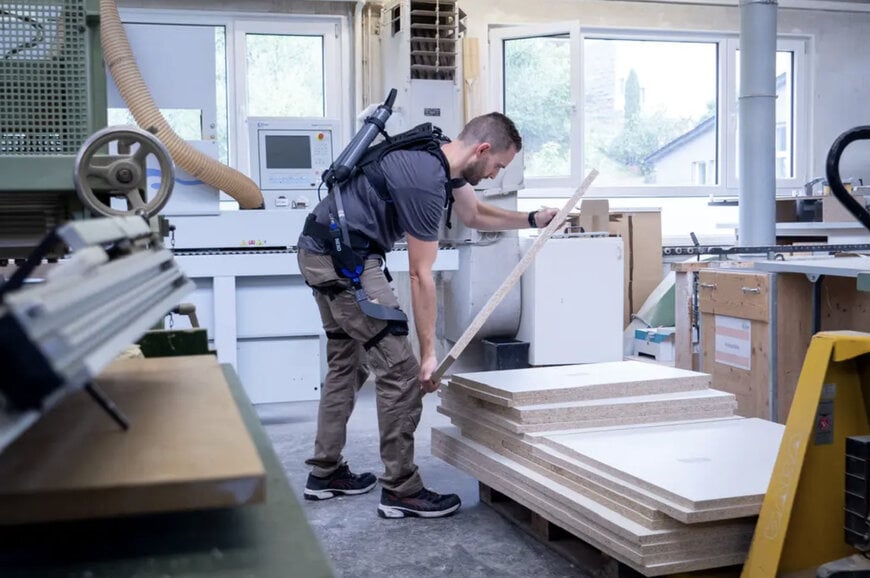
Schmalz is expanding its industrial handling portfolio with the NEXO Pro, a forward bend passive exoskeleton. This mechanical support system addresses physical strain in demanding sectors, particularly across logistics, woodworking, and metalworking applications.
Mechanical Force Mitigation and Strain Reduction
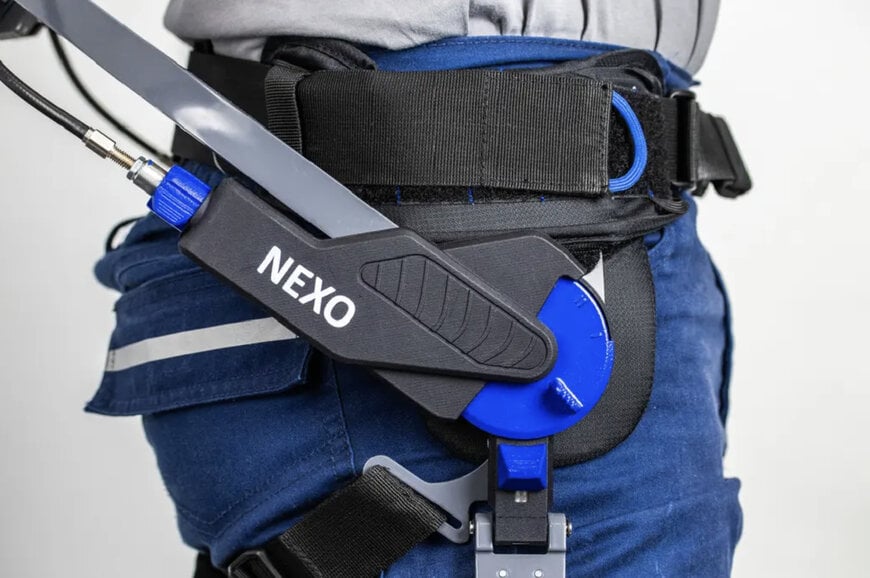
Back pain remains a primary driver of workforce absenteeism in physical labor environments. The NEXO Pro device mitigates lumbar stress by reducing lower back strain during bending and lifting sequences by up to 30 percent. Operating entirely without external power sources, rechargeable batteries, or complex maintenance requirements, the unit relies on a purely mechanical architecture. The core mechanism is a feeder system that captures kinetic force during trunk flexion and releases it as the user straightens. This energy transfer mechanism supports the user without adding compressive force to the spinal column.
Structural Design and Operational Mechanisms
Engineered based on field deployments in logistics and manufacturing environments, the system prioritizes structural adaptability and rapid deployment. The structural components utilize breathable, washable materials engineered for both indoor and outdoor industrial environments. Activating or deactivating the support mechanism requires a single-handed operation, augmented by an audible status indicator for non-visual confirmation. Operators can manually adjust the girders, user handles, support intensity, and initial engagement points without requiring specialized tools. The exoskeleton hardware is manufactured in two distinct sizes to accommodate different body types.
Industrial Application Scenarios
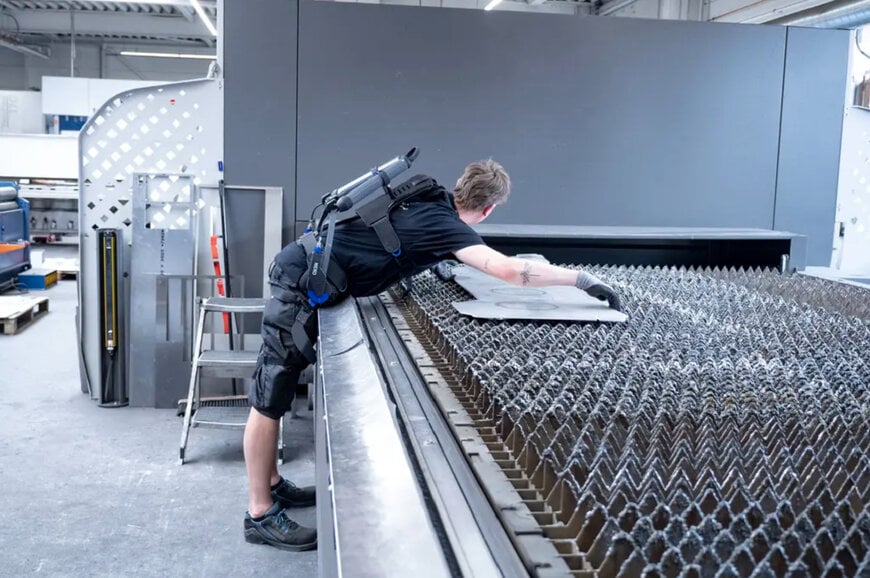
Deployment of mechanical exoskeleton technology yields measurable stability in workforce availability by lowering physical fatigue during repetitive tasks. Standard application scenarios involve order picking, warehouse logistics, machine loading in metalworking facilities, and the assembly of large-scale structural components. The device also offers functional assistance within restricted operating environments, including truck cargo compartments and shipping containers.
Additional Context:
This section details technical specifications and competitive benchmarking not included in the original product announcement
Passive mechanical exoskeletons operate alongside active pneumatic or motorized units within the industrial wearables market. Comparable passive units, such as the Ottobock Paexo Back and the SuitX BackX, similarly utilize elastic energy storage mechanisms rather than battery-powered actuators. A standard metric for evaluating these passive systems is the percentage of load reduction on the spinal discs during flexion. While active exoskeletons provide measured motorized lifting assistance per movement, passive systems like the Schmalz unit provide proportional mechanical resistance, typically yielding a 20 to 30 percent reduction in perceived lumbar strain. Passive systems generally weigh between 2 and 4 kilograms, maintaining a lighter operational profile and requiring less maintenance than motorized counterparts, which often exceed 7 kilograms.
Edited by Natania Lyngdoh, Induportals editor, assisted by AI.
www.schmalz.com
