
www.industryemea.com
09
'26
Written on Modified on
Industrial Automation for Small Modular Reactor Power Generation
ABB evaluates automation, electrification, and instrumentation systems to support the multi-site deployment of Rolls-Royce SMR modular nuclear reactors.
global.abb
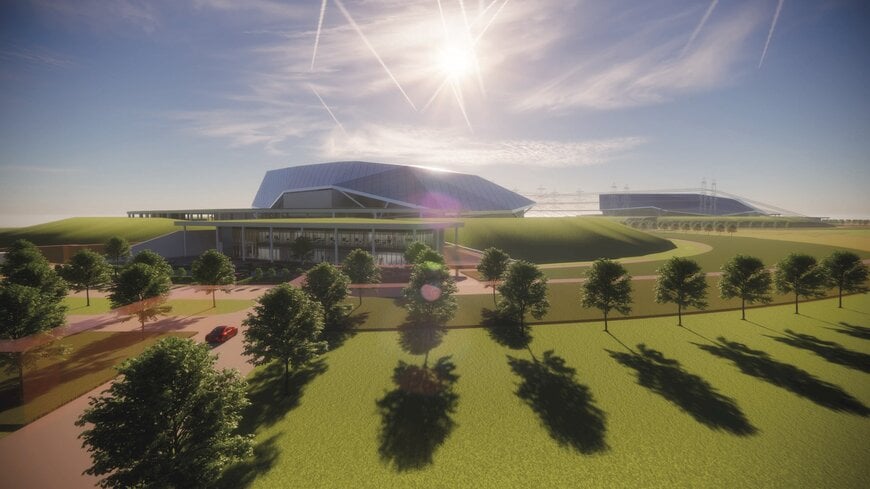
ABB and Rolls-Royce SMR have agreed to explore integration frameworks for digital infrastructure and control architectures across modular nuclear power installations. The cooperation targets baseload low-carbon electricity generation across national grids and industrial power networks.
Technical Scope and Division of Responsibilities
The initiative addresses delivery complexity and integration scaling across distributed reactor fleets. Rolls-Royce SMR develops factory-fabricated small modular reactors based on three-loop, close-coupled pressurized water reactor (PWR) technology. Each standardized unit provides an electrical output of 470 MW, engineered for an operational lifetime of 60 years.
To enable industrial automation and reliable process monitoring, ABB evaluates the application of its instrumentation, electrification, communication, and control platforms across its business divisions. ABB UK leads the operational assessment from Warrington, coordinating with regional entities in target deployment markets. The engineering focus centers on standardizing control interfaces, redundant monitoring networks, and plant-wide power distribution architectures to align with the modular reactor delivery model.
System Architecture and Deployment Programs
The core plant architecture incorporates symmetrical PWR loops with built-in physical redundancy and independent backup mechanisms to satisfy baseline nuclear safety, security, and safeguard regulations. Modularity depends on repeatable factory fabrication methods rather than unique field-erected designs, requiring deterministic automation platforms that install directly into pre-assembled sections.
Deployment evaluations encompass several planned installations across Europe:
- Three initial units scheduled for North Wales, UK, focusing on regional supply chain alignment and site-specific engineering.
- Proposed reactor installations at the Temelín site in the Czech Republic in partnership with ČEZ, with exploratory phases for additional units at Tušimice and Dětmarovice.
- A projected three-unit deployment on Sweden's Värö Peninsula under an agreement with Videberg Kraft.
Operational Impact and Fleet Scalability
Coordinating electrical infrastructure with automated process control addresses cost control and schedule predictability in nuclear construction. Standardized instrumentation architectures allow parallel site works and modular assembly, limiting integration delays during field commissioning. According to the International Energy Agency (IEA), global SMR capacity is projected at 40 GW by 2050 under prevailing policies, with the potential to reach 120 GW through harmonized regulatory pathways and industrial execution models. Standardized control interfaces provide the operational stability and system maintainability necessary to support these fleet installations.
Edited by Evgeny Churilov, Induportals Media - Adapted by AI.
www.abb.com
Coordinating electrical infrastructure with automated process control addresses cost control and schedule predictability in nuclear construction. Standardized instrumentation architectures allow parallel site works and modular assembly, limiting integration delays during field commissioning. According to the International Energy Agency (IEA), global SMR capacity is projected at 40 GW by 2050 under prevailing policies, with the potential to reach 120 GW through harmonized regulatory pathways and industrial execution models. Standardized control interfaces provide the operational stability and system maintainability necessary to support these fleet installations.
Edited by Evgeny Churilov, Induportals Media - Adapted by AI.
www.abb.com
