
www.industryemea.com
14
'26
Written on Modified on
Integrated Aromatics Complex for Petrochemical Feedstock Production
Honeywell UOP provides process licensing, engineering, and catalysts to GPIC for a major paraxylene and benzene production facility in Bahrain.
www.honeywell.com
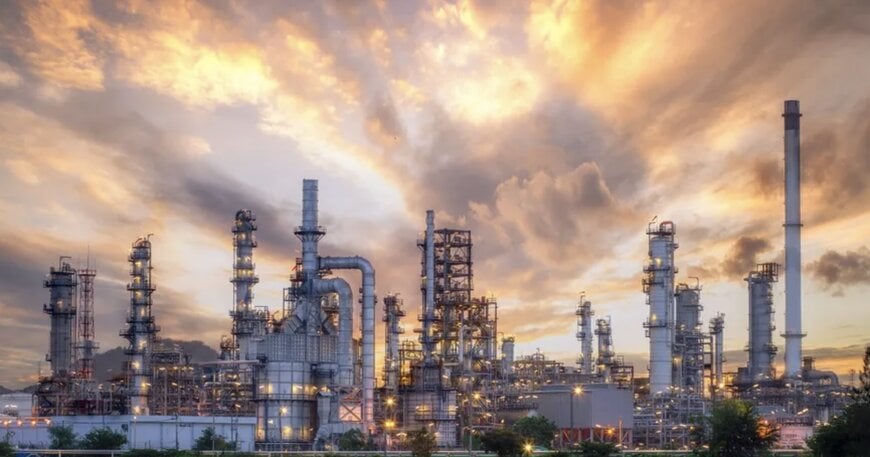
Petrochemical producers face rising global demand for purified terephthalic acid precursors, polyester intermediates, and polymer building blocks, which requires higher selectivity and energy efficiency in naphtha reforming and aromatics extraction. Converting straight-run naphtha into high-purity aromatic isomers demands integrated catalyst regeneration, low-pressure reforming, and selective xylene recovery to maintain high yields while minimizing energy consumption and feedstock loss. To address these downstream manufacturing requirements, Gulf Petrochemical Industries Company (GPIC) selected Honeywell Technologies UOP to engineer an aromatics complex at its established industrial site in Sitra, Kingdom of Bahrain.
Process Architecture and Catalytic Conversion Routes
The planned grassroots aromatics complex is designed to produce 1.2 million metric tons per year of paraxylene and 500,000 metric tons per year of high-purity benzene. These compounds serve as fundamental feedstocks for synthetic polyester fibers, polyethylene terephthalate packaging, engineering resins, and industrial polymers.
Under the project scope, Honeywell Technologies UOP supplies technology licensing, front-end engineering design services, proprietary catalysts, and specialized adsorbents alongside critical process equipment. The production flowsheet combines three interdependent Honeywell UOP process units:
- Naphtha Hydrotreating: Removes sulfur, nitrogen, oxygen, and metallic contaminants from heavy naphtha feedstocks to protect downstream noble-metal reforming catalysts from poisoning.
- CCR Platforming: Operates under Continuous Catalyst Regeneration conditions to crack, dehydrocyclize, and isomerize paraffins and naphthenes into aromatics-rich reformate at high octane and high hydrogen yields. The continuous catalyst circulation and regeneration loop prevents carbon coking, allowing continuous run-lengths and consistent yield structures.
- LDPX Aromatics Complex: Executes downstream fractionation, selective xylene isomerization, toluene and heavy aromatics transalkylation, and high-recovery paraxylene separation. The unit maximizes product recovery while lowering overall utilities consumption across the separation train.
Industrial Site Integration and Operational Continuity
The installation expands GPIC's existing petrochemical footprint in Sitra, which historically centered on ammonia and methanol synthesis. The facility leverages previous site infrastructure that implemented Honeywell pressure swing adsorption systems, specialized adsorbents, and process automation architectures. Integrating the new aromatics unit with existing industrial utilities optimizes hydrogen management across the plant boundary, channeling surplus high-purity hydrogen generated by the CCR Platforming unit back into site hydroprocessing units or downstream synthesis loops.
Additional Context
This section details technical specifications and competitive benchmarking not included in the original product announcement.
In industrial aromatics refining, naphtha-to-paraxylene conversion benchmarks rely heavily on molecular sieve adsorption processes such as UOP Parex technology or crystallization techniques to isolate paraxylene from meta-xylene, ortho-xylene, and ethylbenzene isomers, whose boiling points differ by less than 2°C. Modern continuous catalytic reforming complexes operate at low reaction pressures (typically 3.5 to 5.0 bar gauge) over platinum-tin bimetallic catalysts on chlorided alumina supports, achieving total aromatics selectivities exceeding 85 weight percent.
Competitive aromatics technologies—including Axens Eluxyl paraxylene adsorption, Aromax aromatization, and ExxonMobil Mobil Transalkylation (MSTDP/PxMax) processes—are evaluated on per-pass paraxylene extraction recovery (typically greater than 99.5 percent) and product purity ratings exceeding 99.7 percent. Achieving 1.2 million metric tons per year of paraxylene alongside 500,000 metric tons per year of benzene places the Bahrain facility within the top tier of regional Middle Eastern aromatics complexes, matching the production scale required to support international fiber and bottle-grade polymer supply chains.
Edited by Romila DSilva, Induportals Editor, with AI assistance.
The installation expands GPIC's existing petrochemical footprint in Sitra, which historically centered on ammonia and methanol synthesis. The facility leverages previous site infrastructure that implemented Honeywell pressure swing adsorption systems, specialized adsorbents, and process automation architectures. Integrating the new aromatics unit with existing industrial utilities optimizes hydrogen management across the plant boundary, channeling surplus high-purity hydrogen generated by the CCR Platforming unit back into site hydroprocessing units or downstream synthesis loops.
Additional Context
This section details technical specifications and competitive benchmarking not included in the original product announcement.
In industrial aromatics refining, naphtha-to-paraxylene conversion benchmarks rely heavily on molecular sieve adsorption processes such as UOP Parex technology or crystallization techniques to isolate paraxylene from meta-xylene, ortho-xylene, and ethylbenzene isomers, whose boiling points differ by less than 2°C. Modern continuous catalytic reforming complexes operate at low reaction pressures (typically 3.5 to 5.0 bar gauge) over platinum-tin bimetallic catalysts on chlorided alumina supports, achieving total aromatics selectivities exceeding 85 weight percent.
Competitive aromatics technologies—including Axens Eluxyl paraxylene adsorption, Aromax aromatization, and ExxonMobil Mobil Transalkylation (MSTDP/PxMax) processes—are evaluated on per-pass paraxylene extraction recovery (typically greater than 99.5 percent) and product purity ratings exceeding 99.7 percent. Achieving 1.2 million metric tons per year of paraxylene alongside 500,000 metric tons per year of benzene places the Bahrain facility within the top tier of regional Middle Eastern aromatics complexes, matching the production scale required to support international fiber and bottle-grade polymer supply chains.
Edited by Romila DSilva, Induportals Editor, with AI assistance.
