
NISCO and Huawei launch swarm-intelligence AI steel model
The YuanYe platform integrates metallurgical mechanisms with AI, saving over $15 million annually across 300 applications.
www.huawei.com
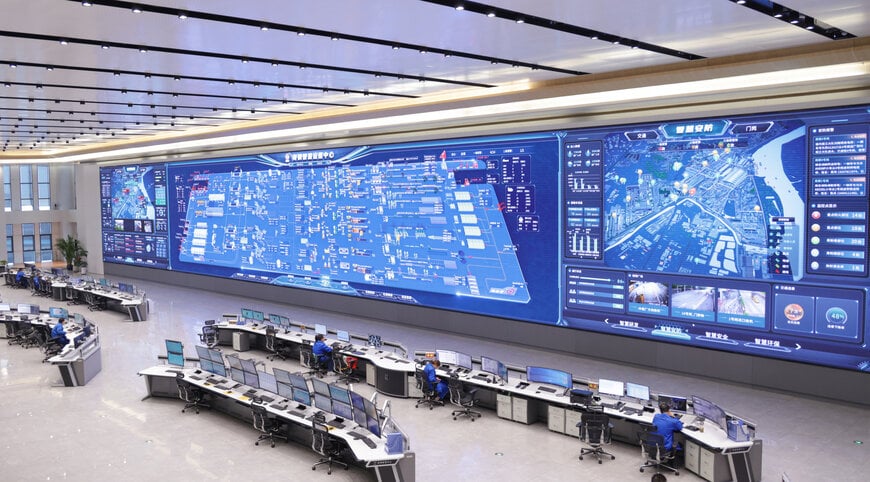
Nanjing Iron & Steel Co., Ltd. (NISCO), in partnership with Huawei, has commercially deployed the world’s first swarm-intelligence steel model. Dubbed the YuanYe Steel Large Model, the architecture transitions traditional metallurgical operations into a data-driven ecosystem. By deploying over 300 AI models and 1,000 low-code applications across its production lines, NISCO has reduced its annual operating costs by more than CNY 100 million (approx. US$15 million) while cutting new product R&D cycles by half.
Dual-drive architecture and predictive rolling
Unlike monolithic general-purpose AI, YuanYe utilizes a multi-model cluster architecture that fuses probabilistic AI (the "right brain") with precise metallurgical mechanism models (the "left brain"). Built on Huawei's Ascend, Kunpeng, and Pangu technologies, the system aggregates millions of operational technology (OT) data points. In the ironmaking stage, the model performs real-time dynamic simulations to predict blast furnace temperatures up to two hours in advance with 90 percent accuracy, increasing prime-grade molten iron yield by over 10 percent. During the rolling stage, a millisecond-level rolling-force prediction model has improved target hit rates from 88 to 98 percent, tightening thickness tolerances to ±0.2 mm to support demanding applications like LNG storage tanks and high-pressure oil pipelines.
Automated inspection and intelligent emission control
Beyond primary steelmaking, NISCO is utilizing the YuanYe architecture to optimize quality assurance and environmental compliance. For finished steel, an integrated smart metallographic inspection system combines robotics with AI to automate sample grinding, polishing, image acquisition, and grading. This has reduced per-sample inspection times from 10 minutes to just 3–5 minutes with over 95 percent accuracy. For environmental management, the S-Link Intelligent Agent processes 602 process parameters to predict sulfur risks an hour in advance. By calculating optimal gas blending schemes and dynamically allocating emission quotas, the plant has slashed natural gas co-firing consumption by nearly 50 percent, ensuring compliance while driving significant cost reductions.
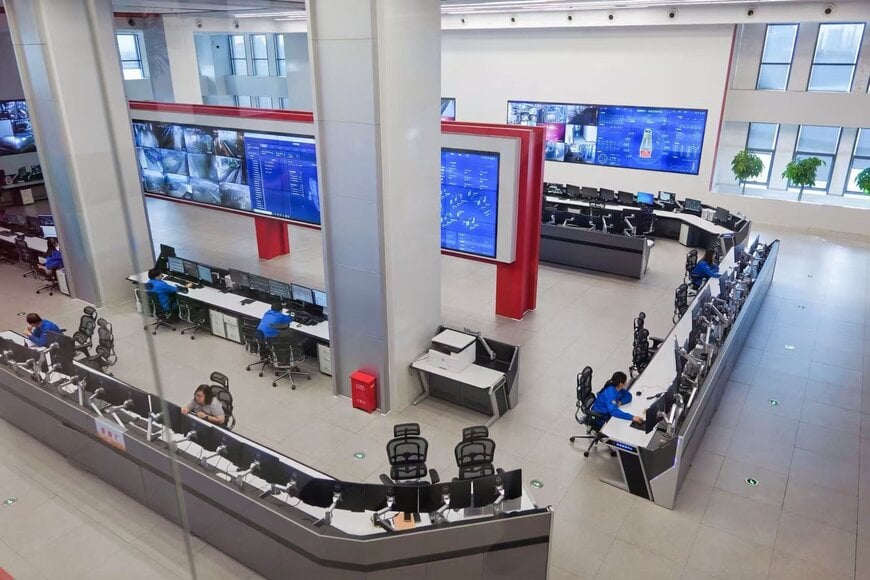
NISCO's hot-rolling production line in its heavy plate plant
Additional Context: Swarm intelligence and mechanism models in heavy industry
This section details AI architectures and industrial automation dynamics not included in the original press release.
In heavy industrial applications like steelmaking, relying on a single, monolithic Large Language Model (LLM) is highly risky because neural networks are inherently probabilistic and prone to hallucination—unacceptable traits when controlling the extreme thermodynamics of a blast furnace. The "swarm intelligence" or multi-agent architecture solves this by deploying dozens of highly specialized, narrow AI models that communicate with one another to negotiate complex plant-wide variables.
Crucially, this architecture fuses these probabilistic AI models with deterministic "mechanism models" (strict, physics-based mathematical equations governing metallurgy, fluid dynamics, and thermodynamics). For example, while a computer vision agent analyzes the surface of the steel and a time-series AI predicts sulfur emissions, the mechanism model acts as the absolute physical boundary. It ensures that the AI's optimization recommendations never violate the laws of physics or exceed the structural safety limits of the rolling mill. This orchestration allows the plant to achieve the efficiency gains of machine learning without compromising the deterministic safety required in critical Operational Technology (OT) environments.
Edited by an industrial journalist, Lekshman Ramdas, with AI assistance.
www.huawei.com
