
www.industryemea.com
29
'26
Written on Modified on
Multi-Axis Robotic Large Format Additive Manufacturing for Industrial Tooling
CMS SpA introduces a six-axis extrusion system designed to optimize thermoplastic material deposition and complex geometric production within advanced manufacturing ecosystems.
www.cms.it
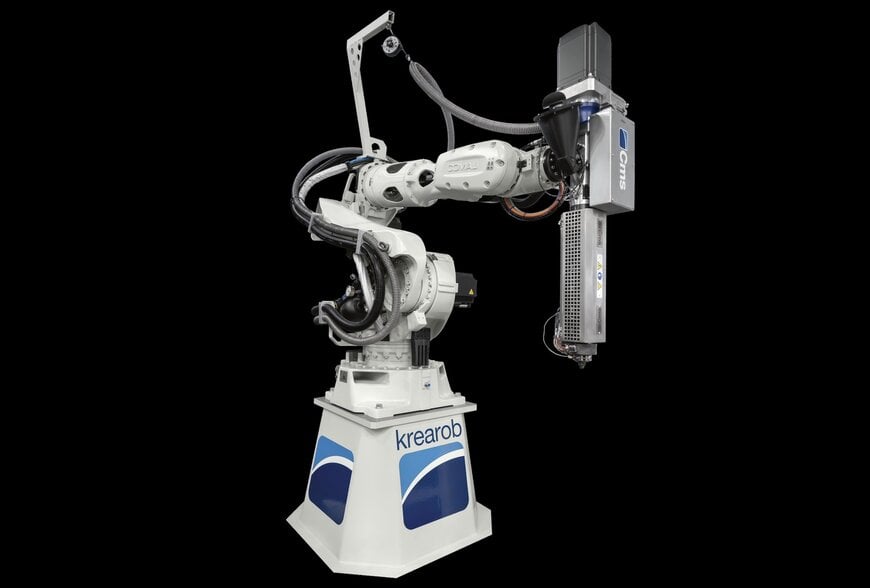
CMS' six-axis Krearob robotic large format additive manufacturing system will make its Formnext debut in Frankfurt.
CMS SpA is releasing its Krearob robotic large format additive manufacturing (LFAM) system to facilitate the production of large-scale thermoplastic tooling, molds, and components. The six-axis solution targets heavy industry applications, specifically addressing the manufacturing requirements of the aerospace, automotive, and industrial equipment sectors.
Six-Axis Extrusion and System Integration
The Krearob system operates using a multi-axis robotic architecture that allows for non-planar material deposition and the construction of complex geometries that are difficult to achieve with standard three-axis Cartesian printers. The hardware integrates a proprietary extrusion unit with dedicated slicing software and a Human-Machine Interface (HMI). This closed-loop control architecture provides operators with centralized management over print programming, toolpath simulation, and physical execution on a single platform. By optimizing the deposition of thermoplastic polymers, the system achieves material and weight savings of up to 80 percent when compared to traditional subtractive manufacturing processes, which typically mill parts from solid tooling blocks. The system will be demonstrated at the Formnext trade show (17–20 November 2026, Hall 12.0, Stand D51) in Frankfurt.
Gantry-Based Production and Output Capacity
In addition to the multi-axis robotic platform, CMS is showcasing its Kreator A3, a gantry-based large-format industrial 3D printing system. Utilizing screw extrusion technology, this machine is engineered for processing sizeable thermoplastic components, including heavy composite tooling and molds. The Kreator A3 achieves a maximum material throughput of up to 30 kilograms per hour. To accommodate varied structural requirements, the printhead can deposit material vertically, horizontally, and at 45-degree angles.
This dual-platform portfolio allows manufacturers to select equipment based on spatial constraints and part complexity. Marino Chiappa, Division Director of Advanced Materials & Plastic at CMS, explained the technical rationale: "While Krearob meets the needs [of] manufacturers in applications that demand multi-axis positioning and robotic flexibility, our gantry-based Kreator A3 takes a different approach to achieving manufacturing flexibility and is particularly suited to large-format printing applications within a defined machine envelope."
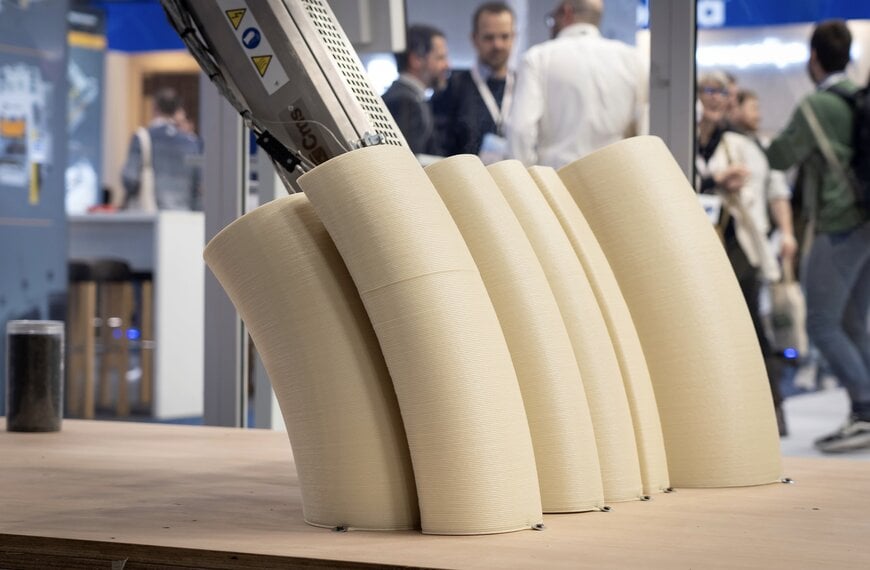
Krearob is particularly suited to applications across aerospace, automotive and industrial manufacturing for large-scale thermoplastic tooling, molds and components with complex geometries.
Additional Context
This section details technical specifications and competitive benchmarking not included in the original news release.
In the robotic Large Format Additive Manufacturing (LFAM) sector, six-axis systems like Krearob are typically benchmarked against multi-axis polymer extrusion platforms such as the CEAD AM Flexbot and the Caracol HERON AM. Competitive evaluation in this category centers on measurable operational parameters: maximum extrusion output (measured in kilograms per hour), the integration of secondary milling spindles for post-print surface finishing (hybrid manufacturing), and the thermal capacity to process high-temperature, fiber-reinforced thermoplastics like carbon-fiber-filled PEI or glass-fiber-filled ABS.
While gantry-based LFAM systems like the Kreator A3 (competing with platforms from Thermwood and Ingersoll) offer rigid stability and high volumetric accuracy within a fixed Cartesian envelope, robotic-arm-based systems leverage track-mounted or mobile pedestal mobility. This robotic flexibility theoretically unconstrains the maximum part length, enabling the continuous additive production of massive monolithic structures such as aerospace lay-up tools and marine hull molds.
Edited by Aishwarya Mambet, Induportals Editor, with AI assistance.
www.cms.com
CMS SpA is releasing its Krearob robotic large format additive manufacturing (LFAM) system to facilitate the production of large-scale thermoplastic tooling, molds, and components. The six-axis solution targets heavy industry applications, specifically addressing the manufacturing requirements of the aerospace, automotive, and industrial equipment sectors.
Six-Axis Extrusion and System Integration
The Krearob system operates using a multi-axis robotic architecture that allows for non-planar material deposition and the construction of complex geometries that are difficult to achieve with standard three-axis Cartesian printers. The hardware integrates a proprietary extrusion unit with dedicated slicing software and a Human-Machine Interface (HMI). This closed-loop control architecture provides operators with centralized management over print programming, toolpath simulation, and physical execution on a single platform. By optimizing the deposition of thermoplastic polymers, the system achieves material and weight savings of up to 80 percent when compared to traditional subtractive manufacturing processes, which typically mill parts from solid tooling blocks. The system will be demonstrated at the Formnext trade show (17–20 November 2026, Hall 12.0, Stand D51) in Frankfurt.
Gantry-Based Production and Output Capacity
In addition to the multi-axis robotic platform, CMS is showcasing its Kreator A3, a gantry-based large-format industrial 3D printing system. Utilizing screw extrusion technology, this machine is engineered for processing sizeable thermoplastic components, including heavy composite tooling and molds. The Kreator A3 achieves a maximum material throughput of up to 30 kilograms per hour. To accommodate varied structural requirements, the printhead can deposit material vertically, horizontally, and at 45-degree angles.
This dual-platform portfolio allows manufacturers to select equipment based on spatial constraints and part complexity. Marino Chiappa, Division Director of Advanced Materials & Plastic at CMS, explained the technical rationale: "While Krearob meets the needs [of] manufacturers in applications that demand multi-axis positioning and robotic flexibility, our gantry-based Kreator A3 takes a different approach to achieving manufacturing flexibility and is particularly suited to large-format printing applications within a defined machine envelope."
Krearob is particularly suited to applications across aerospace, automotive and industrial manufacturing for large-scale thermoplastic tooling, molds and components with complex geometries.
Additional Context
This section details technical specifications and competitive benchmarking not included in the original news release.
In the robotic Large Format Additive Manufacturing (LFAM) sector, six-axis systems like Krearob are typically benchmarked against multi-axis polymer extrusion platforms such as the CEAD AM Flexbot and the Caracol HERON AM. Competitive evaluation in this category centers on measurable operational parameters: maximum extrusion output (measured in kilograms per hour), the integration of secondary milling spindles for post-print surface finishing (hybrid manufacturing), and the thermal capacity to process high-temperature, fiber-reinforced thermoplastics like carbon-fiber-filled PEI or glass-fiber-filled ABS.
While gantry-based LFAM systems like the Kreator A3 (competing with platforms from Thermwood and Ingersoll) offer rigid stability and high volumetric accuracy within a fixed Cartesian envelope, robotic-arm-based systems leverage track-mounted or mobile pedestal mobility. This robotic flexibility theoretically unconstrains the maximum part length, enabling the continuous additive production of massive monolithic structures such as aerospace lay-up tools and marine hull molds.
Edited by Aishwarya Mambet, Induportals Editor, with AI assistance.
www.cms.com
