
www.industryemea.com
14
'26
Written on Modified on
Fibre optic links advance high-voltage applications
OMC delivers integrated fibre-optic datalink solutions to improve safety, reliability, and performance in high-voltage power infrastructure.
www.omcint.com
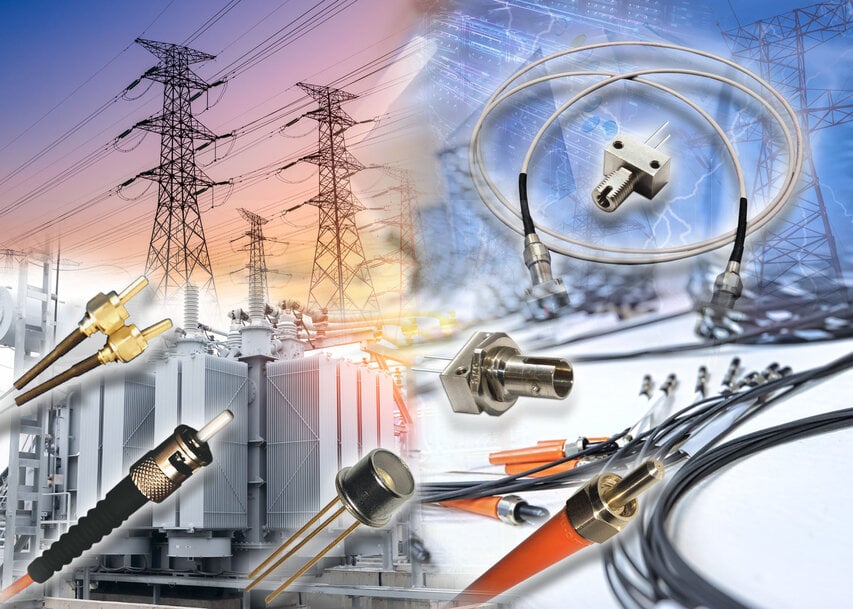
OMC has completed a major optical link supply for an energy distribution company, highlighting increasing adoption of fibre optic technologies in high-voltage (HV) applications.
As electrification accelerates across power generation, transmission, and distribution networks, demand is growing for communication and monitoring systems that can operate reliably in electrically harsh environments.
Technical advantages of optical isolation
Fibre optic systems provide inherent electrical isolation, making them particularly suitable for HV environments. Unlike conventional copper-based systems, fibre optics are non-conductive, eliminating the risk of electrical interference or voltage-related failures.
Key technical benefits include:
- Immunity to electromagnetic interference (EMI)
- Resistance to high-voltage breakdown
- High bandwidth with low signal attenuation
- Enhanced operational safety in critical infrastructure
These characteristics support reliable sensing, monitoring, and control functions in mission-critical energy systems.
Integrated datalink design approach
A common challenge in fibre optic systems is ensuring consistent performance across transmitters, receivers, and cable assemblies. Variability between components can lead to signal degradation and increased system complexity.
OMC addresses this by manufacturing complete datalink systems, including transmitters (Tx), receivers (Rx), and fibre optic cable assemblies. This integrated approach eliminates the need for combining components from multiple suppliers and ensures compatibility across the entire link.
Each optical transmitter and receiver is actively aligned and calibrated during production to meet defined performance parameters. This process ensures that all components operate within a controlled specification range.
Ensuring consistency and reliability
The company applies proprietary production techniques to maintain consistent signal attenuation across fibre optic cable assemblies. By aligning cable characteristics with transmitter and receiver performance, OMC ensures that each complete link delivers predictable performance.
This approach enables:
Integrated datalink design approach
A common challenge in fibre optic systems is ensuring consistent performance across transmitters, receivers, and cable assemblies. Variability between components can lead to signal degradation and increased system complexity.
OMC addresses this by manufacturing complete datalink systems, including transmitters (Tx), receivers (Rx), and fibre optic cable assemblies. This integrated approach eliminates the need for combining components from multiple suppliers and ensures compatibility across the entire link.
Each optical transmitter and receiver is actively aligned and calibrated during production to meet defined performance parameters. This process ensures that all components operate within a controlled specification range.
Ensuring consistency and reliability
The company applies proprietary production techniques to maintain consistent signal attenuation across fibre optic cable assemblies. By aligning cable characteristics with transmitter and receiver performance, OMC ensures that each complete link delivers predictable performance.
This approach enables:
- 100% link consistency across production batches
- Reduced need for component selection and testing
- Reliable operation over the system’s full design life
Such consistency is particularly important in HV environments, where system tolerances are tight and reliability is critical.
Manufacturing scalability and automation
To meet increasing demand, OMC has optimized its production processes, including the introduction of collaborative robots (cobots). These systems automate repetitive and labor-intensive tasks, increasing manufacturing throughput while maintaining quality and consistency.
This allows the company to scale production for large-volume requirements without compromising performance standards.
Application scope in energy infrastructure
The fibre optic datalink solutions are used in:
Manufacturing scalability and automation
To meet increasing demand, OMC has optimized its production processes, including the introduction of collaborative robots (cobots). These systems automate repetitive and labor-intensive tasks, increasing manufacturing throughput while maintaining quality and consistency.
This allows the company to scale production for large-volume requirements without compromising performance standards.
Application scope in energy infrastructure
The fibre optic datalink solutions are used in:
- Power generation facilities
- Transmission and distribution networks
- Substations and grid monitoring systems
- Industrial high-voltage control environments
These applications require robust communication links capable of operating under extreme electrical and environmental conditions.
Industry relevance and outlook
The growing use of fibre optic technologies in HV applications reflects a broader shift toward electrically isolated, high-performance communication systems in energy infrastructure.
As power systems become more digital and interconnected, reliable data transmission and monitoring will play an increasingly important role in ensuring grid stability and operational safety.
Edited by an industrial journalist, Lekshman Ramdas, with AI assistance.
www.omc-uk.com
Industry relevance and outlook
The growing use of fibre optic technologies in HV applications reflects a broader shift toward electrically isolated, high-performance communication systems in energy infrastructure.
As power systems become more digital and interconnected, reliable data transmission and monitoring will play an increasingly important role in ensuring grid stability and operational safety.
Edited by an industrial journalist, Lekshman Ramdas, with AI assistance.
www.omc-uk.com
