
www.industryemea.com
26
'26
Written on Modified on
ABB SensyMaster FMT400 Flowmeter Achieves SIL 2 Certification
ABB’s SensyMaster flowmeter now delivers verified thermal mass flow measurement for the chemicals, oil & gas, power & utilities, and industrial gas industries.
global.abb
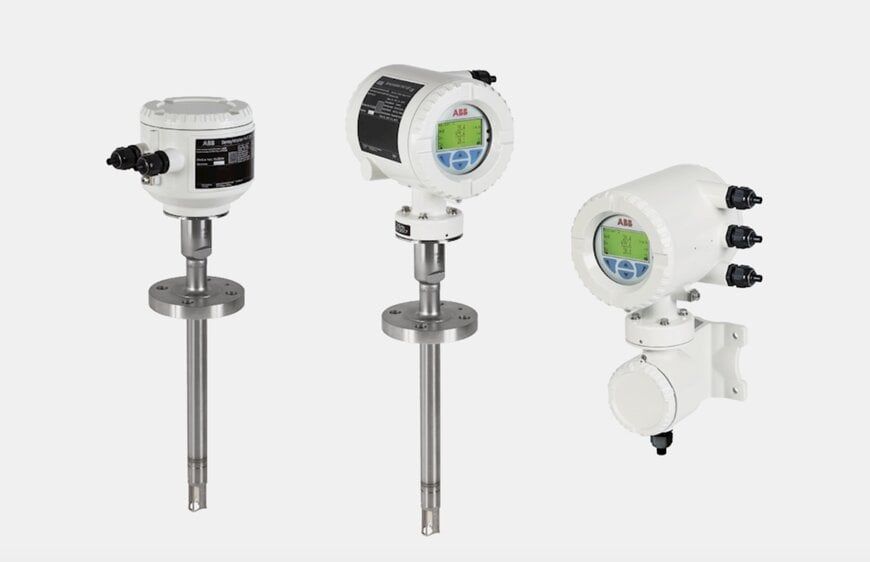
ABB’s SensyMaster FMT400 thermal mass flowmeter has received a Safety Integrity Level (SIL) 2 certification from TÜV SÜD. The qualification was awarded in accordance with the international functional safety standard IEC 61508-2, enabling thermal mass flow measurement across the chemicals, oil and gas, power and utilities, and industrial gas sectors.
Functional Safety and Safety Instrumented Systems
In process automation architecture, automated Safety Instrumented Systems (SIS) function to safeguard industrial plants against hazardous operating conditions. Previously, thermal mass flow measurement technologies were frequently excluded from these safety-critical architectures due to a historical lack of formal functional safety certifications.
With the acquisition of the SIL 2 certification, the flowmeter can be directly integrated into automated SIS networks. Plant operators require field sensors that deliver high measurement accuracy while remaining capable of identifying internal hardware faults before an active safety incident or process failure is triggered.
Thermal Mass Measurement and Device Diagnostics
Instead of evaluating the physical, actual volume of passing gases, the flowmeter calculates mass flow rates by monitoring the thermodynamic cooling effect of the process gas stream as it flows past a heated sensor element. The hardware performs direct mass flow measurements of both natural and industrial gases.
The device architecture incorporates several functional features designed to support digital plant strategies:
- Continuous Self-Diagnostics: The transmitter executes automated background checks to monitor internal electronics and sensor drift.
- Fault Detection: Built-in routine indicators detect localized operational failures to provide real-time device health monitoring.
- Predictive Maintenance: The diagnostic output streams error parameters to centralized asset management systems, enabling predictive maintenance scheduling.
- Operational Availability: Automated diagnostics minimize the requirement for manual field inspections, lowering labor burdens and improving overall plant availability.
Additional Context
This section details technical specifications not included in the original news release.
Thermal mass flowmeters operate on the principle of thermal dispersion or anemometry to calculate the mass flow rate of fluids, primarily clean gases, without requiring secondary pressure or temperature compensation. The sensing probe typically houses two resistance temperature detectors (RTDs) immersed within the gas stream. One RTD acts as an ambient temperature reference sensor, tracking the baseline temperature of the process fluid. The secondary RTD is continuously heated by an internal electrical circuit to maintain a precise, constant temperature differential above the reference sensor.
As gas molecules flow past the heated sensor tip, they absorb and carry away thermal energy via convective heat transfer. The rate of this thermal dissipation is directly proportional to the mass flow rate of the gas, governed by King's Law of fluid mechanics. To maintain the constant temperature delta, the transmitter's control loop must scale the electrical current supplied to the heated RTD. The system measures this dynamic current consumption or voltage drop, translating the raw electrical signals into an absolute mass flow reading.
Achieving compliance with the IEC 61508-2 standard for SIL 2 certification requires rigorous assessment of both hardware safety integrity and systematic safety integrity. Hardware safety metrics evaluate the Safe Failure Fraction (SFF) of the complete instrument, ensuring that the ratio of safe and dangerous detected failures relative to total failures meets strict percentage thresholds. This is managed through an internal dual-channel or highly redundant microprocessor layout.
The embedded diagnostic firmware continuously monitors the loop resistance of the RTD elements to identify open circuits, short circuits, or structural ceramic degradation. If a critical hardware anomaly is detected, the transmitter automatically drives its analog output signal outside the standard 4 to 20 mA measurement range to a predefined fault level (such as less than 3.6 mA or greater than 21 mA), alerting the Safety Instrumented System to initiate a fail-safe process shutdown sequence.
Edited by Romila DSilva, Induportals Editor, with AI assistance.
This section details technical specifications not included in the original news release.
Thermal mass flowmeters operate on the principle of thermal dispersion or anemometry to calculate the mass flow rate of fluids, primarily clean gases, without requiring secondary pressure or temperature compensation. The sensing probe typically houses two resistance temperature detectors (RTDs) immersed within the gas stream. One RTD acts as an ambient temperature reference sensor, tracking the baseline temperature of the process fluid. The secondary RTD is continuously heated by an internal electrical circuit to maintain a precise, constant temperature differential above the reference sensor.
As gas molecules flow past the heated sensor tip, they absorb and carry away thermal energy via convective heat transfer. The rate of this thermal dissipation is directly proportional to the mass flow rate of the gas, governed by King's Law of fluid mechanics. To maintain the constant temperature delta, the transmitter's control loop must scale the electrical current supplied to the heated RTD. The system measures this dynamic current consumption or voltage drop, translating the raw electrical signals into an absolute mass flow reading.
Achieving compliance with the IEC 61508-2 standard for SIL 2 certification requires rigorous assessment of both hardware safety integrity and systematic safety integrity. Hardware safety metrics evaluate the Safe Failure Fraction (SFF) of the complete instrument, ensuring that the ratio of safe and dangerous detected failures relative to total failures meets strict percentage thresholds. This is managed through an internal dual-channel or highly redundant microprocessor layout.
The embedded diagnostic firmware continuously monitors the loop resistance of the RTD elements to identify open circuits, short circuits, or structural ceramic degradation. If a critical hardware anomaly is detected, the transmitter automatically drives its analog output signal outside the standard 4 to 20 mA measurement range to a predefined fault level (such as less than 3.6 mA or greater than 21 mA), alerting the Safety Instrumented System to initiate a fail-safe process shutdown sequence.
Edited by Romila DSilva, Induportals Editor, with AI assistance.
