
www.industryemea.com
01
'26
Written on Modified on
ABB and Alcemy to Collaborate on AI-Driven Cement Quality Control
ABB and Alcemy enter an agreement to integrate predictive machine learning models for optimized cement and concrete production.
global.abb
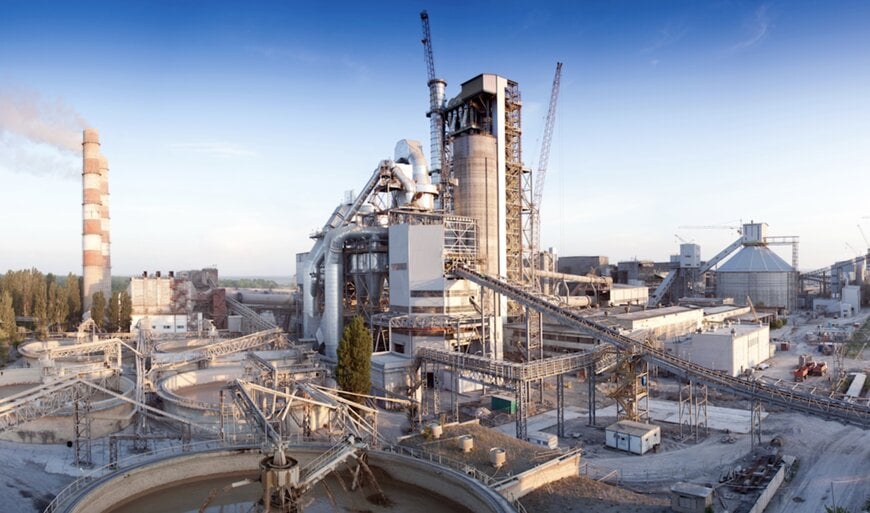
ABB has signed a Memorandum of Understanding (MoU) with Alcemy to explore artificial intelligence solutions for monitoring and determining cement and concrete quality. This collaboration combines ABB’s automation and process control capabilities with Alcemy’s predictive technology to target global emissions reductions in cement manufacturing.
Integration of Predictive Quality Insights
The collaboration centers on extracting process and quality data from the ABB Knowledge Manager to be analyzed by Alcemy’s machine learning models. These models generate specific setpoints that are fed back into the ABB Ability™ Expert Optimizer. This closed-loop system is designed to manage production variability, refine product consistency, and enhance overall plant performance.
Process Optimization and Decarbonization
The partnership aims to close the gap between raw data and process optimization by providing more precise control over production parameters. This technical approach supports the efficient use of raw materials and energy. According to Bodil Recke, Global Manager, Business Unit Cement at ABB, the integration of AI is a key enabler for helping cement producers meet decarbonization targets while improving performance.
Technical and Commercial Synergy
ABB and Alcemy are establishing a framework to explore joint technical and commercial value propositions. The goal is to provide cement and ready-mix concrete customers with tools that deliver more consistent results and reduce environmental impacts through improved efficiency.
Additional Context
The production of cement is a carbon-intensive process, primarily due to the chemical calcination of limestone and the high temperatures required in kilns. Variability in raw material composition often leads to over-processing or the production of sub-optimal batches, which increases energy consumption and waste.
Technically, the "closed-loop" approach described in this agreement utilizes real-time data streaming and predictive analytics to adjust kiln and mill parameters dynamically. By leveraging machine learning to predict quality several hours before traditional physical testing can be completed, operators can minimize "off-spec" production. This level of granular control is essential for the industry to transition toward low-clinker cements, which are more environmentally friendly but significantly more sensitive to process fluctuations than traditional Portland cement.
Edited by Romila DSilva, Induportals Editor, with AI assistance.
www.abb.com
