
www.industryemea.com
06
'26
Written on Modified on
Danfoss, SDU & HPE Deploy Heat-Recovery AI Supercomputer
The Danish AI infrastructure project combines high-performance computing with district energy integration and liquid-cooled data center technology.
www.danfoss.com
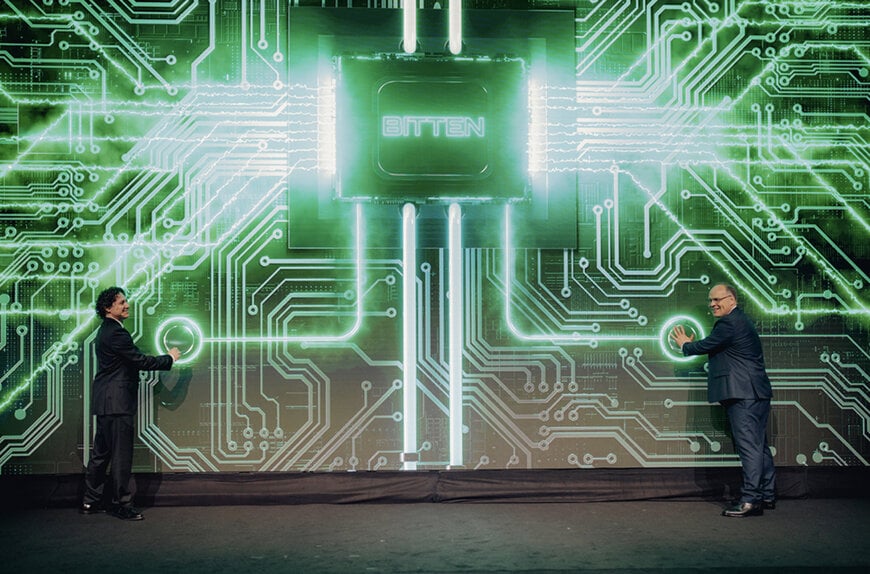
The University of Southern Denmark (SDU), Danfoss, and HPE have launched a national AI supercomputer designed to support advanced computing, artificial intelligence, and large-scale data analytics across Danish universities. The system combines high-performance computing infrastructure with heat-recovery technology integrated into the local energy network in Sønderborg, Denmark.
The supercomputer, named Bitten, has been incorporated into Denmark’s national research infrastructure and is accessible through the UCloud research platform developed by SDU, Aalborg University, and Aarhus University.
Shared AI Infrastructure for Research and Innovation
The project combines SDU’s research infrastructure capabilities, Danfoss’ expertise in energy-efficient cooling and decarbonization systems, and HPE’s data center and supercomputing technologies.
The platform is designed to provide universities across Denmark with shared access to large-scale AI computing resources capable of supporting advanced generative AI workloads, large datasets, and high-performance simulations.
According to the project partners, the infrastructure will also be available to startups and university spin-out companies developing AI and data analytics applications.
UCloud, the platform through which the system is accessed, currently supports more than 23,000 users and operates as a European sovereign cloud environment where data, software, and computations remain under European jurisdiction.
Liquid Cooling and Waste Heat Recovery
A central technical feature of the deployment is the integration of the supercomputer into the local district energy system through full heat recovery architecture.
The facility uses advanced liquid cooling technology to manage thermal loads generated by high-density AI computing infrastructure. Instead of rejecting waste heat through conventional cooling systems, recovered thermal energy is redirected into Sønderborg Municipality’s heating network.
This approach allows the computing infrastructure to function as both a digital infrastructure asset and an active component of the local energy system.
The project demonstrates how large-scale AI infrastructure can reduce operational energy losses by integrating data center cooling systems with district heating networks.
Data Center Efficiency and Scalability
The deployment reflects increasing focus on energy-efficient AI infrastructure as compute-intensive workloads continue to expand globally.
Liquid cooling systems are becoming increasingly important for high-density AI environments because they can transfer heat more efficiently than conventional air-cooling architectures while supporting higher rack power densities.
By combining supercomputing infrastructure with thermal energy reuse, the project aims to improve overall facility energy efficiency while reducing the environmental impact associated with large-scale AI operations.
National Digital Infrastructure Development
The supercomputer has been integrated into Denmark’s broader national research and digital infrastructure strategy, supporting collaboration between universities, industry, and technology providers.
The project also reflects growing European interest in sovereign AI infrastructure capable of supporting domestic research, industrial innovation, and secure data management within regional regulatory frameworks.
Edited by Natania Lyngdoh, Induportals Editor, with AI assistance.
www.danfoss.com
